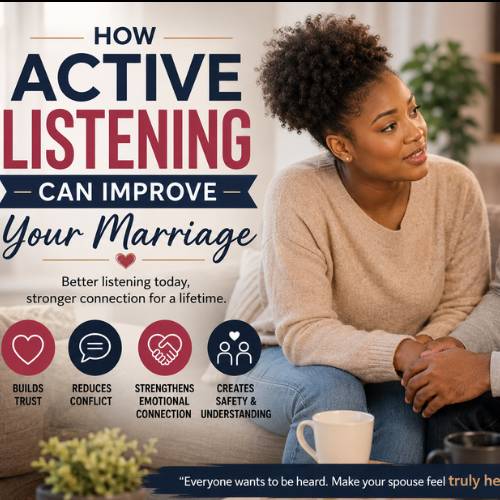
In my years of working around relationship dynamics and marriage communication patterns, one truth consistently stands out: most marital problems are not caused by lack of love, but by lack of effective communication. The keyword here is not just communication in general, but how active listening can improve your marriage in practical, measurable ways.
Many couples believe they are communicating simply because they are talking to each other every day. However, talking is not the same as being understood. I have seen marriages where both partners speak often, yet feel emotionally distant because neither feels truly heard. Active listening bridges that gap. It transforms ordinary conversations into meaningful emotional connections.
This article is designed to help you understand not just the theory behind active listening, but how it actually shows up in real marriage situations. When applied correctly, it can reduce conflict, deepen emotional intimacy, and create a sense of safety between partners that strengthens the relationship over time.
What Active Listening Really Means in a Relationship
Active listening in marriage goes far beyond simply staying quiet while your partner speaks. It is a deliberate and intentional effort to fully understand what your spouse is expressing—emotionally, mentally, and sometimes even indirectly. In practice, it means focusing completely on your partner, not just on their words, but also on their tone, body language, and emotional state.
From experience, I can confidently say that one of the biggest misunderstandings in relationships is assuming that hearing equals understanding. Active listening requires presence. It means putting aside distractions, resisting the urge to interrupt, and avoiding the habit of mentally preparing your response while the other person is still speaking.
For example, if a spouse says, “I feel like you don’t help enough at home,” a passive listener might immediately defend themselves or counter-argue. But an active listener hears something deeper: “I am feeling overwhelmed and unsupported.” That shift in interpretation changes everything about the response that follows.
Active listening also includes reflection. This is where you paraphrase or restate what your partner has said to confirm understanding. Saying something like, “So you’re feeling stressed because you think most of the household responsibilities are falling on you,” helps validate your partner’s feelings and ensures clarity before responding.
The Difference Between Hearing and Actively Listening to Your Spouse
One of the most overlooked distinctions in marriage communication is the difference between hearing and listening. Hearing is passive; it happens automatically when sound reaches your ears. Listening, especially active listening, is intentional and emotionally engaged.
In many marriages I have observed, couples fall into the trap of “surface listening.” This is when one partner is physically present but mentally elsewhere—thinking about work, scrolling on a phone, or preparing a rebuttal. On the surface, it may look like communication is happening, but emotionally, the connection is absent.
Active listening, on the other hand, requires emotional presence. It means you are not just waiting for your turn to speak. You are genuinely trying to understand your spouse’s experience as they see it. This distinction may sound simple, but it is often the difference between recurring conflict and meaningful resolution.
A practical example can be seen during disagreements. When one partner says, “You never listen to me,” a hearing-based response might be defensive: “That’s not true, I always listen.” But an active listening response would be: “It sounds like you feel unheard lately. Can you tell me more about what made you feel that way?” The second response opens the door for resolution instead of escalation.
Common Communication Problems That Damage Marriages
Before couples can fully appreciate how active listening can improve your marriage, it is important to understand what typically goes wrong in communication. In my experience, most marital conflicts are fueled by predictable listening mistakes that repeat over time.
One major issue is interruption. Many spouses interrupt each other without realizing the emotional impact it creates. Even when the intention is to clarify or respond quickly, interruption often signals disrespect or lack of interest to the other person.
Another common problem is selective listening. This happens when a partner only hears what they want to hear and ignores the rest. For example, if a spouse hears praise but filters out criticism, or focuses only on negative words and ignores reassurance, the message becomes distorted.
There is also the issue of defensive listening. This occurs when every statement from a spouse is treated as an attack. Instead of understanding the emotion behind the words, the listener immediately prepares to defend themselves. Over time, this creates emotional distance and unresolved tension.
Lastly, emotional detachment during conversations can quietly damage a marriage. This is when one or both partners stop engaging emotionally during discussions. They may respond with short answers, avoid eye contact, or show little interest in resolving issues. While this may seem harmless at first, it slowly erodes emotional intimacy.
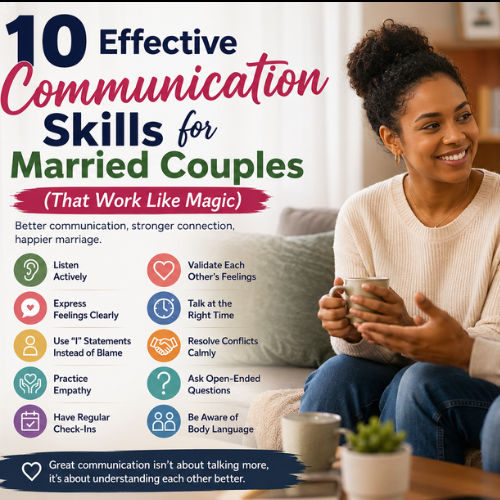
Read: 10 Effective Communication Skills for Married Couples (That Work Like Magic)
How Active Listening Builds Emotional Connection and Trust
Active listening is not just a communication skill; it is an emotional bonding tool. When a spouse feels genuinely heard, something powerful happens: emotional safety is created. And emotional safety is one of the strongest foundations of a healthy marriage.
When I work with couples or observe healthy relationships, I often notice that trust is not built only through big actions like gifts or major sacrifices. Instead, it is built in small daily moments where one partner feels understood without being judged or dismissed. Active listening creates these moments consistently.
For instance, when a partner shares vulnerability—such as feeling insecure, stressed, or overwhelmed—and the other responds with patience and understanding rather than judgment, it reinforces trust. Over time, this builds a pattern where both partners feel safe expressing their true thoughts and emotions.
Active listening also reduces emotional misinterpretation. Many marital arguments are not actually about the issue at hand, but about how the message was received. By listening actively, couples reduce assumptions and replace them with clarity. This leads to fewer misunderstandings and more productive conversations.
In essence, the more consistently active listening is practiced, the stronger the emotional connection becomes. It shifts the marriage from a reactive cycle of arguments to a responsive cycle of understanding and support.
Practical Steps to Practice Active Listening in Your Marriage
Understanding active listening is one thing, but applying it consistently is where real transformation happens. In my experience, most couples don’t struggle because they don’t care about each other; they struggle because they don’t have a structured way to listen effectively when emotions are high or life is stressful.
The first practical step is eliminating distractions during conversations. This sounds simple, but it is one of the most ignored principles in marriage communication. When your partner is speaking, putting away the phone, turning off the TV, or pausing other activities sends a strong message: “You matter right now.” Without this, even the best intentions lose impact.
The second step is using reflective responses. This means repeating or paraphrasing what your spouse has said before responding emotionally. For example, if your partner says, “I feel like we don’t spend enough time together,” you might respond with, “You’re feeling like our time together has reduced lately, and that’s affecting you emotionally.” This does not mean you agree automatically; it means you understand before reacting.
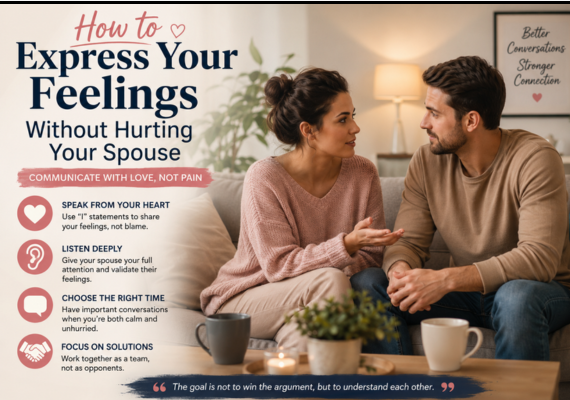
Another important step is validating emotions, even when you disagree with the perspective. Validation is not approval—it is acknowledgment. Saying something like, “I can see why that situation made you feel that way,” helps your partner feel emotionally safe enough to continue the conversation without defensiveness.
It also helps to practice patience during silence. Many people rush to fill gaps in conversation, but silence often means your spouse is processing their emotions. Allowing that space can lead to deeper honesty and more meaningful dialogue.
Mistakes Couples Make When Trying to “Listen Better”
One of the most common mistakes I see is listening just to respond instead of listening to understand. This is when a spouse is already forming their reply while the other person is still talking. The result is often miscommunication because the response is based on assumptions rather than full understanding.
Another mistake is emotional filtering. This happens when a partner only absorbs parts of the message that trigger them emotionally while ignoring the rest. For example, hearing criticism but missing the concern behind it, or focusing only on tone rather than content.
Many couples also mistake silence for active listening. Just staying quiet does not automatically mean you are listening well. True active listening requires engagement—nodding, eye contact, clarification questions, and emotional presence.
There is also the issue of over-correcting. Some individuals become so focused on “doing active listening right” that their responses feel robotic or unnatural. For example, repeating every sentence mechanically without emotional connection. This can make the conversation feel forced rather than genuine.
Lastly, one major mistake is inconsistency. Practicing active listening only during calm moments is not enough. The real test of communication in marriage comes during disagreements. Couples who only “listen well” when things are easy still struggle when emotions rise.
Real-Life Examples of Active Listening in Marriage Conflicts
To understand how active listening can improve your marriage in real situations, it helps to look at practical scenarios.
Imagine a situation where a wife says, “You never help with the kids at night.” A defensive response might be, “That’s not true, I helped yesterday.” This usually escalates the conflict. An active listening response would sound more like, “It feels like you’ve been handling most of the night routines alone lately, and that’s been overwhelming for you. Let’s talk about how we can balance it better.” The second response acknowledges emotion before addressing facts.
Another example could be a husband saying, “I feel disrespected when my opinions are ignored.” Instead of responding with, “I didn’t ignore you,” an active listener might say, “You feel like your opinions are not being considered, and that’s making you feel disrespected. Can you share when you started feeling this way?” This opens space for deeper understanding rather than argument.
In both cases, the goal is not to agree immediately, but to understand accurately. Once understanding is established, solutions become easier to find because both partners are addressing the real issue, not just reacting to surface words.
How Active Listening Reduces Arguments and Misunderstandings
One of the most powerful benefits of active listening is its ability to reduce unnecessary arguments. Many marital conflicts escalate simply because one or both partners feel unheard. When people feel unheard, they tend to repeat themselves louder, more emotionally, or more aggressively.
Active listening interrupts that cycle. When a spouse feels understood early in the conversation, their emotional intensity often decreases naturally. This makes it easier to discuss solutions instead of defending positions.
It also reduces assumptions, which are one of the biggest sources of misunderstanding in marriage. Instead of guessing what your partner means, you clarify it directly. This prevents misinterpretations that often lead to unnecessary conflict.
Over time, couples who practice active listening develop fewer repeated arguments. This is because issues are addressed at the root rather than being recycled in different forms during future disagreements.
The Long-Term Benefits of Active Listening for a Strong Marriage
The long-term impact of active listening in marriage is profound. Over time, it reshapes the emotional environment of the relationship. Instead of tension and defensiveness, couples begin to experience more openness, cooperation, and emotional safety.
One major long-term benefit is stronger emotional intimacy. When both partners feel consistently heard, they naturally become more willing to share deeper thoughts and vulnerabilities. This deepens the emotional bond in ways that surface-level communication cannot achieve.
Another benefit is improved conflict resolution. Couples who practice active listening don’t avoid conflict; they handle it better. They are able to separate emotions from issues, understand each other’s perspectives, and reach solutions faster.
It also strengthens mutual respect. Feeling heard is one of the strongest indicators of respect in a relationship. Over time, this builds a culture where both partners value each other’s voice equally.
Finally, active listening contributes to long-term relationship stability. Many marriages don’t break because of one major event, but because of repeated emotional disconnect over time. Active listening helps prevent that gradual drift by keeping emotional connection alive.
Simple Daily Habits to Strengthen Listening Skills as a Couple
Improving listening skills does not require dramatic changes; it requires consistent small habits. One effective habit is having intentional daily check-ins. This could be as simple as asking, “How was your day emotionally?” instead of just “How was your day?”
Another habit is practicing full attention moments. Even five to ten minutes of distraction-free conversation each day can significantly improve emotional connection over time.
Couples can also benefit from summarizing conversations before ending them. For example, saying, “So today you felt stressed because of work pressure, and you need more support at home,” ensures clarity and reduces misunderstandings.
Over time, these small habits compound. They create a communication culture where both partners feel consistently valued and understood.
Conclusion
A strong marriage is not built on perfect communication, but on intentional understanding. When I look at relationships that last and thrive, active listening is almost always present in some form.
Learning how active listening can improve your marriage is not just about avoiding conflict—it is about creating emotional safety, strengthening trust, and building a deeper connection that can withstand challenges. When both partners feel heard, the relationship naturally becomes more stable, more peaceful, and more fulfilling.
The change does not happen overnight, but every conversation is an opportunity to practice it better than before.

Daniel Master is a relationship and marriage writer passionate about helping readers build healthier relationships, stronger marriages, and more meaningful connections. Through practical advice, thoughtful insights, and fresh perspectives on weddings and modern relationships, Daniel creates easy-to-understand content designed to help readers make confident decisions in love and life.