
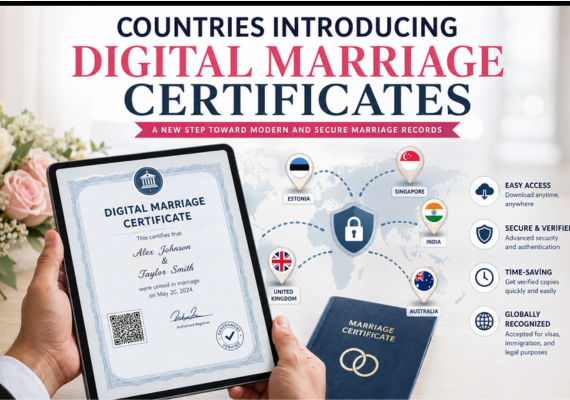
Marriage registration is becoming more modern as governments embrace digital services. One of the biggest changes in recent years is the introduction of digital marriage certificates. Instead of relying only on paper documents, many countries now provide secure electronic certificates that are easier to access, store, and verify.
If you’re planning to get married, already married, or preparing for immigration or legal processes, understanding how digital marriage certificates work can save you time and prevent unnecessary stress. Here’s everything you should know.
Countries Introducing Digital Marriage Certificates
Digital transformation has changed banking, healthcare, education, and now marriage registration. Governments around the world are adopting digital marriage certificates to improve efficiency, reduce fraud, and make important records more accessible.
While not every country has fully replaced paper certificates, many now issue digital versions alongside physical copies. This trend is expected to continue as more public services move online.
What Is a Digital Marriage Certificate?
A digital marriage certificate is an official electronic version of a legal marriage certificate issued by a government authority. It carries the same legal information as a traditional paper certificate but is stored and shared digitally.
Depending on the country, the certificate may include:
- A secure QR code
- Digital signatures
- Electronic verification features
- Government-issued authentication codes
These security measures help confirm that the document is genuine and hasn’t been altered.
Why Countries Are Switching to Digital Marriage Records
Several factors are driving this change.
First, digital certificates are much easier to access. Couples can often download certified copies online instead of visiting government offices.
Second, electronic records reduce paperwork and administrative costs. Government agencies can process applications faster while minimizing storage requirements.
Another major reason is fraud prevention. Digital verification systems make it harder to forge marriage certificates, protecting both individuals and government records.
Finally, digital services provide greater convenience for couples who need their marriage certificate for visas, insurance, banking, or legal purposes.
Countries That Have Already Introduced Digital Marriage Certificates
Several countries have already taken significant steps toward digital marriage registration.
- Estonia is widely recognized for its advanced digital government services, allowing many official records to be accessed securely online.
- Singapore has introduced digital government services that simplify civil registration and document verification.
- India continues expanding digital public services in several states, with online marriage registration and downloadable certificates becoming increasingly common.
- The United Kingdom has also modernized many civil registration processes, while Australia and New Zealand continue improving online access to official records.
Other countries are gradually introducing similar systems as part of broader digital government initiatives.
How Digital Marriage Certificates Benefit Married Couples
The advantages go beyond convenience.
Digital certificates are less likely to be lost because they can be stored securely online or in encrypted digital storage.
When applying for immigration, passports, insurance, mortgages, or financial services, couples may obtain verified copies more quickly than waiting for paper documents.
Digital verification also speeds up administrative processes because organizations can confirm authenticity directly with government systems in many cases.
For couples living abroad, accessing important documents online can eliminate expensive international shipping or repeated visits to government offices.
Challenges and Concerns With Digital Marriage Certificates
Although digital systems offer many benefits, they also present challenges.
Cybersecurity remains one of the biggest concerns. Governments must protect sensitive personal information from hackers and unauthorized access.
Not everyone has reliable internet access or sufficient digital skills, making online services difficult for some citizens.
International recognition can also vary. Some foreign authorities may still request certified paper copies depending on local laws and procedures.
Because digital systems continue evolving, regulations may differ from one country to another.
How Digital Marriage Certificates Affect International Marriage Recognition
Couples planning to relocate or apply for international visas should understand that digital certificates do not automatically guarantee acceptance everywhere.
Many immigration offices, foreign embassies, and international agencies now recognize electronically verified documents. However, certain jurisdictions still require notarized or apostilled paper certificates.
Before submitting marriage documents overseas, always check the specific requirements of the receiving authority.
Doing so can prevent delays in visa applications, residency permits, or legal documentation.
What Couples Should Know Before Applying for a Digital Marriage Certificate
If digital marriage certificates are available in your country, take a few simple precautions.
Keep both digital and printed copies in secure locations.
Download documents only from official government websites.
Never share verification codes or personal information with unknown individuals.
Regularly back up your important documents using secure cloud storage or encrypted devices.
These simple steps can help protect your personal records for years to come.
The Future of Digital Marriage Certificates Around the World
Digital marriage certificates are likely to become the global standard as governments continue modernizing public services.
Future systems may include stronger identity verification, blockchain-based security, faster international authentication, and seamless integration with other government databases.
As more countries adopt secure digital infrastructure, couples can expect faster services, reduced paperwork, and easier access to official records regardless of where they live.
Conclusion
Countries introducing digital marriage certificates are making marriage registration more secure, efficient, and convenient. Although paper certificates remain important in many places, digital versions are becoming an essential part of modern civil registration.
If you’re getting married soon or need proof of marriage for legal or personal reasons, staying informed about your country’s digital services can make the process much simpler. As technology continues to reshape government services, digital marriage certificates are set to play an increasingly important role in the future of marriage documentation.

Daniel Master is a relationship and marriage writer passionate about helping readers build healthier relationships, stronger marriages, and more meaningful connections. Through practical advice, thoughtful insights, and fresh perspectives on weddings and modern relationships, Daniel creates easy-to-understand content designed to help readers make confident decisions in love and life.