Luxury weddings are no longer defined only by extravagant venues, designer fashion, and lavish floral displays. Today’s high-end celebrations are increasingly reflecting something much more meaningful: a commitment to sustainability. Wealthy couples are proving that an elegant wedding can also respect the environment without compromising beauty, sophistication, or unforgettable guest experiences.
As someone who has followed wedding trends and luxury celebrations closely, I have noticed a significant shift in what couples truly value. Rather than spending excessively on decorations that end up in landfills or importing flowers from thousands of miles away, many are choosing thoughtful alternatives that leave a lasting impression while reducing waste. Sustainable weddings have become a statement of style, responsibility, and modern luxury.
The best part is that sustainability no longer means sacrificing elegance. Premium eco-friendly designers, ethical jewelers, luxury venues, and gourmet caterers now offer countless options that combine environmental responsibility with world-class quality. This allows couples to create breathtaking weddings while supporting businesses that share their values.
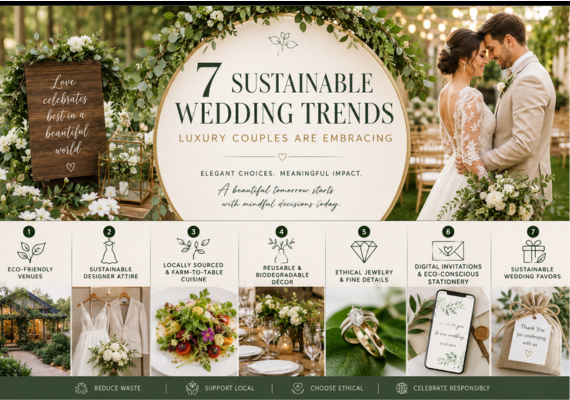
In this guide, I will explore seven sustainable wedding trends luxury couples are embracing, explain why they are becoming increasingly popular, and show how these trends can help create a wedding that is both luxurious and environmentally conscious.
Why Sustainable Luxury Weddings Are Becoming More Popular
Luxury has evolved over the past decade. While extravagant spending once represented prestige, many couples now believe true luxury comes from thoughtful experiences, exceptional craftsmanship, and meaningful choices.
Environmental awareness has played a major role in this transformation. Weddings can generate enormous amounts of waste, including unused food, disposable decorations, plastic packaging, printed materials, and flowers that are discarded within hours. As more couples become aware of this impact, they are actively searching for ways to celebrate responsibly.
Another reason sustainable weddings continue gaining popularity is changing guest expectations. Wedding guests increasingly appreciate events that feel authentic and purposeful rather than simply expensive. Small details such as reusable décor, locally sourced cuisine, or charitable wedding favors often leave stronger impressions than unnecessary extravagance.
Social media has also influenced this trend. Luxury weddings featuring eco-conscious designs regularly appear across Pinterest, Instagram, and wedding magazines, inspiring engaged couples worldwide. Beautiful recycled décor, botanical installations, and sustainable fashion demonstrate that environmentally friendly weddings can be every bit as glamorous as traditional luxury celebrations.
Many luxury brands have embraced sustainability as well. High-end bridal designers now produce collections using organic fabrics, recycled materials, and ethical manufacturing practices. Exclusive venues have introduced green initiatives ranging from renewable energy systems to waste reduction programs.
Ultimately, today’s luxury couples are looking beyond appearances. They want weddings that reflect their personalities, values, and long-term commitment—not only to each other but also to the planet they will share together.
1. Eco-Friendly Wedding Venues
Choosing the venue is often the biggest decision in wedding planning, and it also has one of the greatest environmental impacts. Luxury couples are increasingly selecting venues that actively practice sustainability without compromising elegance.
Eco-friendly wedding venues often incorporate renewable energy, water conservation systems, recycling programs, and environmentally responsible landscaping. Many luxury resorts, vineyards, botanical gardens, and boutique estates have invested heavily in sustainable operations while maintaining exceptional service standards.
Location is another important factor. Couples frequently choose venues closer to where most guests live to reduce transportation emissions. Others organize destination weddings at eco-certified luxury resorts that actively protect local ecosystems and support surrounding communities.
For example, a couple hosting their ceremony at a luxury vineyard that grows organic grapes and produces solar-powered electricity creates an experience that feels exclusive while supporting environmentally responsible business practices.
Another growing trend involves outdoor venues that naturally require less decoration. Scenic mountain estates, lakeside retreats, botanical gardens, and coastal resorts provide breathtaking backdrops that reduce the need for excessive floral installations or elaborate artificial décor.
When evaluating sustainable luxury venues, couples often consider factors such as:
- Renewable energy usage
- Recycling and composting programs
- Water conservation efforts
- Locally sourced catering partnerships
- Sustainable landscaping
- Eco-certification or green building standards
These venues demonstrate that luxury and environmental responsibility can comfortably exist together, offering unforgettable experiences while minimizing environmental impact.
2. Sustainable Designer Wedding Attire
Luxury fashion is experiencing one of the biggest sustainability transformations in the wedding industry. Brides and grooms no longer have to choose between premium craftsmanship and environmentally responsible clothing.
Many internationally recognized bridal designers now offer gowns created from organic silk, recycled lace, ethically sourced cotton, bamboo fabrics, and responsibly harvested natural fibers. These materials provide the same elegance expected from luxury fashion while significantly reducing environmental impact.
Another trend gaining momentum involves custom-made wedding attire rather than mass-produced garments. A custom gown is carefully designed to fit perfectly, minimizing unnecessary fabric waste while creating a timeless piece that may become a treasured family heirloom.
Some luxury brides also choose vintage couture dresses or professionally restored designer gowns. Wearing a beautifully preserved vintage dress offers exceptional uniqueness while extending the life of garments that deserve continued appreciation.
Grooms are embracing sustainability as well. Custom-tailored tuxedos made from ethically sourced wool or sustainable textiles provide exceptional quality while supporting responsible manufacturing practices.
Luxury accessories have also become more sustainable. Handmade veils, biodegradable shoes, vegan leather handbags, and ethically produced hair accessories allow couples to complete their wedding look without sacrificing style.
An excellent example would be a bride selecting a handcrafted silk gown produced by an ethical fashion house, paired with vintage diamond earrings inherited from her grandmother. The combination creates a sophisticated look while reducing the environmental footprint associated with purchasing entirely new accessories.
Many luxury couples also choose attire they can wear again after the wedding. Instead of purchasing garments designed for a single day, they invest in timeless pieces suitable for anniversaries, formal galas, or future celebrations. This approach adds long-term value while supporting sustainable consumption.
Sustainable designer fashion proves that elegance is no longer measured by excess. Instead, true luxury lies in exceptional craftsmanship, ethical production, timeless beauty, and thoughtful purchasing decisions that remain meaningful long after the wedding day ends.
3. Farm-to-Table and Locally Sourced Wedding Menus
Food has become one of the defining features of luxury weddings, and sustainable dining experiences are quickly replacing oversized buffets filled with unnecessary waste.
Farm-to-table catering emphasizes fresh, locally sourced ingredients obtained from nearby farms, fisheries, and artisan producers. These menus not only reduce transportation emissions but also provide guests with fresher flavors and higher-quality meals.
Luxury couples increasingly work with renowned chefs who create seasonal menus based on ingredients currently available rather than importing foods from around the world. This approach celebrates local cuisine while supporting regional farmers and small businesses.
For example, a vineyard wedding may feature organic vegetables harvested that morning, locally raised meats, handcrafted cheeses, fresh herbs, and artisan desserts prepared by nearby pastry chefs. Guests enjoy a memorable dining experience while knowing the meal was thoughtfully sourced.
Food waste reduction has also become a priority. Many luxury caterers now carefully estimate guest portions, donate untouched surplus food to local charities where permitted, and compost unavoidable food scraps.
Signature cocktails are following the same trend. Instead of imported ingredients, bartenders often create drinks using locally distilled spirits, fresh herbs, seasonal fruits, and organic mixers that reflect the wedding destination.
Another thoughtful addition involves sustainable seafood, responsibly sourced meats, and plant-forward menu options that appeal to guests with varying dietary preferences while reducing the overall environmental impact of the celebration.
A carefully curated farm-to-table menu demonstrates that sustainability enhances—not limits—the luxury wedding experience. Fresh ingredients, exceptional culinary creativity, and meaningful sourcing combine to create unforgettable meals that guests will remember long after the celebration concludes.
4. Reusable and Biodegradable Wedding Décor
Wedding décor has always been one of the biggest highlights of a luxury celebration, but it can also be one of the largest sources of unnecessary waste. From single-use backdrops to plastic centerpieces and foam floral arrangements, traditional decorations often end up being discarded once the event is over. Fortunately, luxury couples are embracing décor choices that are just as breathtaking while being significantly more sustainable.
One of the biggest trends is renting high-end décor instead of purchasing items that will only be used once. Premium rental companies now offer elegant chandeliers, candle holders, arches, furniture, tableware, and decorative accents that look every bit as luxurious as custom-made pieces. Renting not only reduces waste but also allows couples to access premium designs without contributing to excessive consumption.
Fresh flowers remain a favorite at luxury weddings, but many couples now prioritize locally grown, seasonal blooms instead of imported flowers. Locally sourced flowers are often fresher, support nearby flower farms, and have a much smaller environmental footprint due to reduced transportation.
Another increasingly popular idea is repurposing floral arrangements throughout the wedding day. Ceremony flowers can be moved to the reception venue, aisle arrangements can decorate the sweetheart table, and entrance displays can become photo backdrops later in the evening. This approach maximizes beauty while minimizing unnecessary spending and waste.
Biodegradable materials are also becoming common in luxury wedding décor. Natural wood, linen table runners, recycled glass, beeswax candles, dried flowers, pampas grass, bamboo accents, and handcrafted ceramics create timeless elegance while remaining environmentally friendly.
For example, imagine a luxury garden wedding featuring wooden welcome signs, linen tablecloths, locally grown white roses, reusable gold candle holders, and elegant glass centerpieces that are rented rather than purchased. The overall atmosphere feels sophisticated while reflecting thoughtful sustainability.
At the end of the celebration, many couples also arrange for flowers to be donated to hospitals, nursing homes, or community organizations. Instead of being thrown away, beautiful floral arrangements continue bringing joy to others long after the wedding ends.
Luxury décor is no longer about having the most decorations. Instead, it is about selecting beautiful pieces that create lasting memories without leaving behind unnecessary waste.
5. Ethical Wedding Rings and Fine Jewelry
Wedding rings symbolize a lifelong commitment, making them one of the most meaningful purchases a couple will ever make. It is no surprise that many luxury couples now seek jewelry that reflects not only their love but also their values.
Ethically sourced diamonds have become one of the fastest-growing trends in the luxury wedding market. Couples increasingly choose diamonds that are responsibly mined under fair labor practices or opt for certified conflict-free stones that meet strict ethical standards.
Lab-grown diamonds have also gained tremendous popularity among luxury buyers. These diamonds possess the same physical, chemical, and visual characteristics as natural diamonds while requiring fewer natural resources during production. Many premium jewelers now offer stunning lab-grown collections that are virtually indistinguishable from mined diamonds.
Beyond diamonds, recycled precious metals have become another sustainable option. Gold, platinum, and silver can be refined and reused without sacrificing quality, allowing couples to own exquisite jewelry while reducing the environmental impact associated with new mining activities.
Family heirlooms are experiencing a beautiful revival as well. Instead of purchasing entirely new jewelry, many couples redesign inherited engagement rings or wedding bands into modern pieces that preserve sentimental value while creating something uniquely personal.
For example, a bride may transform her grandmother’s vintage diamond ring into a contemporary engagement ring, while the groom selects a wedding band crafted from recycled platinum. Together, these choices blend family history, luxury craftsmanship, and environmental responsibility.
Luxury jewelry is increasingly measured by transparency, ethical sourcing, exceptional craftsmanship, and timeless beauty rather than simply rarity alone. Couples appreciate knowing that the symbols of their marriage also reflect responsible decision-making.
6. Digital Invitations and Eco-Conscious Wedding Stationery
Wedding invitations set the tone for the celebration, but traditional stationery often involves significant paper consumption, printing waste, and international shipping. Modern luxury couples are discovering that sustainable alternatives can be equally elegant while offering greater convenience.
Digital wedding invitations have evolved far beyond simple emails. Today’s premium invitation platforms offer beautifully designed animated invitations, interactive RSVP systems, personalized wedding websites, accommodation information, event schedules, and digital maps—all presented with sophisticated style.
These digital solutions eliminate paper waste while making communication much easier for both couples and guests. Changes to event schedules or venue details can be updated instantly without requiring expensive reprints.
Many luxury couples still appreciate the timeless beauty of printed invitations. Rather than eliminating paper entirely, they choose environmentally responsible alternatives such as recycled cardstock, seed paper that guests can plant, vegetable-based inks, or paper certified by sustainable forestry organizations.
Minimalist invitation designs are another growing trend. Elegant typography, premium paper quality, and thoughtful craftsmanship often create a stronger impression than elaborate designs filled with excessive embellishments.
Wedding programs, menus, seating charts, and thank-you cards are also becoming more sustainable. Couples frequently replace printed materials with digital QR codes that guests can scan using their smartphones, reducing unnecessary printing while providing a modern guest experience.
For instance, guests arriving at the reception might scan a beautifully displayed QR code that instantly opens the evening’s menu, seating arrangement, and entertainment schedule. This creates a seamless luxury experience while significantly reducing paper waste.
The goal is not to eliminate elegance but to rethink how information is presented in ways that are both beautiful and environmentally responsible.
7. Sustainable Wedding Favors That Guests Will Actually Use
Wedding favors have traditionally been small tokens of appreciation, but many end up forgotten or discarded shortly after the celebration. Luxury couples are changing this by selecting meaningful gifts that guests genuinely enjoy and continue using.
Practical, high-quality favors have become increasingly popular because they combine elegance with functionality. Instead of novelty items, couples choose gifts that fit naturally into everyday life.
Popular sustainable luxury wedding favors include:
- Handmade artisan candles
- Organic honey jars from local beekeepers
- Premium olive oil or gourmet spices
- Reusable stainless steel drinkware
- Luxury soaps made with natural ingredients
- Potted herbs or miniature plants
- Reusable shopping bags with elegant designs
- Fair-trade chocolates or locally crafted treats
Many couples personalize these gifts with custom packaging made from recyclable or compostable materials, creating memorable keepsakes without excessive waste.
Another thoughtful trend involves charitable wedding favors. Rather than providing physical gifts, couples make donations to environmental organizations or local charities on behalf of each guest. A beautifully printed card explaining the donation often leaves a deeper emotional impact than traditional favors.
For example, instead of giving decorative trinkets, a couple might donate to a tree-planting initiative while providing each guest with a personalized thank-you card explaining that a tree has been planted in honor of their attendance. This simple gesture creates lasting meaning while supporting environmental conservation.
Luxury favors today focus less on quantity and more on quality, usefulness, and positive impact.
How to Plan a Luxury Sustainable Wedding Without Sacrificing Elegance
Planning a sustainable luxury wedding begins with intentional decision-making rather than dramatic compromises. Every choice should balance beauty, guest experience, and environmental responsibility.
Start by identifying the areas where sustainability can make the greatest impact. Venue selection, catering, fashion, transportation, décor, and invitations often provide the biggest opportunities for reducing waste.
Work with vendors who openly share their sustainability practices. Many luxury planners, florists, caterers, photographers, and designers now specialize in environmentally responsible weddings and can recommend solutions you may not have considered.
Focus on quality over quantity. Instead of overwhelming the venue with unnecessary decorations, invest in fewer but more striking design elements that naturally capture attention.
Consider creating a sustainability checklist before making major purchases. Asking questions about sourcing, packaging, transportation, and reusability can help ensure every decision aligns with your vision.
Most importantly, remember that luxury is about creating unforgettable experiences—not unnecessary excess. Guests rarely remember how many floral arrangements filled the ballroom, but they will remember exceptional hospitality, incredible food, meaningful moments, and the thoughtful atmosphere you created.
Common Mistakes to Avoid When Planning an Eco-Friendly Luxury Wedding
Although sustainable weddings are becoming easier to plan, there are still several mistakes couples should avoid.
One common mistake is assuming that every product labeled “eco-friendly” is genuinely sustainable. Always research certifications, manufacturing practices, and sourcing before making purchases.
Another mistake is overlooking transportation. Flying decorations, flowers, or food across continents can significantly increase the event’s environmental footprint, even if the products themselves are sustainable.
Couples should also avoid over-ordering food, flowers, or wedding favors. Careful planning minimizes waste while helping maintain the event’s overall elegance.
Finally, do not feel pressured to achieve perfection. Sustainability exists on a spectrum, and every thoughtful improvement contributes positively. Even incorporating a few environmentally responsible choices can make a meaningful difference without affecting the luxury experience.
Frequently Asked Questions (FAQs)
Are sustainable weddings more expensive?
Not necessarily. While some eco-friendly luxury products may cost more, couples often save money by renting décor, reducing waste, using seasonal flowers, and selecting local vendors.
Can a luxury wedding still feel extravagant if it is sustainable?
Absolutely. Modern sustainable weddings emphasize premium quality, elegant design, exceptional experiences, and thoughtful details rather than excessive spending.
Are lab-grown diamonds suitable for luxury weddings?
Yes. Many luxury couples choose lab-grown diamonds because they offer exceptional brilliance, certified quality, and a lower environmental impact while maintaining the same physical properties as natural diamonds.
What is the easiest way to make a wedding more sustainable?
Choosing a sustainable venue, reducing unnecessary waste, sourcing local food, renting décor, and using reusable or biodegradable materials are some of the simplest and most effective ways to make a meaningful impact.
Conclusion
Sustainability is redefining what luxury means in today’s wedding industry. Instead of focusing solely on extravagance, modern couples are creating celebrations that reflect elegance, authenticity, and environmental responsibility. From eco-friendly venues and ethically crafted attire to locally sourced cuisine, reusable décor, responsible jewelry, digital invitations, and meaningful wedding favors, these trends prove that luxury and sustainability complement each other beautifully.
The most memorable weddings are not necessarily the ones with the biggest budgets—they are the ones that tell a meaningful story. By embracing sustainable wedding trends, couples can celebrate one of life’s most important milestones with confidence, knowing their choices honor both their love story and the world they are building together.

Daniel Master is a relationship and marriage writer passionate about helping readers build healthier relationships, stronger marriages, and more meaningful connections. Through practical advice, thoughtful insights, and fresh perspectives on weddings and modern relationships, Daniel creates easy-to-understand content designed to help readers make confident decisions in love and life.