Planning a wedding is one of the most exciting experiences you’ll ever have, but it can also become overwhelming surprisingly fast. One of the biggest questions couples ask at the beginning of the journey is, what to book first when planning a wedding? It seems like a simple question, yet making the wrong booking decisions early on can affect everything from your budget to your guest experience.
I have seen many couples become stressed simply because they booked vendors in the wrong order. For example, falling in love with a photographer before securing a venue often leads to disappointment when the photographer isn’t available on the final wedding date. Others purchase a wedding dress before deciding on the style of venue, only to realize later that it doesn’t match the overall atmosphere of the celebration.
The truth is that wedding planning becomes much easier when you understand which bookings should come first and which ones can wait. Every decision builds on the previous one, creating a smooth planning process instead of a series of costly mistakes.
In this guide, I’ll walk you through the essential wedding bookings in the order I recommend based on experience. By following this approach, you’ll avoid common planning pitfalls, secure your preferred vendors, and enjoy the months leading up to your big day with far less stress.
Why Booking the Right Vendors First Matters
Many couples assume they can book vendors whenever they find someone they like. In reality, wedding planning works like a chain. One booking influences the next, and delaying an important reservation can limit your options significantly.
The most sought-after wedding professionals often accept bookings more than a year in advance. Popular venues, photographers, and planners especially fill their calendars quickly, particularly during peak wedding seasons. Waiting too long may mean compromising on your preferred date or settling for second-choice vendors.
Booking strategically also helps protect your budget.
When major vendors are secured early, you’ll know exactly how much money remains for flowers, decorations, entertainment, favors, and other details. This prevents overspending in the early stages and scrambling to adjust later.
Another advantage is peace of mind.
Once your venue, photographer, caterer, and other priority vendors are confirmed, the remaining planning tasks become much less intimidating. Instead of worrying whether your dream venue will still be available, you can focus on the enjoyable details like invitations, wedding attire, and personal touches.
Think of wedding planning like building a house. You wouldn’t start decorating the living room before laying the foundation. The same principle applies here—secure the essentials first before moving on to the finishing touches.
Choose Your Wedding Date Before Anything Else
Before contacting vendors, spend time deciding when you actually want to get married.
Although this sounds obvious, many couples rush into touring venues without discussing possible dates. Having a preferred wedding season gives you direction and makes vendor inquiries much more productive.
Consider whether you envision a spring garden wedding, a sunny summer celebration, a colorful autumn ceremony, or a cozy winter event. Each season offers unique advantages as well as pricing differences.
You should also think about practical factors such as family availability, work schedules, school holidays, and local weather. Choosing a meaningful anniversary or holiday weekend may sound romantic, but it could also increase travel costs and reduce vendor availability.
Flexibility is incredibly valuable.
If your heart is set on a particular photographer or venue, having two or three acceptable wedding dates greatly increases your chances of booking your preferred professionals.
For example, imagine you’ve always dreamed of a vineyard wedding in October. If every Saturday is already reserved, being open to a Friday or Sunday celebration could allow you to secure your dream venue while sometimes saving thousands of dollars.
Once you’ve narrowed down your preferred dates, you’re ready to begin making the most important booking of all.
Book Your Wedding Venue First
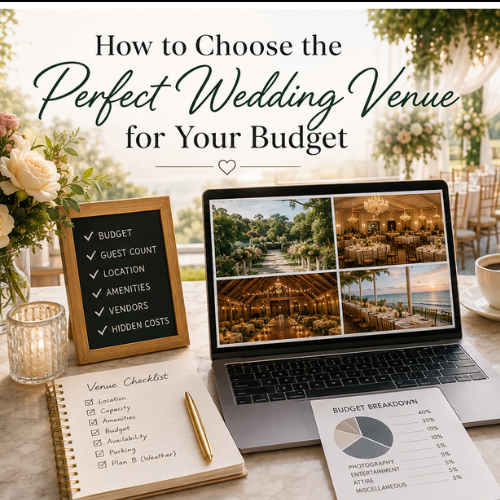
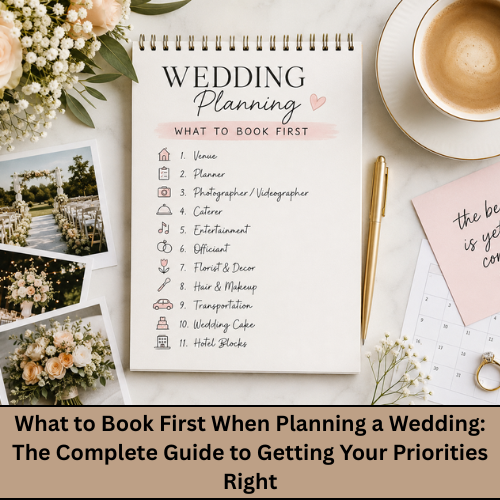
If someone asks me what to book first when planning a wedding, my answer is almost always the same: your wedding venue.
Your venue determines nearly every other planning decision.
It influences your wedding date, guest count, photography style, decoration choices, transportation needs, catering options, accommodation requirements, and even your overall budget.
Many venues book out 12 to 24 months in advance, especially if they’re highly sought after. Waiting too long often means either changing your preferred date or settling for a venue that doesn’t match your vision.
As you compare venues, don’t focus only on appearance.
Ask detailed questions about what’s included in the rental fee. Some venues provide tables, chairs, linens, lighting, catering, coordination staff, and cleanup services, while others simply offer an empty space that requires you to hire nearly every vendor separately.
It’s also worth considering accessibility.
Will elderly guests be comfortable? Is there enough parking? Are there nearby hotels? Does the venue have a weather backup plan if you’re planning an outdoor ceremony?
For instance, a beautiful beachfront venue may look perfect in photographs, but if it lacks sufficient parking, shade, or restroom facilities, your guests may have a very different experience than you imagined.
Choosing the right venue creates the foundation for every decision that follows, making it the most important reservation you’ll make during the planning process.
Hire Your Wedding Planner (If You’re Using One)
If you intend to work with a wedding planner, don’t wait until you’ve already booked half your vendors.
One of the biggest advantages of hiring a planner early is gaining access to professional guidance before major decisions are made. An experienced planner can recommend trusted vendors, negotiate contracts, identify hidden costs, and help you avoid expensive mistakes.
Many couples assume planners only manage the wedding day, but that’s only part of their role.
A full-service planner often assists with budgeting, scheduling, vendor recommendations, design concepts, logistics, guest management, and timeline creation. Their expertise becomes most valuable at the beginning of the planning process rather than near the end.
Even if you’re planning most of the wedding yourself, a partial planner or month-of coordinator can still provide tremendous value.
Imagine booking a venue that requires dozens of outside vendors without realizing how complicated the logistics will become. An experienced planner would immediately recognize those challenges and suggest alternatives that better fit your budget and expectations.
Hiring professional guidance early can ultimately save both money and countless hours of stress.
Secure Your Wedding Photographer and Videographer
Long after the flowers have faded and the cake has been eaten, your wedding photographs and videos become the memories you’ll treasure for decades.
That’s exactly why photographers and videographers should be among your earliest bookings.
Exceptional professionals often reserve dates more than a year in advance. Couples frequently choose their photographer based on artistic style, editing approach, personality, and storytelling ability rather than simply comparing prices.
Take time to review complete wedding galleries instead of only looking at social media highlights.
A few stunning Instagram photos don’t always reflect how consistently a photographer captures an entire wedding day from morning preparations through the final dance.
Meeting your photographer before booking is equally important.
You’ll spend more time with your photographer than almost any other vendor during your wedding day. Feeling comfortable around them helps create natural smiles, relaxed portraits, and genuine emotional moments.
For example, if you’re planning an intimate outdoor ceremony with soft natural lighting, you’ll want someone whose portfolio consistently demonstrates experience photographing outdoor weddings rather than relying primarily on studio-style portraits.
Remember that popular photographers often work alongside preferred videographers, making it worthwhile to ask whether bundled packages are available.
Book Your Caterer (If Not Included with the Venue)
Food is one of the details guests remember long after the wedding ends.
Whether people recall a perfectly prepared dinner or an unforgettable dessert table, the catering experience often shapes their overall impression of your celebration.
If your venue doesn’t include catering, this should become one of your highest priorities.
Begin by determining the style of meal you want to serve.
Popular options include buffet service, plated dinners, family-style meals, cocktail receptions, food stations, or even interactive chef experiences. Each option affects staffing requirements, pricing, guest flow, and the atmosphere of your reception.
Schedule tasting sessions whenever possible.
Menus can sound wonderful on paper, but tasting the food allows you to evaluate quality, presentation, portion sizes, and service standards before signing a contract.
Don’t forget dietary needs.
Modern weddings commonly include guests with vegetarian, vegan, gluten-free, dairy-free, or allergy-related requirements. An experienced caterer should comfortably accommodate these requests without making affected guests feel like an afterthought.
For example, instead of serving one generic vegetarian meal, an excellent caterer may offer multiple plant-based options that are just as thoughtfully prepared as the main menu.
Choosing an experienced caterer ensures your guests leave talking about the celebration—not searching for food on the way home.
Reserve Your Wedding Entertainment (DJ, Band, or MC)
The atmosphere of your reception depends heavily on your entertainment.
I’ve attended weddings where beautiful decorations couldn’t compensate for poor entertainment, while simple receptions became unforgettable because the music kept everyone smiling and dancing throughout the evening.
Whether you prefer a professional DJ, a live band, or a skilled master of ceremonies, booking early gives you access to the most experienced performers.
Entertainment professionals do much more than play music.
A great DJ manages the reception timeline, coordinates introductions, announces speeches, adjusts the energy throughout the evening, and keeps guests engaged from start to finish. Likewise, an experienced live band understands how to read the crowd and adapt the performance as the celebration evolves.
When comparing entertainment options, ask to watch full performance videos rather than promotional highlight reels. Reading reviews is also helpful, but seeing how performers interact with real wedding guests provides much better insight into what you can expect.
Suppose you’re planning an elegant black-tie reception. A sophisticated live jazz ensemble during cocktail hour followed by a professional DJ for dancing could create the perfect balance between elegance and celebration.
On the other hand, couples hosting a relaxed outdoor wedding may find that an energetic acoustic band delivers exactly the atmosphere they envision.
Whichever style you choose, reserving your entertainment early helps ensure your reception is memorable for all the right reasons.
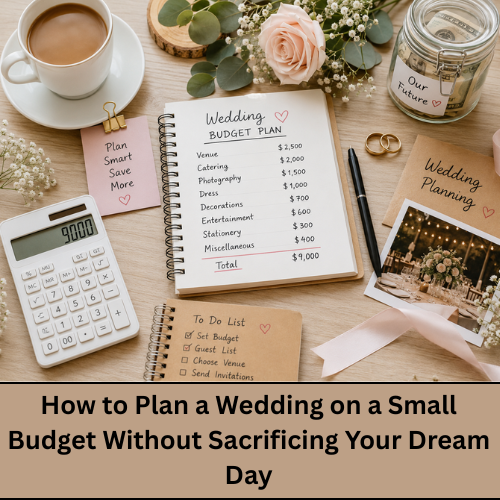
Read: How to Plan a Wedding on a Small Budget Without Sacrificing Your Dream Day
Find and Book Your Officiant
Your officiant is responsible for one of the most meaningful parts of your wedding day—the ceremony itself. While many couples focus heavily on the reception, it’s important not to overlook the person who will legally and emotionally guide you into marriage.
If you’re getting married in a place of worship, your officiant may already be determined by the venue. However, if you’re planning a civil ceremony, destination wedding, or outdoor celebration, you’ll likely need to choose an officiant yourself.
Don’t make your decision based solely on availability.
Every officiant has a different style. Some keep ceremonies short and traditional, while others specialize in personalized ceremonies filled with stories, humor, and meaningful moments. Before booking, ask to read sample ceremony scripts or watch videos from previous weddings if available.
Communication also matters.
An experienced officiant will take the time to understand your relationship, discuss your preferences, explain the legal requirements in your area, and help create a ceremony that reflects your personalities rather than sounding generic.
For example, if you’ve been together for ten years before getting engaged, your officiant can naturally weave parts of that journey into the ceremony, making it far more memorable than reading a standard script.
Booking your officiant early also gives you enough time to schedule planning meetings and complete any required paperwork before the wedding day.
Book Your Wedding Florist and Decor Team
Once your venue has been secured, it’s much easier to begin planning your floral arrangements and overall wedding design.
Flowers and décor work together to transform an empty space into the atmosphere you’ve imagined. Whether your style is timeless, modern, rustic, romantic, or luxurious, your florist and décor team help bring that vision to life.
Instead of starting with individual flower types, begin by deciding how you want your wedding to feel.
Do you picture soft neutral colors with elegant candlelight? A colorful garden-inspired celebration? A minimalist design with clean lines? Having a clear direction helps your florist recommend arrangements that suit both your vision and your budget.
Don’t underestimate how much your venue influences floral decisions.
A grand ballroom with high ceilings may require large statement arrangements to fill the space, while a charming garden venue may only need simple floral accents because nature already provides much of the beauty.
Ask your florist which flowers are in season on your wedding date.
Seasonal blooms are usually more affordable, fresher, and easier to source than imported flowers. They can also reduce the risk of last-minute substitutions if certain varieties become unavailable.
For instance, choosing locally available flowers during spring may provide fuller arrangements at a lower cost than insisting on rare imported blooms that are out of season.
Remember that décor isn’t limited to flowers alone. Lighting, candles, linens, centerpieces, ceremony arches, signage, and table styling all contribute to creating a cohesive and memorable wedding aesthetic.
Reserve Hair and Makeup Artists
Your wedding photographs will last a lifetime, making professional hair and makeup an investment rather than a luxury for many couples.
Experienced wedding beauty professionals understand how to create looks that not only photograph beautifully but also remain intact throughout an emotional day filled with hugs, dancing, happy tears, and changing weather conditions.
Book your preferred artists as early as possible, especially if you’re getting married during peak wedding season.
Popular bridal stylists often accept bookings many months in advance, particularly for Saturday weddings.
Always schedule a trial appointment before the wedding day.
A trial allows you to experiment with hairstyles, makeup colors, and overall looks without the pressure of a wedding timeline. It also gives you the opportunity to discuss any skin sensitivities, preferred products, or adjustments you’d like to make.
Bring inspiration photos to your appointment, but remember that every face shape, hair texture, and skin tone is unique.
A professional stylist can adapt your inspiration to create a version that enhances your natural features rather than copying someone else’s look exactly.
For example, a sleek bridal bun that looks stunning on straight hair may need slight modifications to achieve the same polished appearance on naturally curly hair. An experienced stylist will know how to make those adjustments while preserving your desired style.
Book Wedding Transportation
Transportation is often one of the last things couples think about, yet it can have a significant impact on the smooth flow of the day.
Whether you’re arranging transportation for yourselves, the wedding party, or your guests, making reservations early helps prevent unnecessary stress later.
Begin by considering every location involved.
Will the ceremony and reception take place at different venues? Will you need transportation from the hotel to the ceremony? Are guests traveling from out of town?
The answers to these questions determine whether you’ll need a limousine, luxury sedan, shuttle buses, vintage car, party bus, or another transportation option.
Don’t forget to build extra time into your schedule.
Traffic delays, unexpected weather, road closures, and loading times can all affect your timeline. An experienced transportation provider will usually recommend generous time allowances to keep everything running smoothly.
Imagine planning a countryside wedding where guests must travel from a city hotel to a remote venue. Providing shuttle transportation not only simplifies logistics but also allows everyone to enjoy the celebration without worrying about driving unfamiliar roads afterward.
Reliable transportation helps ensure everyone arrives safely, comfortably, and on time.
Reserve Your Wedding Cake Baker
Your wedding cake is more than dessert—it’s one of the visual highlights of the reception and a tradition many couples still cherish.
Once you’ve finalized your guest count and wedding style, begin researching reputable cake designers whose work aligns with your vision.
Don’t focus only on appearance.
An impressive-looking cake should taste just as good as it looks. Schedule tasting appointments to sample different cake flavors, fillings, frostings, and textures before making your final decision.
Many modern couples also choose alternatives such as dessert bars, cupcakes, doughnut walls, macaron towers, or miniature pastries.
If you’re considering one of these options, discuss display ideas with your baker to ensure the dessert presentation complements your overall décor.
For example, a rustic outdoor wedding may pair beautifully with a semi-naked cake decorated with fresh flowers and seasonal fruit, while an elegant ballroom reception may call for a classic multi-tiered cake featuring intricate sugar flowers and refined detailing.
Booking your baker several months in advance ensures enough time for consultations, design revisions, and final preparations.
Don’t Forget Hotel Blocks for Guests
If you expect friends and family to travel for your wedding, reserving hotel room blocks is a thoughtful gesture they’ll genuinely appreciate.
Hotel blocks allow guests to stay near one another while often receiving discounted room rates. They also simplify transportation planning, especially if you’re providing shuttle service to and from the venue.
Start by identifying hotels within a reasonable distance of your ceremony and reception.
Ideally, offer accommodations at different price points so guests can choose options that fit their budgets.
When negotiating room blocks, ask important questions regarding reservation deadlines, cancellation policies, minimum booking requirements, parking fees, breakfast availability, and group discounts.
For destination weddings or celebrations in popular tourist locations, booking accommodations early becomes even more important since nearby hotels may fill quickly.
Providing guests with accommodation information several months before the wedding allows them to secure travel arrangements without unnecessary pressure.
Wedding Booking Timeline: What to Reserve and When
One of the easiest ways to stay organized is by following a general booking timeline.
While every wedding is different, this schedule provides a practical starting point:
12–18 months before the wedding
- Choose your wedding date.
- Book your venue.
- Hire your wedding planner.
- Reserve your photographer and videographer.
9–12 months before the wedding
- Book your caterer if needed.
- Reserve your entertainment.
- Book your officiant.
- Secure your florist and décor team.
- Reserve hotel room blocks.
6–9 months before the wedding
- Book hair and makeup artists.
- Arrange transportation.
- Reserve your wedding cake baker.
3–6 months before the wedding
- Finalize menus.
- Confirm décor details.
- Schedule beauty trials.
- Review vendor contracts and timelines.
Following a timeline like this helps spread planning responsibilities across several months instead of leaving everything until the final weeks.
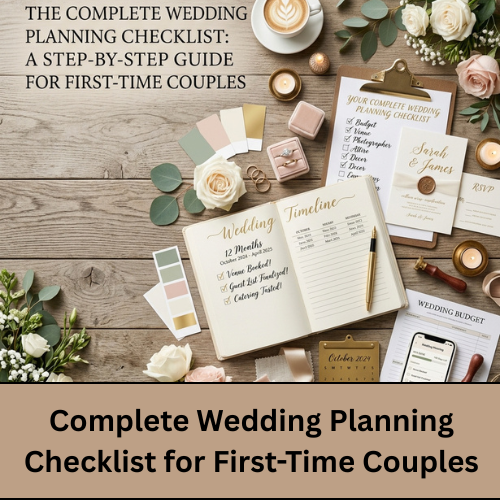
Recommended: Complete Wedding Planning Checklist for First-Time Couples: Your Easy Steps Guide
Common Mistakes Couples Make When Booking Wedding Vendors
Even organized couples occasionally make avoidable mistakes during the planning process. Recognizing these pitfalls early can save both money and unnecessary frustration.
One common mistake is booking vendors before establishing a realistic budget.
Without knowing how much you can comfortably spend, it’s easy to commit too much money to one category while neglecting others.
Another frequent mistake is failing to read contracts carefully.
Always review payment schedules, cancellation policies, overtime fees, backup plans, and refund conditions before signing any agreement.
Some couples also rely entirely on social media when choosing vendors.
Beautiful photos certainly matter, but reviews, communication, professionalism, experience, and consistency deserve equal attention.
Waiting too long to reserve high-demand vendors is another costly error.
The most respected professionals often receive inquiries months or even years ahead of popular wedding dates. Delaying decisions can leave you with fewer options and potentially higher prices.
Finally, don’t underestimate the value of communication.
Keeping every vendor informed about timeline updates, venue changes, and important details helps ensure everyone works together smoothly on your wedding day.
Frequently Asked Questions
What should I book first when planning a wedding?
Your wedding venue should almost always be your first booking because it determines your wedding date and influences nearly every other planning decision.
How far in advance should I start booking wedding vendors?
Most couples begin booking major vendors between 12 and 18 months before the wedding, especially for popular dates and locations.
Should I book my photographer before buying my wedding dress?
Yes. Photographers often book up well in advance, while wedding dresses can usually be purchased later according to your boutique’s ordering timeline.
Is it necessary to hire a wedding planner?
Not every couple needs a planner, but having one can simplify the planning process, reduce stress, and help you avoid expensive mistakes, particularly if you’re organizing a large or complex wedding.
Can I book multiple vendors on the same day?
Absolutely. Once your venue and wedding date are confirmed, you can begin securing several major vendors simultaneously, provided you’ve researched them carefully and confirmed their availability.
Conclusion: Prioritize the Essentials and Book with Confidence
If you’ve been wondering what to book first when planning a wedding, the answer isn’t simply about checking vendors off a list—it’s about building your wedding plans in the right order.
Starting with your wedding date and venue creates a solid foundation for every decision that follows. From there, securing experienced professionals like your planner, photographer, caterer, and entertainment team helps eliminate uncertainty while giving you access to the vendors you truly want.
Remember that every wedding is unique.
Your priorities may differ depending on your budget, guest count, location, and personal vision. However, following a logical booking order allows you to make informed decisions instead of rushed ones.
Wedding planning doesn’t have to feel overwhelming.
With thoughtful preparation, realistic timelines, and early bookings, you’ll spend less time worrying about logistics and more time enjoying one of the most meaningful seasons of your life. By focusing on the essentials first, you’ll create not only a beautiful wedding day but also a planning experience you’ll look back on with confidence and joy.

Daniel Master is a relationship and marriage writer passionate about helping readers build healthier relationships, stronger marriages, and more meaningful connections. Through practical advice, thoughtful insights, and fresh perspectives on weddings and modern relationships, Daniel creates easy-to-understand content designed to help readers make confident decisions in love and life.