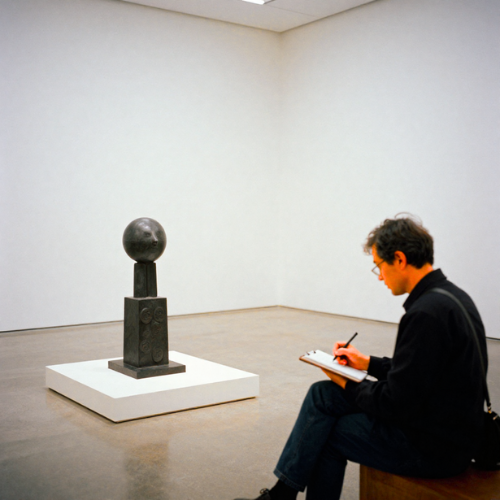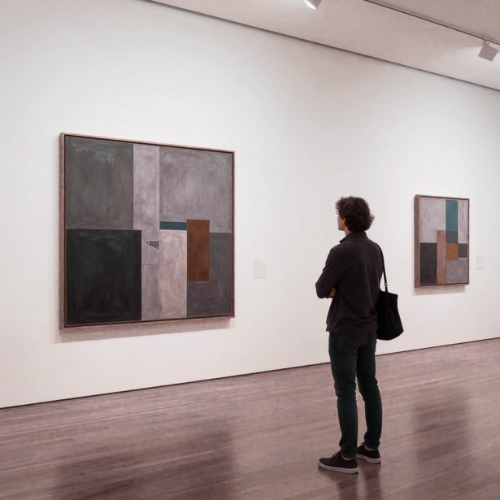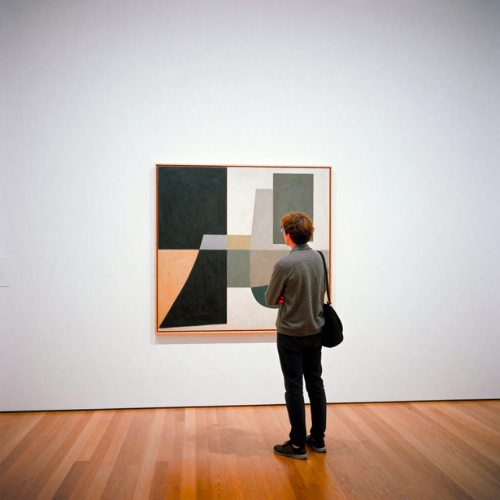
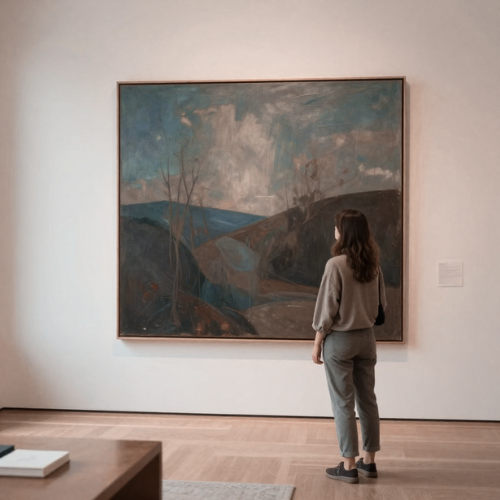
In a gallery setting, one of the most common questions I hear—spoken or unspoken—is not about technique or value, but about feeling. Visitors often pause in front of a painting and say something like, “This feels heavy,” or “This makes me calm, but I don’t know why.” That instinctive reaction is the mood of the artwork at work.
Analyzing the mood of an artwork is not about guessing what the artist was thinking. It is about learning how visual elements work together to create an emotional atmosphere. When approached thoughtfully, mood analysis deepens appreciation, sharpens visual literacy, and transforms passive viewing into active engagement.
For collectors, students, and casual viewers alike, understanding mood provides a powerful entry point into art. It allows the viewer to connect emotionally before intellectual interpretation even begins.
What Is “Mood” in Art? An Experienced Gallery Perspective
Mood in art refers to the emotional tone or atmosphere that an artwork conveys to the viewer. It can feel calm, tense, joyful, melancholic, mysterious, or unsettling. Unlike subject matter, which is what you see, mood is what you feel.
In professional gallery analysis, mood is never treated as accidental. Even when an artwork appears spontaneous or abstract, its emotional impact is shaped by deliberate visual decisions. These decisions guide the viewer’s emotional response, whether subtly or forcefully.
It is also important to understand that mood is not universal. While certain visual cues tend to trigger similar emotions across audiences, personal experience, cultural background, and memory all influence how mood is perceived. This is not a weakness in analysis—it is part of what makes art enduring and dynamic.
Why Artists Use Mood to Communicate Meaning
Artists often rely on mood as a primary storytelling tool. In many cases, mood carries meaning more effectively than literal imagery. A painting does not need to depict tragedy to feel tragic, just as a joyful mood does not require smiling figures.
From a curatorial standpoint, mood often acts as the emotional anchor of an artwork. It guides how long a viewer lingers, how deeply they engage, and what they remember after leaving the space.
Artists use mood to:
-
Express internal emotional states
-
Respond to social or political conditions
-
Create empathy or discomfort
-
Invite contemplation rather than explanation
For example, a quiet interior scene with muted colors and soft light may communicate isolation or introspection more powerfully than a dramatic narrative scene. The mood becomes the message.
How Color Choices Influence the Mood of an Artwork
Color is one of the most immediate and influential tools for setting mood. Before the eye recognizes forms or details, it responds to color relationships. This is why color analysis is always a starting point when evaluating emotional tone.
Warm colors such as reds, oranges, and yellows often evoke energy, intensity, warmth, or tension. Cool colors like blues, greens, and purples tend to suggest calm, melancholy, distance, or reflection. However, context matters. A bright red can feel celebratory in one composition and aggressive in another.
When analyzing mood through color, I look at:
-
Dominant color palettes
-
Saturation versus muted tones
-
Color contrasts or harmony
-
Emotional temperature (warm vs cool)
A monochromatic blue painting, for instance, may create a contemplative or somber mood, while a fragmented palette of clashing colors can introduce unease or emotional instability.
The Role of Light and Shadow in Emotional Expression
Light is not just a technical element; it is an emotional language. Artists manipulate light and shadow to guide mood as intentionally as color or composition.
Soft, diffused lighting often creates intimacy, calm, or nostalgia. Strong contrasts between light and dark—known as chiaroscuro—can introduce drama, tension, or psychological depth. Shadows can obscure information, suggesting mystery or emotional distance.
In gallery analysis, I pay attention to:
-
Where light originates
-
What areas are emphasized or hidden
-
How shadows affect the subject’s presence
A figure partially submerged in shadow may feel introspective or burdened, while a brightly illuminated subject can feel exposed, hopeful, or confrontational, depending on context.
Analyzing Mood Through Composition and Visual Balance
Composition controls how the viewer’s eye moves through an artwork, and this movement plays a major role in emotional response. A balanced composition tends to feel stable and harmonious, while imbalance can create tension or unease.
Symmetry often suggests order, calm, or formality. Asymmetry, on the other hand, can feel dynamic, restless, or emotionally charged. Negative space—the empty areas around a subject—also affects mood significantly.
Key compositional factors to observe include:
-
Placement of focal points
-
Use of empty or crowded space
-
Directional lines and movement
A solitary figure surrounded by vast negative space may evoke loneliness or contemplation. Conversely, a tightly packed composition can feel overwhelming or claustrophobic.
How Subject Matter Shapes Emotional Tone
While mood goes beyond literal content, subject matter still plays an essential role in emotional interpretation. Humans are naturally drawn to narrative cues, especially when figures, environments, or recognizable scenes are present.
Portraits often rely heavily on mood to communicate inner states. Landscapes can range from serene to ominous depending on treatment. Still lifes, though seemingly neutral, can feel celebratory, somber, or introspective based on arrangement and atmosphere.
When evaluating subject matter, consider:
-
The emotional associations of the subject
-
How the subject is presented or distorted
-
Whether the scene feels observed, staged, or intimate
For example, an empty chair can feel peaceful in a sunlit room or deeply melancholic in a darkened interior. The mood transforms meaning.
Interpreting Mood Through Facial Expressions and Body Language
In figurative art, facial expressions and body language are among the most direct indicators of mood. Even subtle gestures can communicate emotional depth when carefully rendered.
A downward gaze, slumped shoulders, or closed posture often suggests introspection, sadness, or withdrawal. Open gestures, lifted heads, and relaxed forms can convey confidence or emotional openness.
However, experienced analysis looks beyond the obvious. A neutral expression paired with tense posture may communicate suppressed emotion, while exaggerated gestures can feel theatrical or ironic depending on execution.
Texture and Brushwork: Reading Emotion in Surface Details
Texture is often overlooked by casual viewers, yet it plays a powerful role in shaping emotional response. In a gallery setting, I always encourage viewers to look closely at how paint or material is handled, because surface treatment reveals emotional intention.
Rough, heavy brushstrokes often convey urgency, intensity, or emotional turbulence. Smooth, polished surfaces tend to feel controlled, calm, or contemplative. In some cases, the contrast between areas of texture and smoothness creates emotional tension within the same artwork.
When analyzing texture and brushwork, consider:
-
Whether the surface feels aggressive or gentle
-
If the artist’s hand feels visible or concealed
-
How texture interacts with light
For example, thick impasto paint catching light can feel energetic or chaotic, while thin, blended layers may create a quiet, introspective mood. Texture allows emotion to exist physically on the surface.
The Impact of Space, Scale, and Perspective on Mood
The way space is used within an artwork directly affects how the viewer feels in relation to it. Scale determines whether an artwork feels intimate or imposing, while perspective shapes emotional distance.
Large-scale works can overwhelm the viewer, creating awe, tension, or immersion. Smaller works often invite close, personal engagement. Perspective—whether deep, shallow, distorted, or flattened—also influences mood significantly.
I often analyze:
-
How close or distant the viewer feels from the subject
-
Whether space feels expansive or confined
-
If perspective feels natural or psychologically altered
A distorted perspective may introduce unease or disorientation, while a wide, open landscape can evoke freedom or solitude. Space is not neutral; it carries emotional weight.
Cultural and Historical Context in Mood Interpretation
Mood does not exist in isolation from time and place. Cultural values, historical events, and artistic movements all influence how mood is constructed and perceived.
An artwork created during wartime may carry emotional tension even in subtle imagery. A minimalist piece from the modern era may evoke calm or detachment based on its philosophical roots rather than visual drama.
To deepen mood analysis, consider:
-
The period in which the artwork was created
-
Social or political conditions influencing the artist
-
Symbolic meanings tied to cultural context
Understanding context does not limit interpretation—it enriches it. Mood becomes layered, informed by both visual language and historical reality.
How the Viewer’s Emotions and Experience Affect Mood Perception
One of the most important lessons I share with gallery audiences is that mood is a dialogue, not a monologue. The viewer’s emotional state, memory, and lived experience play a role in how mood is perceived.
Two viewers can stand before the same artwork and experience entirely different emotional responses. This does not invalidate either interpretation. Instead, it demonstrates how effective mood-driven artworks invite personal reflection.
When analyzing mood, it helps to ask:
-
What emotions arise immediately?
-
Which elements triggered that response?
-
How personal experience might influence interpretation
Recognizing the viewer’s role strengthens analysis rather than weakening it. Mood lives between artwork and observer.
Practical Ways to Analyze the Mood of an Artwork Step by Step
For those seeking a structured approach, mood analysis can be broken into clear, repeatable steps. This method is especially useful in gallery visits, academic study, or art writing.
A practical process includes:
-
Observe initial emotional reaction without overthinking
-
Identify dominant visual elements such as color and light
-
Examine composition and spatial relationships
-
Analyze texture, brushwork, and surface quality
-
Consider subject matter and context
-
Reflect on personal response versus visual evidence
This step-by-step approach ensures that emotional interpretation remains grounded in observation rather than assumption.
Common Mistakes When Interpreting Mood in Art
One frequent mistake is assuming that mood must be obvious. Subtle emotional atmospheres often require slow looking and careful attention.
Another common error is projecting emotion without visual justification. While personal response matters, strong analysis always connects feeling to form.
Avoid:
-
Relying only on subject matter
-
Ignoring formal elements
-
Treating mood as a fixed or singular interpretation
Mood is complex, layered, and often intentionally ambiguous.
Examples of Famous Artworks and Their Emotional Atmosphere
Edvard Munch’s The Scream is often cited for its intense emotional impact, yet its mood is not created solely by the figure. The distorted landscape, unnatural colors, and swirling lines all contribute to psychological anxiety.
In contrast, Johannes Vermeer’s interior scenes often convey quiet intimacy through soft light, balanced composition, and restrained gesture. The mood is calm, yet emotionally resonant.
These examples demonstrate how mood emerges from the interaction of multiple elements, not from a single visual cue.
How Mood Analysis Enhances Art Appreciation and Collecting
For collectors, understanding mood is essential. Emotional resonance often determines long-term connection to a piece more than technical mastery alone.
In gallery curation, mood also shapes how works are grouped and experienced. Thoughtful mood analysis leads to more meaningful acquisition, display, and engagement.
Art that sustains emotional dialogue continues to reveal itself over time.
Final Thoughts: Training the Eye to Read Emotional Depth in Art
Learning ways to analyze the mood of an artwork is not about mastering rules—it is about training sensitivity. With practice, viewers begin to notice emotional nuance in color, space, texture, and gesture.
Mood analysis transforms art from an object to an experience. It invites patience, curiosity, and emotional intelligence. In my experience, those who learn to read mood never look at art the same way again.