Few artists have left a mark on the art world as deeply personal and emotionally powerful as Frida Kahlo. Decades after her death, her paintings continue to resonate with audiences across cultures and generations. In galleries, museums, and academic discussions, Kahlo’s work stands as a testament to how art can transform pain, identity, and lived experience into something visually unforgettable.
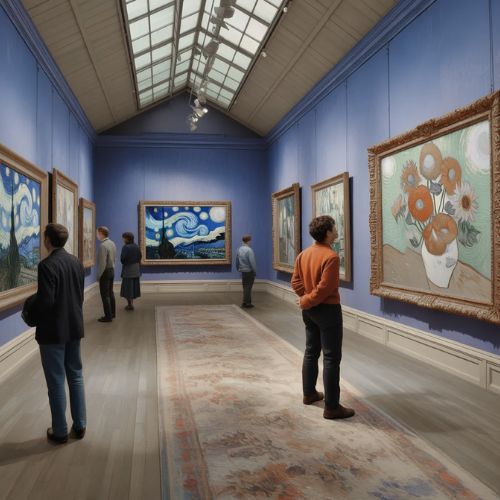
From my perspective as someone deeply engaged with the art gallery world, Kahlo’s influence is impossible to ignore. Visitors often pause longer in front of her paintings than almost any other artist’s work. There is an immediate emotional connection. Her self-portraits, bold colors, and deeply symbolic imagery invite viewers into her inner world in a way that feels both intimate and universal.
What makes Kahlo especially compelling is that her work does not attempt to hide vulnerability. Instead, it confronts it directly. She painted physical pain, emotional turmoil, love, loss, and cultural pride with remarkable honesty. This fearless approach transformed her from simply a painter into a cultural icon whose legacy continues to inspire artists, curators, and collectors today.
In many ways, celebrating Kahlo as an “Artist of the Month” is not just about revisiting her paintings. It is about understanding how her story, her resilience, and her visual language continue to shape modern conversations around art, identity, and representation.
Who Was Frida Kahlo? A Brief Biography
Frida Kahlo was born in 1907 in Coyoacán, a historic neighborhood of Mexico City in Mexico. She grew up in what is now famously known as Casa Azul, a vibrant blue house that today attracts thousands of visitors each year who want to understand the environment that shaped her life and creativity.
Her early years were marked by hardship. At just six years old, Kahlo contracted polio, which left one of her legs weaker than the other. However, the defining moment of her life came at age eighteen when a devastating bus accident left her with multiple fractures and severe injuries. During the long months of recovery, painting became both a therapeutic outlet and a path toward artistic expression.
Kahlo initially aspired to become a doctor, but the accident altered her future. Confined to bed and surrounded by mirrors that allowed her to see herself while painting, she began creating self-portraits. These works were not simply exercises in representation. They were deeply introspective explorations of identity, suffering, and resilience.
Her life was also closely intertwined with that of the renowned Mexican muralist Diego Rivera. The two artists married in 1929, forming one of the most famous—and often turbulent—relationships in art history. Their partnership influenced both their artistic and political lives, embedding Kahlo within the vibrant cultural movements of early twentieth-century Mexico.
The Life Events That Shaped Her Art
Understanding Kahlo’s artwork requires understanding the experiences that shaped her perspective. Unlike many artists who separate personal life from creative output, Kahlo turned nearly every significant moment of her life into visual storytelling.
The bus accident that nearly killed her remained a recurring theme throughout her career. Multiple surgeries and chronic pain followed her for the rest of her life. Rather than hiding this suffering, Kahlo made it a central element of her artistic identity. Many of her paintings depict surgical braces, broken bodies, or symbolic wounds, reflecting both physical and emotional trauma.
Her complicated relationship with Diego Rivera also played a major role in shaping her work. Their marriage was marked by deep love, political collaboration, and numerous betrayals. These emotional highs and lows appear repeatedly in Kahlo’s paintings, where themes of heartbreak, longing, and independence intertwine.
Another important influence was her deep pride in Mexican heritage. Kahlo embraced indigenous clothing, folklore, and cultural symbolism at a time when Mexico was redefining its national identity after the Mexican Revolution. By incorporating traditional dress and imagery into her portraits, she made cultural identity a central part of her artistic voice.
In the gallery world today, this blend of personal narrative and cultural symbolism is often what captivates viewers the most. Kahlo’s paintings feel authentic because they are inseparable from the life she lived.
Frida Kahlo’s Unique Artistic Style and Symbolism
Although Kahlo is sometimes associated with Surrealism, she famously rejected the label. She once stated that she never painted dreams—she painted her own reality. This distinction is important when examining the distinctive style that defines her work.
Her paintings often combine realism with symbolic imagery. At first glance, many of her self-portraits appear straightforward, but closer observation reveals layers of metaphor. Animals, plants, blood, thorns, and traditional objects frequently appear in her compositions, each carrying emotional or cultural meaning.
For example, in Self-Portrait with Thorn Necklace and Hummingbird, Kahlo depicts herself wearing a necklace made of thorns that pierce her skin. The imagery evokes suffering and sacrifice, while surrounding animals and plants suggest themes of protection, transformation, and identity.
Another striking example is The Two Fridas, where two versions of the artist sit side by side, their hearts exposed and connected by a shared artery. The painting is widely interpreted as representing her dual identity—European and Mexican—as well as emotional conflict following her divorce from Rivera.
What makes Kahlo’s visual language so powerful is its clarity. Even viewers unfamiliar with art theory can feel the emotional intensity embedded in her symbolism. In my experience observing gallery visitors, Kahlo’s paintings often provoke immediate questions, reflections, and conversations, which is a hallmark of truly impactful art.
Most Famous Paintings by Frida Kahlo
While Kahlo created around 150 paintings during her lifetime, a handful have become iconic within both museum collections and popular culture. These works capture the emotional depth and symbolic richness that define her legacy.
Among the most celebrated are:
• The Two Fridas – A powerful double self-portrait exploring identity, heartbreak, and cultural duality.
• Self-Portrait with Thorn Necklace and Hummingbird – One of her most recognized works, symbolizing pain, endurance, and spiritual transformation.
• The Broken Column – A haunting image that depicts Kahlo’s body split open, revealing a cracked architectural column in place of her spine.
• Self-Portrait with Cropped Hair – A bold painting reflecting independence and rebellion following her separation from Rivera.
Each of these paintings offers insight into Kahlo’s inner world. They reveal an artist who refused to conceal vulnerability and instead transformed it into visual poetry.
From a gallery perspective, Kahlo’s most famous works also demonstrate something rare: the ability for deeply personal imagery to become universally relatable. Visitors from different backgrounds often find their own emotions reflected in her paintings, which helps explain why her legacy continues to grow with each generation.
Themes in Frida Kahlo’s Work: Identity, Pain, and Culture
One of the most powerful aspects of Frida Kahlo’s paintings is the way they explore deeply personal themes that many viewers recognize within their own lives. Her work consistently reflects three intertwined ideas: identity, physical and emotional pain, and cultural belonging. These themes are not abstract concepts in her art. Instead, they emerge directly from the experiences that defined her life.
Identity is perhaps the most visible element in Kahlo’s paintings. She produced an extraordinary number of self-portraits, often placing herself at the center of symbolic landscapes or surrounded by meaningful objects. These self-portraits were not acts of vanity but acts of self-exploration. Kahlo once explained that she painted herself because she was the subject she knew best. Through this approach, she created an artistic autobiography that unfolded across dozens of paintings.
Pain also appears as a constant motif. After the catastrophic bus accident that left her with lifelong injuries, Kahlo endured numerous surgeries and chronic discomfort. Rather than concealing that suffering, she chose to depict it directly in her art. Paintings like The Broken Column present her body as fractured yet resilient, communicating both vulnerability and strength.
Cultural identity is the third defining theme. Kahlo embraced indigenous Mexican traditions through clothing, hairstyles, and symbolic imagery. Traditional Tehuana dresses appear frequently in her portraits, representing pride in heritage and a connection to the cultural roots of Mexico. These choices were not merely aesthetic; they were statements about identity during a period when Mexico was redefining its national character.
From a gallery perspective, these themes are what continue to make Kahlo’s work so relatable. Visitors often describe feeling as though her paintings speak directly to them, even decades after they were created. That emotional immediacy is a rare quality in art.
Frida Kahlo and Mexican Cultural Identity
Beyond personal storytelling, Kahlo’s work also serves as a celebration of Mexican culture. Her paintings incorporate traditional symbolism, vibrant color palettes, and references to folklore that reflect the spirit of the country she loved.
During the early twentieth century, Mexico was undergoing a cultural renaissance following the Mexican Revolution. Artists were encouraged to celebrate indigenous heritage and national identity through their work. Kahlo became one of the most recognizable figures associated with this movement, though her approach was far more intimate than monumental.
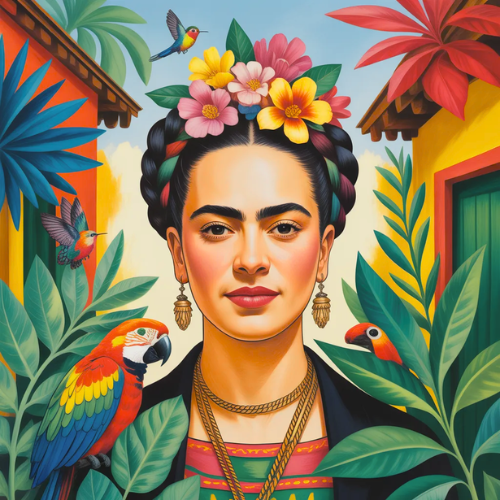
Her husband, Diego Rivera, expressed national identity through massive public murals that depicted workers, farmers, and historical narratives. Kahlo, on the other hand, expressed Mexican identity through the lens of personal portraiture. Her paintings often combine indigenous clothing, tropical plants, and symbolic animals, creating compositions that feel both autobiographical and culturally rooted.
For example, monkeys, parrots, and traditional floral motifs frequently appear in her portraits. These elements reflect the natural environment and spiritual symbolism of Mexico. When displayed in museums today, these details offer viewers insight into the country’s artistic traditions and visual heritage.
Many visitors who encounter Kahlo’s work in galleries later feel inspired to explore Mexico’s art history more deeply. In this sense, Kahlo serves not only as an individual artist but also as an ambassador of cultural identity.
Her Influence on Feminism and Modern Art
Over the past several decades, Frida Kahlo has become an important figure in conversations about feminism and artistic independence. While she did not explicitly label herself a feminist in the modern sense, her work and life story have inspired generations of artists who view her as a symbol of resilience and self-expression.
Kahlo painted subjects that were rarely explored so openly in early twentieth-century art. She depicted miscarriage, infertility, physical disability, emotional heartbreak, and female identity with unflinching honesty. These subjects challenged traditional expectations of what women artists were supposed to paint.
In many ways, Kahlo’s self-portraits redefined how the female body could be represented in art. Instead of presenting idealized beauty, she portrayed herself with realism and strength. Her distinctive unibrow, traditional clothing, and direct gaze rejected conventional standards and emphasized authenticity.
Today, contemporary artists frequently cite Kahlo as an influence when discussing personal narrative in art. Her ability to transform lived experience into visual storytelling paved the way for artists who explore identity, gender, and social issues through deeply personal imagery.
Within the gallery world, Kahlo’s presence has grown significantly in recent decades. Major retrospectives, academic studies, and museum exhibitions continue to revisit her work, highlighting how relevant her themes remain in modern artistic conversations.
Frida Kahlo’s Legacy in Today’s Art World
The legacy of Frida Kahlo extends far beyond the paintings she created during her lifetime. Today, she is widely recognized as one of the most influential artists of the twentieth century.
Her work has become a central feature in major museums, academic research, and international exhibitions. Art historians frequently examine her paintings not only for their aesthetic qualities but also for their psychological depth and cultural significance.
Kahlo’s influence is also visible in contemporary art practices. Many modern painters and photographers explore self-portraiture, identity, and personal narrative in ways that echo Kahlo’s approach. The idea that an artist’s life can be inseparable from their artwork has become a defining characteristic of contemporary creative expression.
Even outside the museum environment, Kahlo’s image has become globally recognizable. Books, documentaries, and exhibitions continue to introduce new audiences to her story. This widespread recognition has helped ensure that her artistic voice remains relevant in cultural conversations about identity, resilience, and creativity.
For art galleries and museums, Kahlo’s work often attracts visitors who might not normally engage deeply with art. Her story is compelling, her imagery is unforgettable, and the emotional honesty of her paintings invites viewers to connect with them on a personal level.
Where to See Frida Kahlo’s Artwork Today
For those who wish to experience Kahlo’s paintings in person, several important museums house her work. Viewing these paintings firsthand offers a completely different experience compared to seeing reproductions in books or online.
One of the most significant locations is Museo Frida Kahlo. Located in her childhood home in Coyoacán, the museum preserves many personal belongings, photographs, and artworks that provide insight into her daily life and creative process.
Another important destination is the Museo de Arte Moderno, which houses several of her major paintings, including the iconic The Two Fridas. Seeing this painting in person allows viewers to appreciate its scale, intricate detail, and emotional intensity.
Her works can also be found in international collections such as the Museum of Modern Art and the Tate Modern, where Kahlo’s paintings are displayed alongside works by some of the most influential artists of the twentieth century.
Visiting these museums offers a deeper understanding of Kahlo’s artistic process and the environment that shaped her creativity. For many art enthusiasts, standing in front of her paintings is an unforgettable experience.
Why Frida Kahlo Is the Perfect “Artist of the Month”
Selecting an “Artist of the Month” is often about highlighting someone whose work continues to inspire meaningful conversation. In that regard, Frida Kahlo stands out as an exceptional choice.
Her life story alone captures attention. From overcoming physical trauma to building a powerful artistic identity, Kahlo’s journey reflects resilience and determination. Yet her importance goes beyond biography. Her paintings demonstrate how art can serve as both personal therapy and cultural expression.
For readers exploring art through an art gallery blog, Kahlo represents an ideal introduction to the power of visual storytelling. Her works are rich with symbolism, emotion, and historical context, making them accessible to both casual viewers and serious art enthusiasts.
In my experience discussing art with gallery visitors, Kahlo’s paintings consistently spark curiosity. People want to understand the meaning behind her imagery, the story behind her life, and the cultural influences that shaped her perspective.
That curiosity is exactly what makes her such a compelling figure to spotlight.
Conclusion
The brilliance of Frida Kahlo lies not only in her technical skill but also in the honesty of her artistic voice. Few artists have transformed personal experience into visual language with such courage and clarity.
Her paintings invite viewers into moments of vulnerability while also celebrating strength, culture, and individuality. They challenge traditional ideas about beauty and storytelling in art, replacing them with something more authentic and deeply human.
More than seventy years after her death, Kahlo’s influence continues to grow. New audiences discover her work each year, and artists around the world continue to draw inspiration from her fearless approach to self-expression.
For anyone exploring the world of art galleries, Kahlo’s legacy serves as a powerful reminder that great art does more than decorate walls. It tells stories, sparks conversations, and reveals the emotional truths that connect us all.