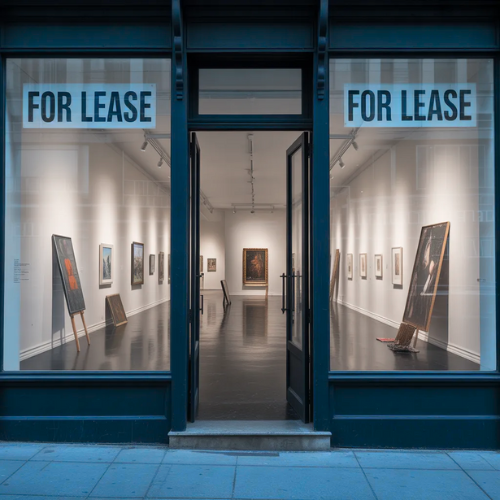
The global art market is a complex ecosystem where galleries, artists, collectors, and investors interact in a delicate balance. Galleries are not merely spaces for displaying art; they act as critical hubs for discovering talent, shaping trends, and connecting creators with collectors. Yet, despite their importance, galleries face increasing pressure, leading to a notable wave of closures across major art capitals. As someone who has been closely involved in the gallery world for over a decade, I have witnessed firsthand how these closures reflect broader shifts in the industry, from evolving collector behaviors to economic instability and technological disruption. Understanding these closures is not only essential for artists navigating their careers but also for collectors, investors, and art enthusiasts who aim to comprehend the forces shaping the contemporary art market.
While some gallery closures are the result of internal mismanagement or financial challenges, many are symptoms of larger systemic changes. The rise of online marketplaces, shifting demographics of collectors, and the increasing dominance of mega-auction houses are reshaping the traditional gallery model. In this article, I will delve into the historical context, the underlying causes, notable recent closures, and their broader impact on the art community. My goal is to provide a comprehensive view that is both informative and actionable for anyone interested in the evolving landscape of global art galleries.
Historical Context: Trends in Gallery Openings and Closures
Galleries have always experienced cycles of expansion and contraction, but the pace and scale of closures have accelerated in recent decades. In the post-World War II era, galleries flourished in cultural hubs such as New York, Paris, and London. These institutions often functioned as incubators for groundbreaking movements, from Abstract Expressionism to Pop Art. Back then, the success of a gallery was closely tied to its ability to cultivate relationships with emerging artists and discerning collectors, a dynamic that allowed even small galleries to exert significant influence in the art world.
However, the late 20th and early 21st centuries brought unprecedented challenges. The globalization of the art market created both opportunities and competition, leading to a crowded landscape in major cities. While some galleries expanded internationally, others struggled to maintain profitability amid rising rents, operational costs, and changing buyer expectations. Historically, a gallery’s closure often signaled more than financial failure; it reflected shifts in artistic trends, collector priorities, and urban development. For instance, the closure of several mid-sized galleries in Chelsea during the 2010s highlighted the combined impact of skyrocketing real estate costs and the migration of younger collectors toward digital and alternative spaces.
Key Factors Behind Major Gallery Closures
Several factors contribute to gallery closures, and these often intersect in complex ways. Economic downturns are an obvious cause. Galleries rely heavily on discretionary spending, and during periods of recession or global uncertainty, collectors often reduce their purchases. The 2008 financial crisis, for instance, forced many well-established galleries to either downsize or shutter completely. Beyond macroeconomic trends, internal business practices such as poor financial management, lack of diversification in represented artists, and inadequate marketing strategies can also precipitate closures.
Shifting collector behavior is another critical factor. The contemporary collector demographic increasingly favors flexibility and convenience, gravitating toward online platforms, art fairs, and auction houses over traditional gallery visits. In addition, younger collectors often prioritize experiential engagement and direct interaction with artists, reducing their reliance on conventional gallery intermediaries. Galleries that fail to adapt to these changing behaviors risk losing relevance, even if they have historically strong reputations.
Technological disruption is an increasingly prominent factor in gallery closures. The rise of online viewing rooms, NFT marketplaces, and virtual exhibitions has reshaped how collectors discover and acquire art. While this shift has opened opportunities for digital-first galleries and hybrid models, it has simultaneously placed traditional galleries under pressure to innovate. Those unable to integrate digital strategies into their operations often find themselves at a disadvantage, leading to dwindling sales and eventual closure.
Notable Recent Gallery Closures Worldwide
Recent years have seen some high-profile closures that illustrate the evolving dynamics of the global art market. In New York, several mid-tier contemporary galleries closed despite decades of operation, citing rising rents in Chelsea and the migration of collectors to more flexible, online-focused art experiences. In London, prominent galleries in the Mayfair district have shuttered due to similar financial pressures, with many artists being forced to seek representation elsewhere.
A particularly illustrative example is the closure of several Tokyo galleries that specialized in emerging contemporary Japanese artists. These galleries faced not only the challenges of high operating costs but also a cultural shift in which younger collectors preferred purchasing through online platforms and international fairs rather than visiting traditional gallery spaces. These cases underscore a broader global trend: even galleries with strong reputations and dedicated followings are not immune to the pressures of a rapidly transforming market.
In addition to regional patterns, closures often reveal the fragility of smaller, niche galleries. Many galleries that focused on experimental or avant-garde art struggled to maintain financial sustainability, despite critical acclaim. This trend highlights the broader tension in the art market between commercial viability and artistic innovation, forcing galleries to make difficult decisions about their future.
Impact on Artists and the Art Community
Gallery closures have profound consequences for artists, particularly those who rely on physical spaces to showcase their work and cultivate a collector base. For emerging artists, losing gallery representation can mean reduced visibility, fewer sales opportunities, and a disruption in career momentum. Even established artists can face challenges, as galleries often provide critical support in marketing, networking, and exhibition planning. When a gallery closes, artists must navigate the daunting task of finding new representation or adapting to alternative models such as online sales, pop-up exhibitions, or direct-to-collector engagement.
The closure of a gallery also affects the broader art community. Galleries serve as hubs for cultural exchange, education, and collaboration. When they disappear, so do opportunities for dialogue, mentorship, and the cultivation of local art ecosystems. For example, in cities like Berlin and Mexico City, several gallery closures over the past decade have disrupted the networks that supported artist residencies, public art programs, and collaborative projects. These closures are not merely financial events—they alter the cultural landscape and influence which voices are amplified within the art world.
Shifts in Collector Behavior and Market Dynamics
The modern art collector is increasingly diverse, tech-savvy, and global in outlook. This shift has contributed to the vulnerability of traditional galleries. Collectors today often seek convenience, immediacy, and access to a wide variety of artworks without geographic constraints. Online viewing rooms, digital art fairs, and curated online marketplaces have reduced reliance on physical gallery visits, even in cities with historically vibrant art scenes.
In addition, the rise of secondary markets, particularly online auctions, has introduced new competition for galleries. Collectors can now access rare works and investment-grade pieces directly, bypassing traditional gallery representation. This trend has created a bifurcation in the market: mega-galleries and auction houses dominate high-value sales, while smaller galleries struggle to sustain operations. Galleries that fail to adapt to these shifts, either by embracing digital tools or offering unique, experiential value, face heightened risk of closure.
Role of Online Platforms and Digital Art Spaces
Digital platforms have emerged as both a threat and an opportunity for galleries. While traditional brick-and-mortar galleries face pressure from reduced foot traffic, online marketplaces allow artists and galleries to reach a global audience. Virtual exhibitions, 3D gallery tours, and NFT-based art sales are changing the way collectors engage with art, democratizing access but also increasing competition.
For instance, platforms such as Artsy, Saatchi Art, and even Instagram have enabled galleries to maintain visibility beyond their physical location. Some galleries have successfully integrated digital strategies by offering hybrid experiences, combining in-person exhibitions with online engagement to expand their reach. However, galleries that resist digital integration often find themselves unable to compete in a rapidly evolving landscape, accelerating the likelihood of closure.
Case Studies of Galleries That Closed and Lessons Learned
Examining specific gallery closures offers valuable insight into broader market dynamics. One notable example is Salon 94 in New York, which after years of operating multiple locations, had to consolidate due to rising costs and shifts in collector behavior. Despite its critical acclaim and strong artist roster, the gallery faced the reality that traditional models were no longer sustainable in high-rent urban centers.
Similarly, Victoria Miro’s smaller satellite spaces in London were eventually closed to focus resources on flagship locations and digital expansion, illustrating a strategic pivot rather than failure. These cases highlight an important lesson: closures do not always indicate mismanagement—they often reflect strategic recalibration in response to evolving market conditions. Galleries that adapt by combining physical presence with digital engagement and flexible business models are more likely to survive long-term.
Future Outlook: Predictions for the Global Art Market
The trajectory of gallery closures suggests that the global art market will continue to consolidate and diversify simultaneously. High-end galleries in major cities are likely to thrive by catering to affluent collectors and leveraging global networks, while mid-sized and niche galleries may face continued pressure unless they innovate. Digital-first galleries, pop-up exhibitions, and collaborative artist-led spaces are emerging as viable alternatives to traditional gallery models.
I anticipate that galleries will increasingly adopt hybrid models, blending physical exhibitions with online visibility, subscription-based collector engagement, and virtual events. Urban art districts may become more curated, focusing on flagship galleries and cultural institutions capable of drawing both local audiences and international visitors. Meanwhile, artists will need to be more proactive, exploring multiple avenues for visibility and sales beyond traditional gallery representation.
Strategies Galleries Are Adopting to Survive
To survive in this evolving market, galleries are employing a range of innovative strategies. Many are diversifying revenue streams by offering art consultancy, online sales, educational programs, and experiential events. Some galleries are embracing collaborative approaches, sharing spaces, resources, and marketing efforts to reduce costs while maintaining visibility.
Additionally, investing in technology has become essential. Galleries now use social media, online viewing rooms, and targeted digital campaigns to engage collectors worldwide. They are also forming partnerships with art fairs, museums, and cultural institutions to maintain relevance and attract diverse audiences. The most successful galleries balance tradition with innovation, maintaining the personal, curated experience collectors expect while leveraging digital tools to expand reach.
Conclusion: What Gallery Closures Reveal About the Art Market
Gallery closures are more than isolated business events—they are indicators of shifting priorities in the global art market. They reflect the evolving dynamics between artists, collectors, and institutions, and highlight the increasing importance of adaptability, innovation, and digital integration. For artists, collectors, and investors, understanding these closures provides insight into broader market trends and emerging opportunities.
While the wave of closures may appear concerning, it also signals transformation. The art market is not shrinking; it is evolving. Galleries that embrace change, focus on value-driven experiences, and adapt to digital and global realities will continue to play a pivotal role in shaping the cultural landscape. By observing these trends closely, I can confidently say that the future of galleries, though different, remains rich with potential for those willing to innovate.