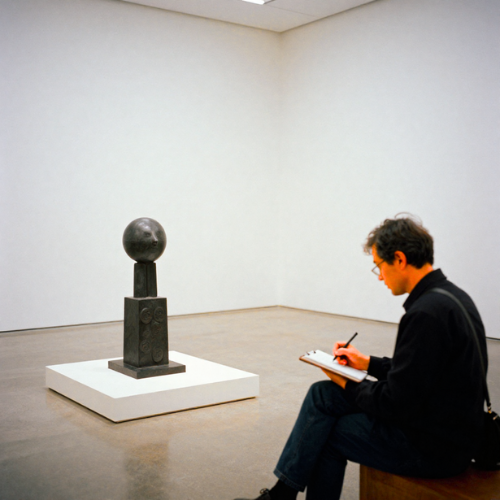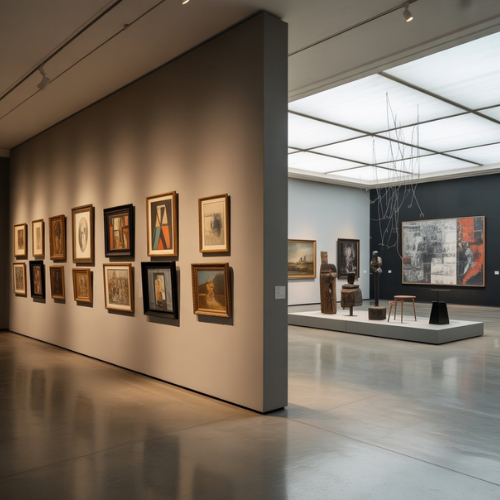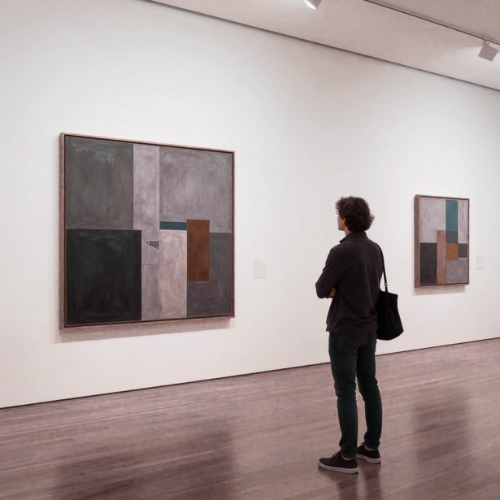
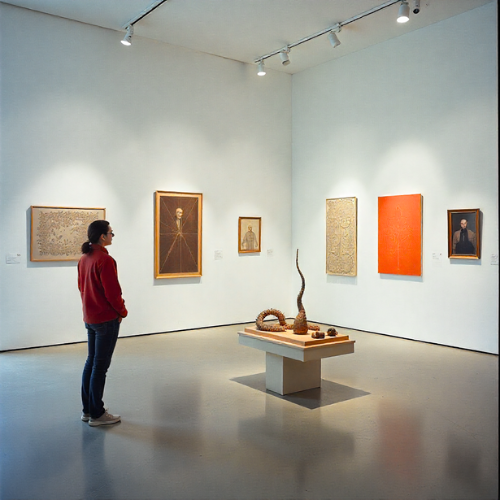
Many visitors walk into a gallery, encounter an abstract installation, and immediately feel uncertain. I see this reaction almost daily. There is often a quiet pressure to “get it right,” as if understanding abstract installations requires special training or insider knowledge. This feeling alone can create distance between the artwork and the viewer before any real engagement begins.
Abstract installations challenge expectations. Unlike traditional paintings or sculptures, they rarely present a clear subject or story. Instead, they invite interpretation, movement, and emotional response. This openness can feel unsettling at first, especially for viewers accustomed to more literal forms of art.
Understanding how to understand abstract installations begins with recognizing that confusion is not failure. In fact, that moment of uncertainty is often the artist’s entry point. It is where curiosity, emotion, and personal reflection begin to take shape.
What an Abstract Installation Really Is
From a professional gallery perspective, an abstract installation is not just an object placed in a room. It is an experience constructed through space, materials, and viewer interaction. The artwork often cannot exist independently of its environment, which is what separates it from more traditional art forms.
An abstract installation may involve unconventional materials, sound, light, or movement. Sometimes it fills an entire room, sometimes it subtly alters how a space feels. What makes it abstract is not the lack of meaning, but the absence of a single, fixed interpretation.
When learning how to understand abstract installations, it helps to think of them as conversations rather than statements. The artist sets the conditions, but the viewer completes the experience through observation and presence.
How Abstract Installations Differ from Paintings and Sculptures
Paintings and sculptures typically present themselves as self-contained objects. You observe them from a distance, often from a fixed viewpoint. Abstract installations, on the other hand, require physical engagement. You walk around them, through them, or even within them.
This shift changes the role of the viewer. Instead of being a passive observer, you become an active participant. Your movement, perspective, and time spent with the work all influence how the installation is understood.
For many people, this is the moment where discomfort arises. The rules feel unclear. However, this is precisely why abstract installations are powerful. They do not dictate meaning; they invite it.
Why Artists Choose Abstraction in Installation Art
Artists often choose abstraction because it allows them to explore ideas that cannot be expressed literally. Emotions, memories, social tensions, and philosophical questions rarely have clear visual forms. Abstraction gives artists freedom to suggest rather than explain.
In installation art, abstraction also allows space itself to become expressive. Walls, floors, shadows, and silence can all communicate meaning. The absence of recognizable imagery encourages viewers to respond intuitively rather than analytically.
When asking how to understand abstract installations, it helps to consider what abstraction offers the artist. It removes limitations and opens the work to multiple interpretations, all of which can coexist without canceling each other out.
Common Misconceptions About Abstract Installations
One of the most common misconceptions I encounter is the belief that abstract installations are intentionally meaningless. This assumption often stems from frustration or insecurity rather than from the artwork itself.
Another misconception is that understanding requires specialized education. While background knowledge can enhance appreciation, it is not a prerequisite. Abstract installations are designed to be experienced, not decoded like puzzles with a single correct answer.
There is also the idea that artists are simply being obscure. In reality, abstraction often comes from deep reflection and intention. The challenge lies not in the absence of meaning, but in the openness of it.
How to Approach an Abstract Installation in a Gallery
When I guide visitors through abstract installations, I encourage them to slow down. The first few seconds rarely reveal much. Meaning emerges through time, movement, and attention.
Start by observing the space as a whole. Notice how the installation interacts with the room. Pay attention to scale, placement, and how your body feels as you move through or around the work.
Then begin to focus on details. Materials, textures, sounds, or light changes often carry emotional or conceptual weight. You do not need to name what you feel immediately. Allow impressions to form naturally.
The Importance of Space and Scale
Space is never neutral in abstract installations. The size of the room, the distance between elements, and the way the viewer navigates the environment are all deliberate choices.
Large-scale installations may evoke feelings of awe, vulnerability, or immersion. Smaller, more intimate works may encourage quiet reflection or careful observation. Scale influences emotion long before interpretation begins.
Understanding how to understand abstract installations requires sensitivity to these spatial cues. Ask yourself how the work makes you move, pause, or adjust your body. These physical responses are often part of the meaning.
Understanding Materials and Mediums
Materials in abstract installations are rarely chosen at random. Industrial objects, organic materials, fragile elements, or everyday items all carry associations that shape interpretation.
For example, rough or decaying materials may suggest impermanence or memory. Reflective surfaces may involve the viewer directly, blurring the line between observer and artwork. Sound or light can create rhythm, tension, or calm.
Instead of asking what the material “represents,” consider what it does. How does it affect the atmosphere? How does it interact with light, sound, or movement? This practical observation often leads to deeper understanding.
How Light, Sound, and Movement Influence Meaning
Many abstract installations rely on elements beyond physical objects. Light may shift throughout the day, sound may respond to movement, and components may change over time.
These elements introduce temporality. The work is not static; it unfolds. Two visitors may have entirely different experiences depending on when and how they encounter the installation.
This is a crucial point in learning how to understand abstract installations. Meaning is not fixed. It evolves with context, presence, and duration. Accepting this fluidity allows the artwork to remain open and alive.
Interpreting Emotion Without Forcing Meaning
One of the most important lessons I share with gallery visitors is that abstract installations are often felt before they are understood. Emotion is not a byproduct of interpretation; it is usually the starting point. If a work makes you uneasy, calm, curious, or energized, that reaction matters.
Many people try to force a literal explanation too quickly. They search for symbols or hidden messages instead of allowing themselves to respond naturally. This approach often leads to frustration, because abstract installations are not designed to deliver clear narratives.
Understanding how to understand abstract installations means trusting emotional responses as valid forms of interpretation. Emotion provides context, direction, and personal relevance, even when the work remains visually ambiguous.
How to Read the Artist’s Intent Without Overthinking
Artist intent plays a role in interpretation, but it should not dominate the experience. I have seen visitors cling too tightly to wall texts or artist statements, fearing they might “miss” the correct meaning.
In reality, many artists intentionally leave space for interpretation. Their intent may guide the framework of the work, but it rarely limits how the work can be understood. Overreliance on explanation can flatten the experience instead of enriching it.
A better approach is to encounter the installation first, then read supporting texts afterward. This allows your own impressions to form before being influenced by external context.
The Role of Curatorial Texts and Wall Labels
Curatorial texts exist to support, not replace, personal engagement. They offer insight into the artist’s process, materials, or conceptual starting point, but they are not instructions on how to feel or think.
When reading a wall label, focus on understanding the conditions under which the work was created. Historical context, social influences, or technical decisions can deepen appreciation without dictating interpretation.
In the process of learning how to understand abstract installations, curatorial texts should be treated as companions, not authorities. They provide clarity, not conclusions.
How Personal Experience Shapes Interpretation
No two viewers encounter an abstract installation in the same way. Personal history, cultural background, and emotional state all influence perception. This diversity of interpretation is not a flaw; it is central to the power of installation art.
I often remind visitors that their response is shaped by who they are and where they are in that moment. An installation that feels overwhelming to one person may feel meditative to another.
Accepting subjectivity removes pressure. You are not meant to see what everyone else sees. You are meant to see what you see.
Cultural and Historical Context Behind Abstract Installations
While abstract installations feel contemporary, they are deeply connected to historical movements. Minimalism, conceptual art, and postmodern practices all influence how installations are conceived and presented.
Cultural context also plays a role. Artists respond to social issues, political climates, and collective experiences, often using abstraction to address complex themes without direct representation.
Understanding how to understand abstract installations becomes easier when you recognize that abstraction is often a response to reality, not an escape from it.
Questions to Ask Yourself While Viewing
Asking the right questions can open interpretation without limiting it. Instead of asking, “What is this supposed to be?” try asking, “What is happening here?” or “How does this space affect me?”
Other useful questions include how your movement changes the experience, what elements feel intentional, and where your attention naturally goes. These questions encourage awareness rather than judgment.
There are no wrong answers. The value lies in the act of questioning itself.
How to Talk About Abstract Installations with Confidence
Confidence does not come from having the “right” interpretation. It comes from being able to articulate your experience clearly and honestly.
When discussing abstract installations, describe what you notice before explaining what you think it means. Talk about materials, scale, atmosphere, and emotional response. This approach grounds your interpretation in observation.
Using language like “I felt,” “I noticed,” or “It reminded me of” signals engagement rather than uncertainty. This is how professionals speak about abstract art, even when interpretations differ.
Famous Abstract Installations and How to Understand Them
Many well-known abstract installations initially confused audiences. Over time, they became landmarks because of how they transformed space and perception.
These works often share common traits: immersive environments, unconventional materials, and an emphasis on experience over explanation. Studying them reveals that confusion is often part of the intended journey.
Rather than seeking definitive meanings, observe how these installations invite attention, presence, and reflection.
Mistakes Beginners Often Make
One common mistake is rushing through the experience. Abstract installations reward time and patience. A brief glance rarely reveals much.
Another mistake is assuming complexity equals importance. Some installations are subtle, quiet, and restrained. Their impact unfolds slowly, through sustained engagement.
Finally, many viewers dismiss their own reactions too quickly. Doubting your response limits understanding more than any lack of knowledge.
How Understanding Abstract Installations Deepens Art Appreciation
Once viewers learn how to approach abstract installations, their relationship with art changes. They become more open, attentive, and curious across all forms of contemporary art.
Abstract installations train perception. They sharpen awareness of space, material, and emotion. This sensitivity carries into how other artworks are experienced and understood.
In this sense, learning how to understand abstract installations is not just about one art form. It is about developing a deeper, more confident way of seeing.
Final Thoughts on Trusting Your Perception
After years of working in galleries, I can say with certainty that the most meaningful encounters with abstract installations happen when viewers let go of certainty and lean into experience.
You do not need permission to interpret. You do not need to reach a conclusion. Presence, curiosity, and honesty are enough.
Understanding how to understand abstract installations is ultimately about learning to trust your perception. When you do, abstract art stops feeling distant and begins to feel personal.