Preparing a canvas properly is one of the most overlooked steps in acrylic painting, yet it is the foundation of every successful artwork I’ve seen in professional gallery settings. Many beginners rush straight into painting, unaware that the surface beneath their brush plays a major role in how the final piece looks, feels, and lasts over time.
From years of working with acrylic paintings—both fresh works and older pieces that have stood the test of time—I can confidently say that preparation determines paint adhesion, color vibrancy, and durability. Acrylic paint is forgiving, but it still demands a stable, well-prepared surface to perform at its best.
Understanding how to prepare a canvas for acrylic painting is not about being overly technical. It’s about creating the right conditions so the paint behaves predictably, layers smoothly, and remains stable for years to come.
What Does Preparing a Canvas Actually Mean?
Canvas preparation refers to treating the surface so it is suitable for paint application. This usually involves priming, sealing, and sometimes sanding the canvas to achieve a controlled texture. Even canvases sold as “ready to use” often benefit from additional preparation.
A raw canvas is highly absorbent. If acrylic paint is applied directly to untreated fabric, the paint sinks into the fibers, resulting in dull colors and weakened paint layers. Over time, this can cause cracking, discoloration, or premature aging.
Preparing the canvas creates a barrier between the fabric and the paint. This barrier allows acrylic paint to sit on the surface rather than soak in, preserving color intensity and structural integrity.
Types of Canvases Used for Acrylic Painting
Not all canvases behave the same, and understanding the type you’re working with helps determine how much preparation is needed. In gallery practice, the most common options include cotton canvas, linen canvas, and canvas panels.
Cotton canvas is widely used and affordable, making it popular among beginners. It is flexible and easy to work with, but it tends to be more absorbent and benefits greatly from additional priming.
Linen canvas is considered a professional-grade surface. It is stronger, less prone to sagging, and naturally smoother. While linen is often pre-primed, it still responds well to further preparation when a refined surface is desired.
Canvas panels, which are canvas sheets mounted on boards, are already rigid. They require less structural preparation but still benefit from surface priming to control absorbency and texture.
Should You Prepare a Pre-Primed Canvas?
Many artists assume that pre-primed canvases are ready for immediate use. While technically true, this approach often limits the quality of the finished painting. Factory-primed canvases are designed for convenience, not optimal performance.
In my experience, adding at least one or two extra layers of gesso improves paint flow and surface consistency. Factory primer layers are often thin and uneven, leaving visible fabric texture that can interfere with detail work.
Preparing a pre-primed canvas gives the artist control. It allows you to customize the surface depending on whether you prefer a smooth finish for detailed work or a more textured surface for expressive brushstrokes.
Essential Materials Needed to Prepare a Canvas
Preparing a canvas for acrylic painting does not require expensive or complicated tools. Most of what’s needed is easily accessible and used regularly in professional studios.
Acrylic gesso is the most important material. It acts as a primer and sealant, creating a stable painting surface. White gesso is standard, but tinted gesso can also be used for specific artistic effects.
A wide, flat brush or foam roller is ideal for applying gesso evenly. Sandpaper, typically fine-grit, helps smooth the surface between layers. A clean cloth or soft brush is useful for removing dust before painting begins.
Step-by-Step Guide: How to Prepare a Canvas for Acrylic Painting
The preparation process begins with placing the canvas on a flat surface. If the canvas is stretched, it should be properly tensioned before priming to avoid cracking later.
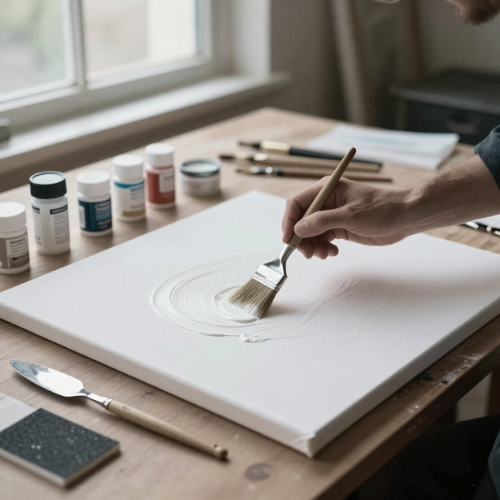
The first layer of gesso should be applied in thin, even strokes. I recommend brushing in one direction and allowing the layer to dry completely. This initial coat seals the canvas and prevents paint absorption.
Once dry, lightly sanding the surface removes raised fibers and brush marks. Additional layers of gesso can then be applied, alternating brush direction between coats for a balanced surface.
Each layer should dry fully before adding the next. Rushing this process often leads to uneven textures and compromised adhesion.
How Many Layers of Gesso Should You Apply?
There is no universal rule, but professional practice offers clear guidelines. For most acrylic paintings, two to three layers of gesso provide a reliable and versatile surface.
If a smoother, more refined surface is desired—especially for detailed or realistic work—additional layers with light sanding between each coat can create a near-velvet finish.
For expressive or textured painting styles, fewer layers may be preferable. The key is understanding that each layer of gesso increases control over how acrylic paint interacts with the surface
Drying Time and Sanding: Achieving a Professional Surface
Drying time is often underestimated when preparing a canvas for acrylic painting. In professional practice, patience at this stage directly affects the quality of the final surface. Gesso may feel dry to the touch within minutes, but it continues to cure beneath the surface for much longer.
Allowing each layer of gesso to dry fully prevents peeling, cracking, or uneven absorption later. I typically allow at least 30 minutes between thin coats, and longer if the environment is humid or cool. Rushing this step often results in a surface that behaves unpredictably once paint is applied.
Sanding between layers is what elevates a prepared canvas from amateur to professional. Light sanding smooths out brush strokes and raised fibers, creating a surface that responds beautifully to acrylic paint. The goal is not to remove the gesso, but to refine it.
Common Mistakes to Avoid When Preparing a Canvas
One of the most common mistakes is applying gesso too thickly. Heavy layers dry unevenly and can crack over time, especially on stretched canvases. Thin, controlled layers always outperform thick applications.
Another frequent issue is skipping sanding altogether. While not mandatory, sanding dramatically improves surface quality. Artists who struggle with paint drag or uneven blending often discover the problem lies in poor surface preparation.
Painting on damp gesso is another mistake that compromises results. Acrylic paint applied before the gesso has cured can bond improperly, leading to dull colors and reduced longevity.
How Canvas Preparation Affects Acrylic Paint Longevity
From a gallery perspective, longevity is not optional. Properly prepared canvases protect acrylic paintings from long-term deterioration. Gesso acts as a protective barrier that prevents acids in the fabric from migrating into the paint layers.
Acrylic paint is flexible, but it still relies on a stable foundation. When applied to a poorly prepared surface, it becomes vulnerable to cracking, flaking, and discoloration over time.
Paintings that have been properly prepared age more gracefully. Colors remain vibrant, layers stay intact, and the artwork maintains its structural integrity even decades later.
Preparing Different Canvas Textures for Acrylic Painting
Not every painting requires a smooth surface. Texture plays a significant role in artistic expression, and canvas preparation should reflect the intended outcome.
For smooth, detailed work, multiple layers of gesso with careful sanding produce an even, controlled surface. This approach is often used for portraits, realism, or fine detail.
For expressive or abstract work, allowing some of the canvas texture to remain visible can enhance brushwork and movement. In these cases, fewer gesso layers or textured application techniques can be intentionally used.
When Not to Use Gesso
While gesso is standard for acrylic painting, there are specific situations where it may be avoided. Some artists intentionally paint on raw canvas to achieve a staining or soaking effect.
This approach requires experience, as unprimed canvas absorbs paint quickly and permanently. The resulting look can be beautiful but is difficult to control and offers little room for correction.
In gallery settings, raw canvas works are typically sealed after completion to prevent long-term damage. Without proper sealing, such paintings are far more vulnerable to environmental factors.
Professional Tips from Art Gallery Practice
In professional studios, canvas preparation is never rushed. It is treated as part of the creative process, not a chore to get through. The surface sets the tone for everything that follows.
Testing the surface before committing to a painting is another professional habit. A few brushstrokes with acrylic paint can quickly reveal whether the canvas is ready or needs additional refinement.
Labeling prepared canvases with the number of gesso layers and preparation date is a small practice that helps maintain consistency across multiple works, especially in series.
Frequently Asked Questions About Preparing a Canvas for Acrylic Painting
Many artists wonder if sanding is absolutely necessary. While not required, sanding significantly improves surface quality and paint control, especially for detailed work.
Another common question concerns tinted gesso. Using tinted gesso can reduce glare and influence color harmony, making it a valuable tool rather than a shortcut.
Artists also ask whether old canvases can be re-prepared. In most cases, lightly sanding and re-priming an unused or lightly painted canvas restores it for new work.
Final Thoughts: Creating a Strong Foundation for Acrylic Artwork
Learning how to prepare a canvas for acrylic painting is one of the most valuable skills an artist can develop. It directly influences how the paint behaves, how the artwork looks, and how long it lasts.
In gallery environments, the difference between a well-prepared canvas and a neglected one is immediately visible. The surface speaks before the subject does.
By approaching canvas preparation with care and intention, artists give their work the foundation it deserves. A strong surface allows creativity to flourish without technical limitations.