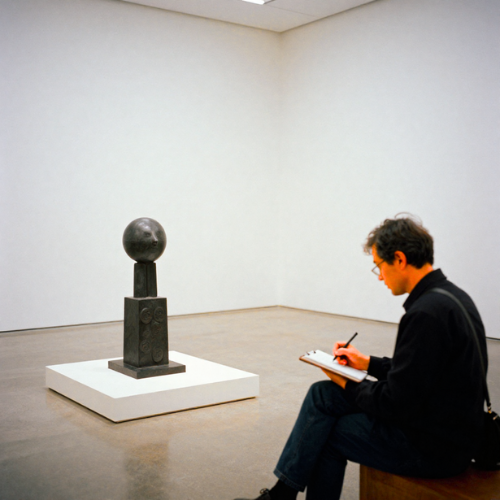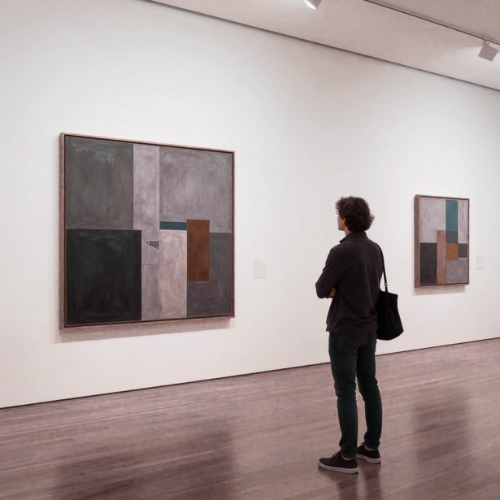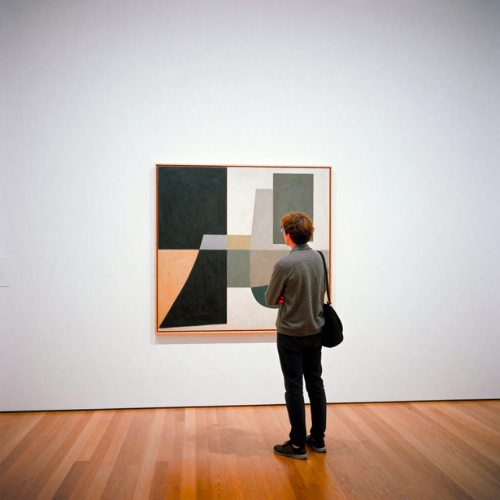
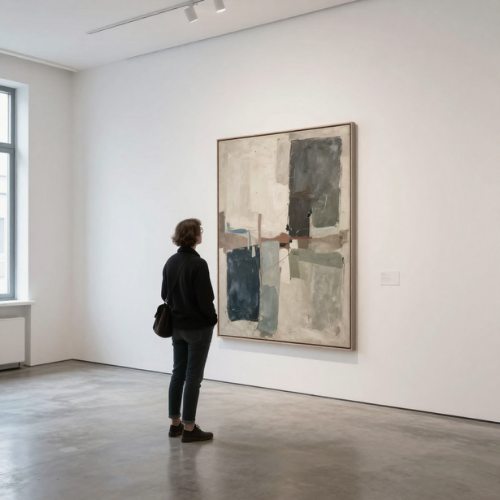
I have spent years walking people through galleries, and one reaction comes up again and again: hesitation. Many visitors pause in front of a modern artwork, unsure of what they are supposed to feel or understand. This confusion is not a failure on the viewer’s part. It is a natural response to art that does not explain itself in obvious ways.
Modern art often removes familiar visual anchors. There may be no clear subject, no realistic figures, or no recognizable scene. For someone without formal art experience, this can feel alienating. People worry about “getting it wrong,” which instantly shuts down curiosity.
What most first-time viewers do not realize is that modern art was never meant to be decoded like a puzzle. It was created to be experienced. Once that mental shift happens, interpretation becomes far more accessible and even enjoyable.
What Modern Art Really Means (In Simple Terms)
Modern art does not mean “art that looks strange” or “art that anyone could make.” In professional terms, modern art refers to a period and mindset where artists intentionally broke away from traditional rules of realism, technique, and subject matter.
Instead of copying the visible world, modern artists focused on ideas, emotions, reactions, and concepts. They explored how art could communicate feelings rather than facts. This is why modern artworks can look abstract, minimal, or unconventional.
Understanding this context matters because it removes pressure. When you stop expecting modern art to explain itself visually, you start engaging with it emotionally and intellectually, which is exactly where interpretation begins.
Why You Don’t Need Art Training to Understand Modern Art
One of the biggest misconceptions I encounter in galleries is the belief that interpretation requires education. In reality, professional training refines perspective, but it does not replace personal response.
Modern art invites the viewer into a dialogue. The artist offers a visual statement, and the viewer completes it with their own thoughts, memories, and emotions. This exchange does not require terminology or historical knowledge.
In fact, viewers without formal training often respond more honestly. They are less constrained by rules and more open to intuitive reactions, which are incredibly valuable when interpreting modern art.
Common Myths That Make People Overthink Modern Art
Several myths actively block understanding, and I see them play out daily in gallery spaces.
One common myth is that modern art has one “correct” meaning. In truth, many modern works are intentionally open-ended. Multiple interpretations are not only allowed, they are expected.
Another myth is that if an artwork looks simple, it must be meaningless. Simplicity in modern art is often deliberate. Reducing visual elements can intensify emotional impact or conceptual clarity.
There is also the belief that artists are “tricking” viewers. This idea creates unnecessary defensiveness. Most modern artists are not trying to confuse audiences; they are inviting deeper engagement beyond surface-level visuals.
Start With What You See, Not What You Think You Should Know
The most effective way to interpret modern art without experience is to begin with observation. This step is often skipped because people rush to meaning instead of presence.
I always recommend starting with basic questions:
-
What colors dominate the piece?
-
Are the shapes sharp or soft?
-
Does the artwork feel chaotic or calm?
By grounding interpretation in visual facts, you create a stable foundation. From there, emotional and conceptual responses naturally follow.
This approach removes intimidation and replaces it with curiosity. You are not guessing; you are responding.
How to Read Emotions, Mood, and Atmosphere in Modern Art
Modern art communicates emotion more than narrative. The mood of a piece is often more important than its subject.
Color plays a major role. Dark tones may suggest heaviness or introspection, while bright or contrasting colors can evoke energy, tension, or optimism. Scale also matters. Large works can feel overwhelming or immersive, while smaller ones may feel intimate or restrained.
Texture and movement contribute as well. Thick brushstrokes, rough materials, or aggressive lines often carry emotional intensity. Smooth surfaces and repetition can suggest control or stillness.
When interpreting emotion, trust your reaction. If a piece makes you uncomfortable, curious, calm, or unsettled, that response is meaningful.
Understanding the Artist’s Intention Without Research
Many people assume interpretation requires reading wall text or researching the artist. While background information can add depth, it is not a requirement.
Artist intention is often embedded visually. Choices like composition, materials, and repetition are rarely accidental. Ask yourself why the artist might have chosen this approach instead of another.
Consider the time spent with the artwork. Some pieces reveal themselves slowly. Spending a few uninterrupted minutes can offer insight that labels never provide.
Modern art rewards attention. The more present you are, the clearer the intention becomes.
How Color, Shape, and Space Communicate Meaning
Modern artists rely heavily on visual language. Understanding this language does not require theory, only awareness.
Color can symbolize emotion, conflict, harmony, or isolation. Shape can suggest stability, chaos, softness, or rigidity. Space, especially negative space, often communicates absence, silence, or focus.
Notice relationships between elements. Are shapes crowded or isolated? Does color clash or blend? Is the composition balanced or intentionally unstable?
These visual decisions guide interpretation subtly. By paying attention to them, meaning begins to form naturally.
Using Personal Experience as a Valid Interpretation Tool
One of the most overlooked tools in interpreting modern art is personal experience. Viewers often assume their background is irrelevant, especially if they have never studied art. In reality, personal history is one of the strongest interpretive lenses available.
Modern art often functions like a mirror. It reflects emotion, memory, tension, or silence in ways that resonate differently with each person. What you bring into the gallery space—your experiences, cultural references, and emotional state—actively shapes meaning.
If a piece reminds you of a place, a moment, or a feeling, that connection matters. Interpretation is not about distancing yourself from the work; it is about allowing it to meet you where you are.
Questions to Ask Yourself When Viewing Modern Art
Asking the right questions transforms confusion into clarity. These questions are not academic; they are practical and intuitive.
Start with simple prompts:
-
How does this artwork make me feel?
-
What draws my attention first?
-
Do I feel pushed away or pulled in?
Then move deeper:
-
Does this piece feel loud or quiet?
-
Does it suggest movement or stillness?
-
What might the artist be responding to emotionally or socially?
There are no wrong answers here. These questions exist to slow you down and encourage active engagement rather than passive judgment.
Examples: Interpreting Modern Art Step by Step
I often guide visitors through interpretation by breaking the process into manageable steps.
First, observe without judgment. Notice color, scale, material, and form. Avoid assigning meaning too quickly.
Second, acknowledge emotional response. Whether the reaction is curiosity, discomfort, or indifference, it provides valuable information.
Third, connect visually and emotionally. Ask how the visual elements create that reaction. This is where interpretation begins to take shape.
Finally, reflect. Meaning does not always appear instantly. Sometimes it settles in after you walk away, which is perfectly normal with modern art.
How Galleries Expect Viewers to Engage With Modern Art
Many people believe galleries expect silence, expertise, or reverence. In professional gallery settings, engagement is far more important than correctness.
Curators design spaces to encourage contemplation, not intimidation. Walking back and forth, revisiting a piece, or spending extended time with one artwork is encouraged.
Modern art is not meant to be consumed quickly. Galleries anticipate that some works will challenge viewers and others will resonate immediately. Both responses are valid and anticipated.
What Art Experts Do Differently (And What You Can Copy)
Experts do not approach modern art with certainty. They approach it with patience and openness.
One key difference is time. Professionals spend longer with each work. Even a few extra minutes can significantly change perception.
Another difference is comfort with ambiguity. Experts accept that not all meaning needs to be resolved. You can adopt this mindset immediately by allowing questions to remain unanswered.
Interpretation improves through exposure, not instruction. The more modern art you see, the more confident your responses become.
Mistakes Beginners Make When Interpreting Modern Art
The most common mistake is trying to impress rather than engage. Viewers sometimes search for complex explanations instead of honest reactions.
Another mistake is dismissing emotional responses as irrelevant. Feeling confused, unsettled, or intrigued is part of the experience, not a sign of failure.
Rushing is also a problem. Modern art rarely reveals itself at a glance. Slowing down often changes everything.
Avoiding these habits makes interpretation more intuitive and rewarding.
How to Build Confidence When Viewing Modern Art Over Time
Confidence comes from repetition, not knowledge. Each gallery visit strengthens visual literacy and emotional awareness.
Start by revisiting artists or styles that resonate with you. Familiarity builds trust in your instincts.
Over time, you will notice patterns, preferences, and recurring themes that make interpretation feel natural rather than forced.
Confidence in modern art is not about certainty. It is about comfort with your perspective.
Conclusion: Trusting Your Perspective in Modern Art
Learning how to interpret modern art without experience begins with letting go of fear. Modern art does not demand expertise; it invites attention.
Your reactions, emotions, and interpretations are not secondary to professional opinions. They are central to the experience.
Modern art exists to be engaged with, questioned, and felt. When you trust your perspective, interpretation stops being intimidating and starts becoming deeply personal and rewarding.