Many artists believe visual composition is something you either “have” or you do not. After years of working with paintings, photographs, and mixed-media works inside gallery spaces, I can confidently say that this belief is one of the biggest obstacles to artistic growth. Visual composition is not a mysterious gift. It is a trainable skill, shaped by observation, repetition, and intentional study.
When people search for how to improve your sense of visual composition, they are usually not asking for abstract theory. They want clarity. They want to understand why certain artworks feel powerful and balanced while others feel confusing or flat. Composition is the silent language behind those feelings, and like any language, it can be learned.
Improving composition does not start with rules. It starts with awareness. Once the eye is trained to recognize how elements interact within a frame, decision-making becomes instinctive rather than forced. That is when composition stops feeling technical and starts feeling natural.
What Visual Composition Really Means in Fine Art
Visual composition refers to how elements are arranged within a work of art to create meaning, harmony, tension, or movement. This includes placement, spacing, scale, direction, and relationships between visual components. In a gallery setting, composition is often what determines whether a viewer pauses or walks past.
Composition is not about decoration. It is about intention. Every element included in a piece should serve a purpose, whether that purpose is emotional, narrative, or structural. Strong composition allows the artist to communicate without explanation.
From experience, the most compelling artworks are not necessarily the most detailed or technically complex. They are the ones where nothing feels accidental. When composition is working, the viewer senses coherence even if they cannot explain why.
How the Human Eye Reads an Image
Understanding how the eye moves across an image is essential if the goal is to improve visual composition. The human eye does not scan artwork randomly. It seeks contrast, follows lines, and responds to visual weight almost instinctively.
High contrast areas tend to attract attention first. From there, the eye looks for pathways, whether created by lines, shapes, or directional movement within the piece. This journey determines how the artwork is experienced emotionally and intellectually.
In gallery environments, I often observe viewers standing longer in front of works that guide their gaze smoothly rather than overwhelm it. Good composition respects the viewer’s visual rhythm. It allows the eye to explore without confusion, leading to deeper engagement.
The Core Principles That Shape Strong Visual Composition
Certain principles consistently appear in successful compositions, regardless of style or medium. These include balance, contrast, emphasis, movement, unity, and proportion. They are not rigid rules but foundational concepts that support clarity.
Balance does not always mean symmetry. In fact, many dynamic compositions rely on asymmetrical balance, where visual weight is distributed unevenly but intentionally. Contrast helps define focal points, while unity ensures that all elements feel connected rather than scattered.
What matters most is not memorizing these principles, but learning to recognize them in practice. The more time spent analyzing how artists apply these ideas, the more naturally they appear in one’s own work.
Understanding Balance, Rhythm, and Visual Weight
Visual balance is about how elements “feel” within a composition, not how they measure. Large shapes, bold colors, or dense textures carry more visual weight than subtle or minimal elements. Knowing how to distribute this weight is key to controlling attention.
Rhythm in composition works much like rhythm in music. Repetition, variation, and spacing create a sense of flow that keeps the viewer engaged. Without rhythm, a composition can feel static or lifeless.
In gallery curation, works with a strong sense of rhythm often feel more immersive. The viewer’s eye moves comfortably through the piece rather than stopping abruptly. This flow is one of the clearest signs of a well-developed compositional sense.
How Master Artists Use Composition to Control Attention
Master artists rarely leave composition to chance. Even when a work appears spontaneous, there is often a carefully constructed underlying structure guiding the viewer’s experience. This is true across classical painting, modern abstraction, and contemporary installation art.
Composition allows artists to decide what is seen first, what is seen last, and what may be overlooked entirely. This control over attention is powerful. It shapes narrative, emotion, and interpretation without a single word being spoken.
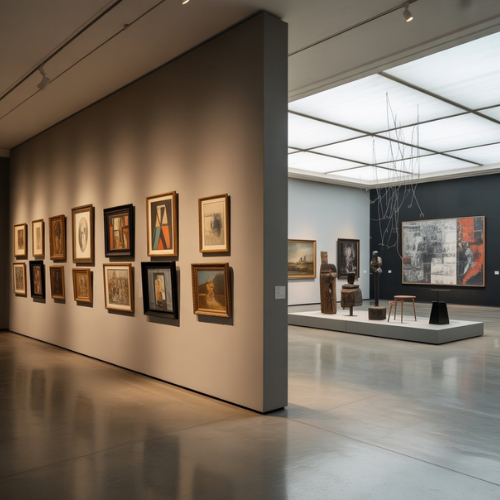
Studying masterworks inside galleries reveals how subtle these decisions can be. A slight shift in placement or scale can completely change the emotional impact of a piece. Observing these nuances is one of the fastest ways to improve visual composition skills.
The Role of Space: Positive Space vs. Negative Space
Space is one of the most misunderstood elements of visual composition. Positive space refers to the main subjects, while negative space refers to the areas around and between them. Both are equally important.
Negative space is not empty space. It gives breathing room, emphasizes form, and allows the composition to feel intentional rather than crowded. Many emerging artists struggle because they focus only on objects, not the space surrounding them.
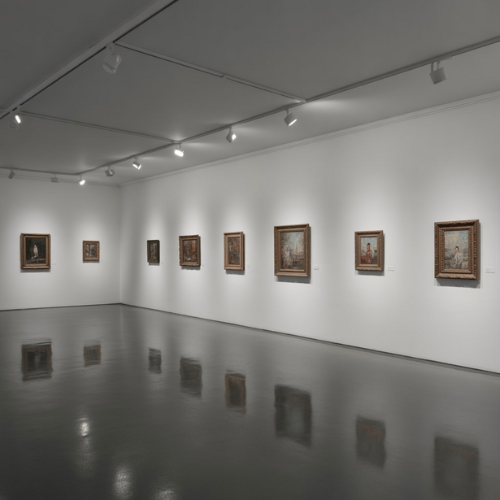
In gallery contexts, artworks with confident use of negative space often feel more refined and deliberate. Learning to see space as an active component rather than a leftover area is a major step toward improving your sense of visual composition.
Color, Contrast, and Their Impact on Composition
Color is one of the most immediate forces in visual composition. It attracts attention, creates hierarchy, and influences emotional response long before a viewer consciously analyzes an artwork. When thinking about how to improve your sense of visual composition, understanding color relationships is essential.
Contrast in color does more than make elements stand out. It defines structure. High-contrast areas naturally become focal points, while low-contrast zones allow the eye to rest. This push and pull is what gives a composition visual energy.
In gallery spaces, I often see viewers drawn first to color relationships before subject matter. Artists who understand how to balance bold and muted tones are able to guide attention without overwhelming the viewer. Color, when used intentionally, becomes a compositional tool rather than decoration.
Using Lines, Shapes, and Patterns to Guide the Viewer’s Eye
Lines are among the most powerful compositional elements available to an artist. Whether literal or implied, they direct movement and influence how an image is read. Horizontal lines suggest calm, vertical lines convey strength, and diagonal lines introduce tension or motion.
Shapes act as visual anchors. Repeating shapes can create harmony, while contrasting shapes introduce interest and complexity. Patterns, when used thoughtfully, establish rhythm and reinforce cohesion within a composition.
From years of observing artwork in gallery environments, it is clear that strong compositions rarely rely on isolated elements. They use relationships between lines, shapes, and patterns to quietly guide the viewer through the piece.
How Studying Art in Galleries Improves Compositional Awareness
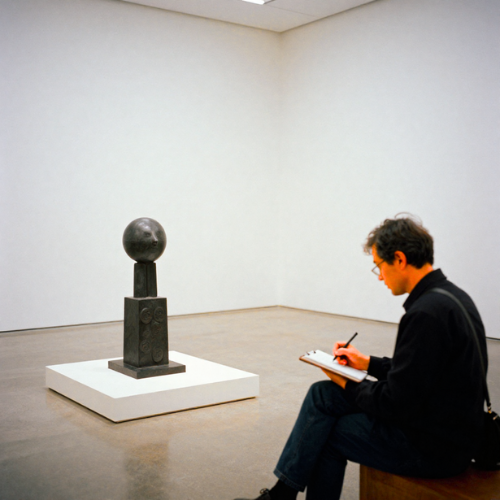
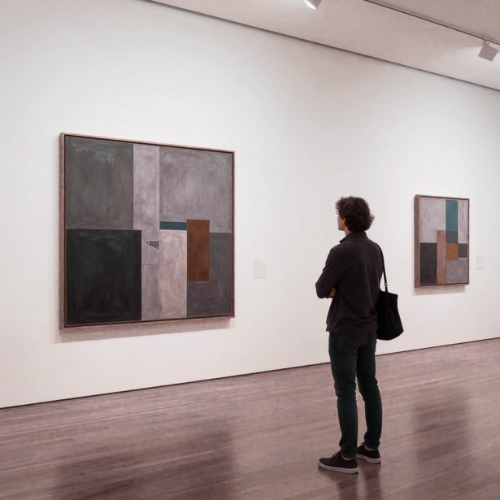
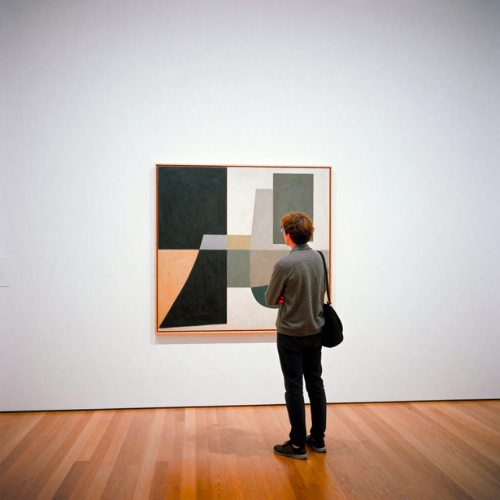
One of the most effective ways to improve visual composition is by studying original artwork in person. Galleries provide a controlled environment where composition can be observed without digital distortion or distraction.
Standing in front of an artwork allows the eye to experience scale, spacing, and balance as the artist intended. Small compositional decisions that may go unnoticed online become obvious in physical space.
I often encourage artists to spend time not just looking at art, but analyzing it. Asking simple questions like where the eye goes first or why a piece feels balanced can dramatically sharpen compositional awareness over time.
Practical Exercises to Improve Your Sense of Visual Composition
Improving composition requires active practice, not passive consumption. One effective exercise is to limit a composition intentionally, using only a few shapes or colors. Constraints force clarity and reveal compositional weaknesses quickly.
Another valuable practice is thumbnail sketching. Small, quick sketches allow experimentation without attachment. This helps train the eye to recognize balance, flow, and focal points instinctively.
In gallery education settings, these exercises consistently produce noticeable improvement. The key is repetition. Composition strengthens through frequent, low-pressure practice rather than occasional perfection-driven efforts.
Common Composition Mistakes and How to Avoid Them
One of the most common mistakes is overcrowding the frame. Including too many focal points dilutes impact and confuses the viewer. Strong composition often involves subtraction rather than addition.
Another frequent issue is unintentional symmetry or imbalance. When elements are placed without purpose, the composition can feel stiff or awkward. Every placement should feel deliberate.
Awareness is the solution. Reviewing work with a critical eye, stepping back physically, or viewing a piece in a mirror can quickly reveal compositional problems that were invisible during creation.
Training Your Eye: How Often You Should Practice Composition
Visual composition improves through consistent exposure and reflection. Even short daily observation sessions can be more effective than infrequent, long study periods.
Looking at everyday environments through a compositional lens helps build instinct. Light, shadow, spacing, and contrast are present everywhere, not just in artworks.
In my professional experience, artists who develop a habit of seeing composition beyond the studio progress faster and with more confidence. The eye learns through use, just like any other skill.
Applying Visual Composition Across Different Art Mediums
Composition principles remain consistent across painting, photography, sculpture, and digital art, even though their applications differ. Understanding this flexibility strengthens overall artistic control.
A painter may rely on color and brushwork, while a photographer uses framing and light. A sculptor considers physical space and viewer movement. Despite these differences, composition remains the foundation.
Developing compositional awareness across mediums sharpens adaptability. It also reinforces the idea that composition is not medium-specific, but vision-specific.
Conclusion: Developing a Lifelong Eye for Composition
Learning how to improve your sense of visual composition is not a one-time achievement. It is an ongoing process shaped by observation, practice, and refinement.
The most successful artists I have encountered are not those who follow rules rigidly, but those who understand composition deeply enough to bend it with confidence. This level of understanding comes from patience and commitment.
Composition is ultimately about clarity. When the artist knows what they want to communicate and arranges elements with intention, the work speaks for itself. That is the goal every time a piece is placed on a gallery wall.