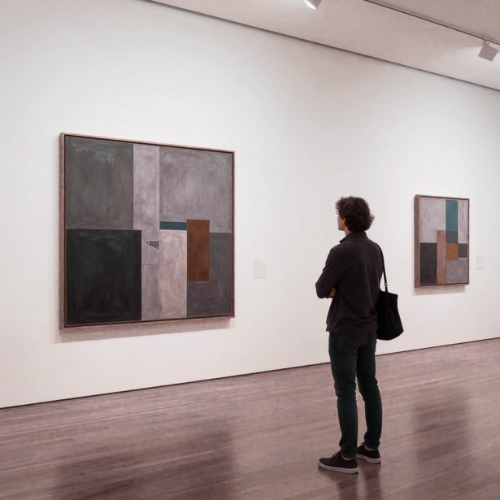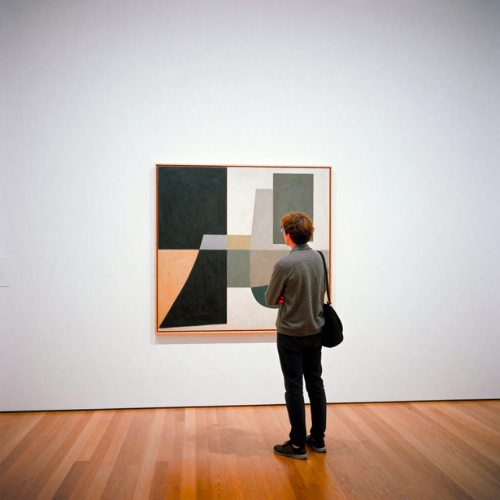
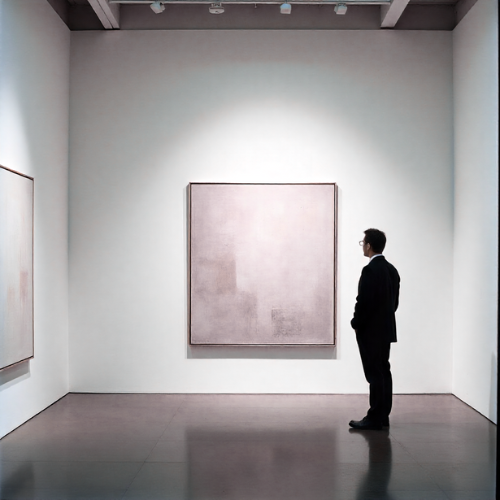
After years of working closely with paintings in gallery spaces, I’ve learned one important truth: most great artworks are not meant to be taken at face value. Paintings often speak quietly, using visual language instead of words. What appears decorative or purely aesthetic at first glance frequently carries deeper meaning beneath the surface.
Artists across history have relied on symbolism, subtle references, and visual cues to communicate ideas that could not always be expressed openly. Sometimes this was due to political pressure, religious censorship, or social expectations. Other times, it was simply a way to reward attentive viewers with a richer experience.
Understanding how to decode hidden messages in paintings transforms the act of looking into an act of discovery. Instead of asking whether a painting is “beautiful,” the viewer begins to ask what the painting is trying to say.
What Hidden Messages in Paintings Really Mean
Hidden messages in paintings are not secrets in the cinematic sense. They are visual ideas embedded intentionally through symbols, colors, composition, and subject matter. These messages often reflect the artist’s beliefs, fears, critiques, or personal experiences.
In gallery settings, I often see visitors assume that hidden meanings require advanced academic knowledge. In reality, decoding paintings starts with observation rather than expertise. Artists leave clues in plain sight, but those clues require patience and context to interpret correctly.
A skull resting quietly on a table, for example, is rarely just a skull. Historically, it has symbolized mortality, the passage of time, or the fragility of human life. These visual messages rely on shared cultural understanding rather than written explanation.
Why Artists Embed Hidden Meanings in Their Work
Artists embed hidden messages for many reasons, and understanding those motivations helps decode the artwork more accurately. In earlier centuries, painters often worked under powerful institutions such as churches or royal courts. Expressing dissent openly could be dangerous.
Symbolism allowed artists to speak carefully. A subtle gesture, an animal placed in the background, or a specific object could communicate criticism, devotion, or irony without direct confrontation.
Even in modern art, hidden meanings remain relevant. Contemporary artists often use coded imagery to address themes like identity, trauma, politics, and power. The difference is not the presence of symbolism, but the context in which it appears.
A Brief History of Symbolism in Art
Symbolism in art did not emerge suddenly. It evolved alongside human culture. Ancient civilizations used visual symbols to represent gods, social hierarchy, and natural forces long before written language was widespread.
During the Renaissance, symbolism became more structured and intellectual. Painters relied heavily on religious iconography, classical mythology, and philosophical references. Every object, color, and gesture had a purpose.
Later movements, such as Romanticism and Symbolism, pushed this idea further by focusing on emotion, imagination, and the subconscious. These historical layers matter because decoding hidden messages in paintings requires understanding when and where the artwork was created.
Understanding Visual Symbols and Iconography
Iconography refers to the study of symbols and themes in visual art. In gallery practice, this is one of the most powerful tools for interpretation. Symbols often carry consistent meanings across time, but they can also shift depending on context.
Animals are a common example. A dog may symbolize loyalty, while a snake might represent temptation or wisdom, depending on the narrative. Flowers, too, are rarely chosen at random. Lilies often suggest purity, while wilting blooms can indicate loss or impermanence.
The key is not memorization but comparison. When the same symbols appear repeatedly across artworks from the same period, patterns begin to emerge, guiding interpretation.
How Color Choices Reveal Hidden Messages
Color is one of the most emotionally charged elements in painting, and artists use it deliberately. In gallery lighting, color relationships often become clearer, revealing contrasts and emphasis that are less visible in reproductions.
Red frequently signals power, passion, or danger. Blue may suggest spirituality, calm, or melancholy. Gold often implies divinity or authority. These associations are not universal, but they are historically grounded.
Artists also use color strategically to guide the viewer’s attention. A single bright tone in an otherwise muted composition often signals importance. When decoding paintings, asking why a particular color dominates can unlock deeper meaning.
Reading Body Language and Facial Expressions in Paintings
Human figures in paintings rarely exist in neutral poses. Their gestures, posture, and gaze often communicate more than the setting itself. In my experience guiding gallery visitors, this is where many hidden messages reveal themselves most clearly.
A downward gaze can suggest humility, grief, or introspection. Crossed arms may indicate resistance or protection. Even the direction a figure faces can imply power dynamics or narrative tension.
Facial expressions are equally telling. Slight smiles, tightened jaws, or distant stares often reflect emotional states tied to the painting’s message. Artists understood human psychology long before it was formally studied, and they encoded that understanding visually.
Decoding Objects and Background Details
Background elements are never accidental. Artists carefully place objects to reinforce the painting’s narrative or symbolism. A seemingly ordinary table, window, or book often carries meaning beyond its physical form.
For example, a broken mirror might symbolize fractured identity or illusion. An open window could suggest freedom, escape, or divine presence. Even shadows can act as symbolic devices.
Learning how to decode hidden messages in paintings requires slowing down and examining these details without rushing toward interpretation. Meaning emerges through careful looking, not instant conclusions.
Religious, Political, and Social Codes in Classical Art
Many classical paintings are layered with religious, political, and social symbolism that can easily be overlooked without historical awareness. In gallery environments, I often see viewers focus on technique while missing the deeper narrative embedded in these works.
Religious symbolism was especially dominant in European art for centuries. Biblical scenes were not only spiritual expressions but also moral guides for society. Elements such as light breaking through clouds, specific hand gestures, or the placement of figures often communicated theological ideas understood by viewers of the time.
Political messages were more discreet. Artists used allegory to critique authority or comment on power structures. A historical battle scene might quietly question leadership, while mythological figures could represent real political figures in disguise. These coded messages allowed artists to speak without provoking direct punishment.
Hidden Messages in Modern and Contemporary Paintings
Modern and contemporary artists approach hidden meaning differently, but the principle remains the same. Instead of relying on shared religious symbolism, they often draw from personal experience, psychology, and social commentary.
In modern art, abstraction itself can act as a coded language. Distorted figures may represent trauma, fragmented identity, or emotional conflict. Color fields and chaotic compositions often reflect internal states rather than external reality.
Contemporary paintings frequently address themes such as consumerism, gender, migration, and technology. The symbols may feel less familiar, but they are no less intentional. Decoding these works requires understanding the artist’s cultural and social environment rather than relying solely on historical symbolism.
How to Decode Hidden Messages in Paintings Step by Step
Decoding hidden messages in paintings is not about guessing or projecting personal opinions onto the artwork. It is a structured process grounded in observation, context, and reflection.
The first step is to observe without interpretation. Spend time simply looking. Notice composition, color, figures, and objects without assigning meaning immediately. This stage builds visual awareness.
Next, consider historical and cultural context. Ask when and where the painting was created, and what social conditions may have influenced the artist. Context often explains why certain symbols appear.
Finally, connect visual elements to meaning. Look for relationships between figures, contrasts in color, or repeated motifs. Meaning emerges through these connections rather than isolated details.
Famous Paintings with Hidden Meanings Explained
Some of the most celebrated paintings in art history are also the most symbolically complex. Leonardo da Vinci’s works, for example, are filled with layered meanings that reward careful study.
In many Renaissance portraits, objects placed near the subject reveal their status, profession, or moral character. A simple book could indicate education, while gloves might suggest wealth or authority.
Even seemingly straightforward paintings often contain subtle commentary. Once viewers learn how to decode hidden messages in paintings, these masterpieces reveal themselves as deeply intellectual rather than purely decorative.
Common Mistakes When Interpreting Symbolism in Art
One of the most common mistakes I encounter in gallery discussions is overinterpretation. Not every detail carries symbolic weight, and forcing meaning can distort the artist’s intention.
Another mistake is ignoring context. Symbols change meaning over time and across cultures. A color or object that signifies purity in one era may symbolize something entirely different in another.
Finally, relying solely on personal emotion can limit understanding. Emotional response is important, but it should complement research and observation rather than replace them.
How Viewing Paintings in Galleries Changes Interpretation
Experiencing paintings in a gallery setting changes how hidden messages are perceived. Scale, texture, and lighting reveal details that reproductions cannot capture.
Standing in front of an original artwork allows viewers to notice brushwork, layering, and spatial relationships that often carry meaning. These physical qualities are part of the message.
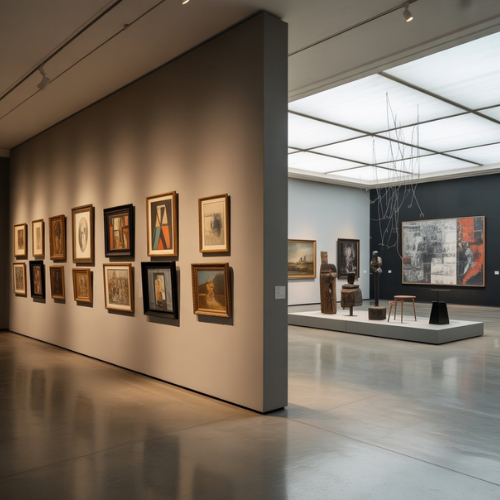
Gallery curation also provides context. The placement of a painting alongside others from the same period or theme encourages comparative interpretation, deepening understanding.
Practical Ways to Train Your Eye to See Hidden Meanings
Learning how to decode hidden messages in paintings is a skill that improves with practice. The more paintings you study, the more familiar visual patterns become.
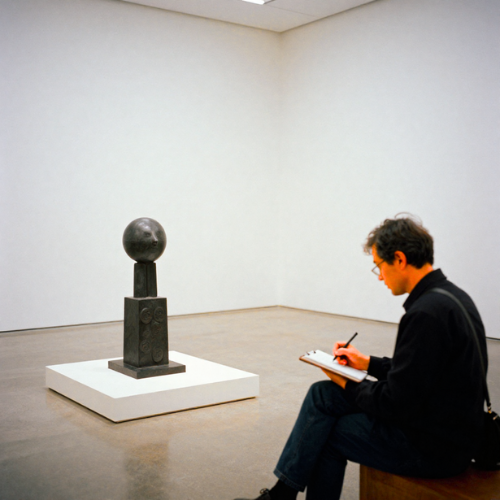
Reading exhibition texts, artist statements, and art history resources builds symbolic literacy. Sketching or taking notes while observing can also sharpen attention.
Most importantly, patience matters. Meaning does not always reveal itself immediately. Allowing time for reflection often leads to deeper insight.
Why Decoding Paintings Deepens Art Appreciation
Decoding hidden messages transforms passive viewing into active engagement. Paintings become conversations rather than static images.
This deeper understanding creates emotional connection and intellectual satisfaction. Art no longer feels distant or elitist but personal and relevant.
For many gallery visitors, learning to interpret symbolism changes how they experience all visual culture, not just fine art.
Learning to See Beyond the Surface
Knowing how to decode hidden messages in paintings is not about having all the answers. It is about asking better questions and observing more carefully.
Paintings reward those who slow down, look closely, and remain open to meaning. Every layer uncovered strengthens the relationship between viewer and artwork.
With practice, decoding becomes intuitive, and paintings begin to speak with clarity, depth, and purpose far beyond their surface beauty.