
Designing a dining area in a small home can feel like solving a puzzle. I’ve worked with many homeowners and apartment dwellers who believe they simply don’t have enough space for a proper dining setup. In reality, the issue is rarely about square footage—it’s about using space intelligently. With the right approach, even the smallest apartment corner can become a comfortable and stylish dining area.
Small homes, studio apartments, and compact condos have become increasingly common, especially in urban environments. Because of this, the way people approach dining spaces has evolved. Instead of large, traditional dining rooms, modern homes often require flexible, space-saving solutions that allow one area to serve multiple purposes.
This is where smart design choices make a huge difference. I’ve seen narrow kitchens, unused corners, and even hallway walls transformed into functional dining spots with the right furniture and layout. The key is focusing on pieces that maximize usability without making the room feel cramped.
A well-designed small dining area should feel inviting rather than restrictive. It should allow people to comfortably enjoy meals, work, or entertain guests while maintaining a sense of openness. When done correctly, a small dining space can actually feel more intimate and charming than a large, formal dining room.
The solutions in this guide focus on practical ideas that combine smart furniture, clever layouts, and thoughtful styling. These approaches help homeowners create dining spaces that feel both functional and visually appealing, even when square footage is limited.
What Makes a Dining Area Work in a Small Space?
A successful small dining area is not just about squeezing a table into a corner. I always approach compact dining design with a balance of functionality, flow, and visual openness. Every piece of furniture should contribute to the space without overwhelming it.
One of the most important elements is scale. Oversized furniture can quickly dominate a small room, making it feel cluttered and uncomfortable. Choosing dining tables and chairs that are proportionate to the room helps maintain balance and allows for easier movement around the space.
Another critical factor is flexibility. In smaller homes, rooms often serve multiple purposes. A dining area may double as a workspace, a breakfast nook, or even a social hub when guests visit. Furniture that can adapt to different situations—such as extendable tables or stackable chairs—helps maximize the functionality of the room.
Visual lightness also plays a big role. Furniture with slim legs, open bases, or glass surfaces allows light to flow through the space, preventing the area from feeling heavy or crowded. For example, a pedestal table with minimal structure often works better than a bulky four-leg dining table in tight spaces.
I often recommend focusing on these design principles when planning a compact dining area:
-
Choose furniture scaled to the room
-
Prioritize multi-functional pieces
-
Maintain clear walking paths
-
Use visually light materials and designs
When these principles are applied thoughtfully, even a tiny dining corner can feel comfortable and inviting.
Things to Consider Before Designing a Small Space Dining Area
Before selecting furniture or rearranging a room, I always encourage homeowners to take a moment to evaluate how their dining space will actually be used. This simple step prevents many of the common mistakes that make small spaces feel cramped or inefficient.
The first thing to consider is seating needs. Some households only require seating for two people most of the time, while others frequently host guests. Understanding this difference helps determine whether a compact two-seat table is sufficient or if an expandable solution would be more practical.
Another important factor is room layout. In small homes, dining areas are often placed in kitchens, living rooms, or open-concept spaces. The location of doors, windows, and walkways should influence where the dining furniture is placed. I always recommend leaving enough clearance around the table so people can move comfortably without bumping into walls or other furniture.
Storage is another detail many people overlook. Small dining spaces benefit greatly from built-in or nearby storage solutions. Shelves, cabinets, or benches with hidden compartments can keep dining essentials organized without taking up additional space.
Lighting also deserves attention. Good lighting can completely transform a small dining area. A pendant light placed above the table creates a visual focal point while defining the dining zone within a larger room.
Here’s a quick overview of the key planning elements I typically evaluate before designing a small dining space:
| Design Factor | Why It Matters |
|---|---|
| Seating capacity | Determines table size and layout |
| Traffic flow | Ensures comfortable movement around the table |
| Storage availability | Reduces clutter in small areas |
| Lighting placement | Helps define the dining space |
Taking time to plan these details ensures that the final dining area feels intentional rather than improvised.
1. Wall-Mounted Fold-Down Dining Table
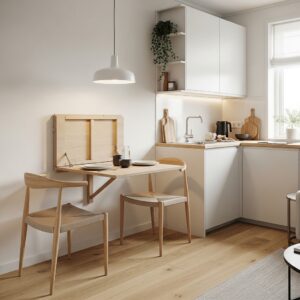
One of the most effective solutions I recommend for extremely small homes is a wall-mounted fold-down dining table. This design is particularly useful in studio apartments, compact kitchens, or multipurpose rooms where every inch of floor space matters.
The beauty of a fold-down table lies in its ability to disappear when not in use. Mounted directly to the wall, the table can be folded flat after meals, instantly freeing up valuable space. This makes the room feel larger and more flexible throughout the day.
I’ve seen this solution work beautifully in narrow kitchens where a traditional table simply wouldn’t fit. When the table is folded up, the area remains open for movement or other activities. When it’s time to eat, the table can be pulled down in seconds to create a comfortable dining surface.
Many modern fold-down tables also include clever features such as built-in shelves or hidden storage compartments. These additions allow homeowners to store plates, placemats, or small kitchen essentials directly inside the unit.
Styling can also elevate the look of this space-saving solution. A well-designed fold-down table can double as wall decor when closed. Some homeowners choose tables with wood finishes that blend into their interior design, while others prefer minimalist white designs that visually disappear into the wall.
Pairing the table with lightweight folding chairs or stackable stools completes the setup. These seating options can easily be stored nearby when the table is not in use.
For anyone living in a very small home, a wall-mounted fold-down table is one of the smartest ways to create a functional dining space without permanently sacrificing floor space.
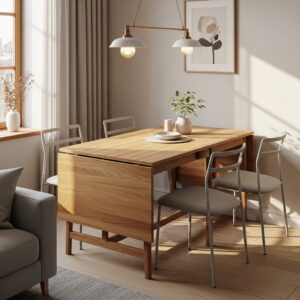
2. Extendable or Drop-Leaf Dining Table
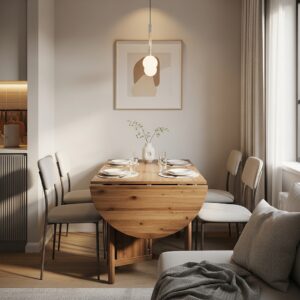
Another dining solution I frequently recommend for small spaces is the extendable or drop-leaf table. Unlike fixed tables that occupy the same amount of space all the time, these designs adapt to different needs throughout the day.
A drop-leaf table features hinged sections on either side that can be folded down when not needed. This allows the table to remain compact during everyday use while still offering additional seating when guests arrive.
For example, a small two-person table can quickly expand to accommodate four people by simply lifting the drop leaves. This flexibility makes it an ideal option for apartments or small homes where entertaining occasionally happens but space remains limited.
Extendable tables offer a similar advantage but typically expand using hidden panels or sliding mechanisms. These tables often appear small and minimal at first glance, but they can grow significantly when needed.
I often recommend placing these tables against a wall or near a corner when in their compact form. This placement keeps the room open while still allowing the table to expand into the space when necessary.
Choosing the right chair style also enhances the practicality of these tables. Slim chairs, benches, or stackable seating options allow extra seating to be added without overcrowding the room.
When carefully selected, an extendable or drop-leaf table offers the perfect balance between everyday efficiency and occasional entertaining.
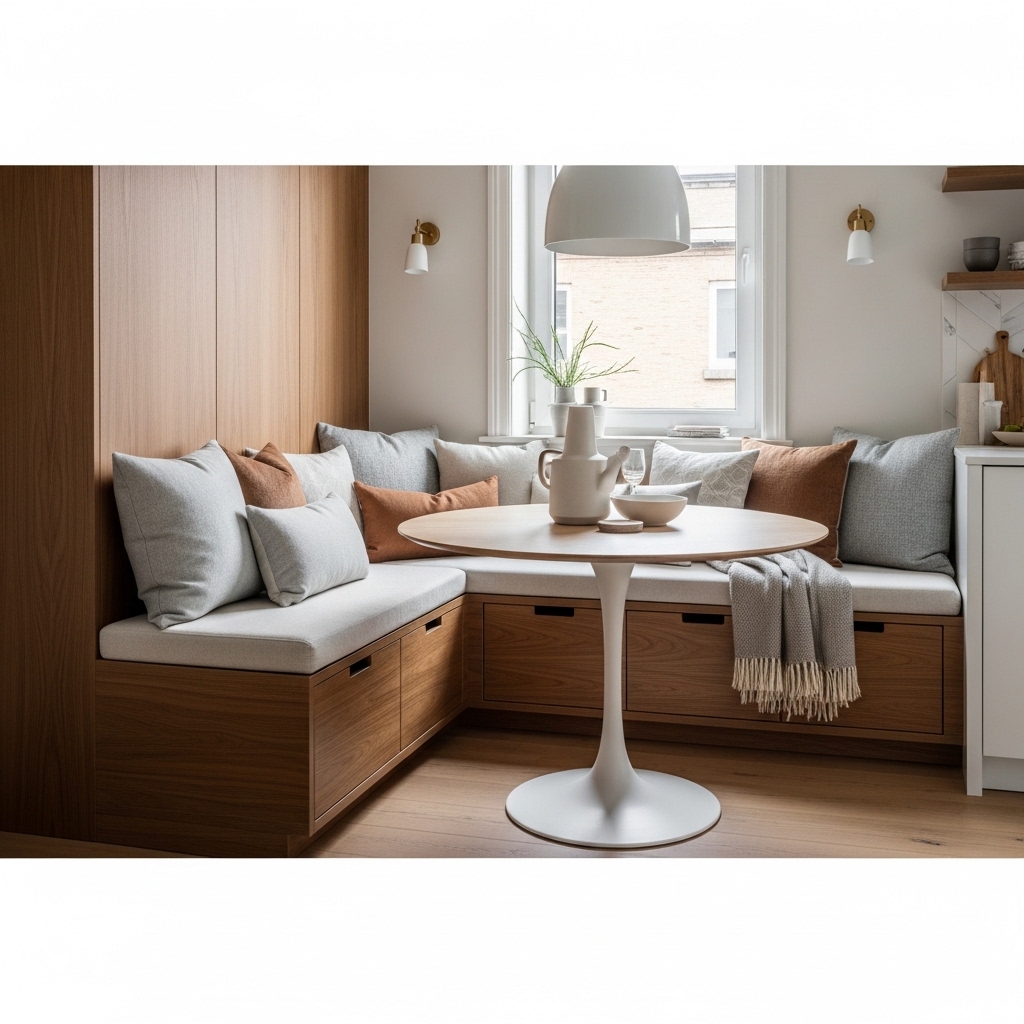
3. Built-In Banquette Seating with Storage
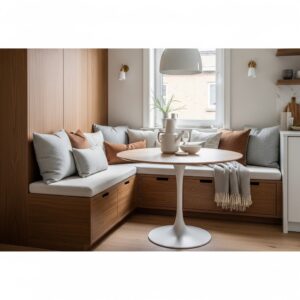
One of the smartest dining solutions I often recommend for small homes is built-in banquette seating. This idea is particularly effective in tight kitchens, apartment corners, or open-concept living areas where a traditional dining setup might feel too bulky.
Banquette seating is essentially a bench-style seat that sits against the wall, often wrapping around a corner. Instead of placing multiple chairs around a table, the bench provides seating along one or two sides, which immediately reduces the amount of space required.
What makes this option especially genius for small spaces is the hidden storage potential. Many banquette benches are designed with lift-up seats or built-in drawers underneath. This space can be used to store items like table linens, seasonal decor, or even kitchen appliances that don’t get used daily.
From a design perspective, banquette seating also creates a cozy and inviting dining nook. I’ve seen small apartments completely transformed by adding a simple L-shaped bench paired with a compact dining table. The space instantly feels more intentional and comfortable, almost like a café corner inside the home.
Styling can elevate the look even further. Soft seat cushions, textured throw pillows, and warm lighting can turn a simple bench into a charming focal point. Because the seating is built against the wall, it also allows for slimmer tables that keep the area visually open.
This type of dining setup works particularly well for households that want to maximize seating without filling the room with multiple chairs.
4. Round Pedestal Dining Table for Tight Spaces
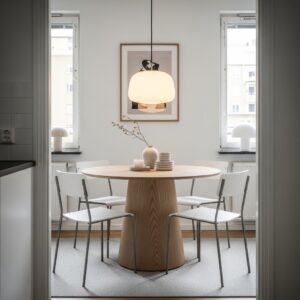
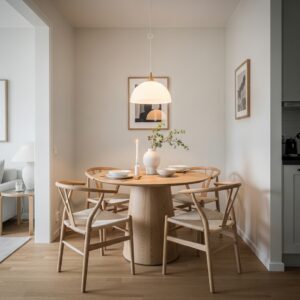
When square footage is limited, furniture shape can make a surprising difference. One of my favorite solutions for compact dining areas is a round pedestal table.
Unlike rectangular tables, round tables eliminate sharp corners and create a more fluid layout. This makes it easier to move around the table in tight spaces. In small dining areas where every inch matters, that extra bit of movement can significantly improve comfort.
The pedestal base is another advantage. Traditional tables with four legs can limit where chairs are placed, but a pedestal base opens up the entire perimeter. This allows chairs to slide in and out easily and provides more flexibility when adding extra seating.
Round tables also create a more intimate dining experience. Because everyone sits facing each other at equal distance, conversations feel more natural and relaxed. For small households or couples, this type of setup often feels more comfortable than larger rectangular dining tables.
In terms of styling, round tables pair beautifully with a variety of design styles. A light wood pedestal table can create a warm Scandinavian-inspired dining area, while a marble-top version instantly adds a modern, sophisticated touch.
I usually suggest choosing compact dining chairs with slim frames to keep the space visually light. Upholstered chairs can work as well, as long as the overall scale remains appropriate for the room.
Here’s a quick comparison of why round pedestal tables often work better in small dining spaces.
| Table Type | Space Efficiency | Movement Around Table |
|---|---|---|
| Rectangular table | Requires more clearance | Corners can block walkways |
| Round pedestal table | Compact footprint | Easy movement with no corners |
For many small apartments, switching from a rectangular table to a round pedestal table can make the dining area feel noticeably more spacious.
5. Convertible Dining Table or Multi-Functional Furniture
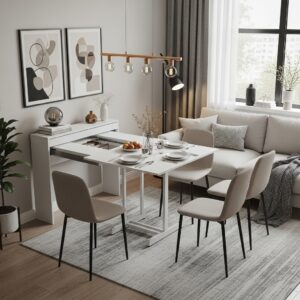
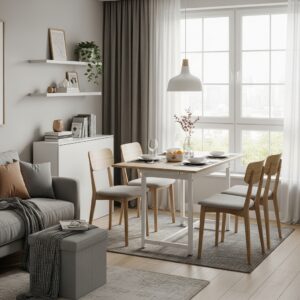
In small homes, the most valuable furniture pieces are the ones that serve more than one purpose. That’s why convertible dining tables have become one of my favorite solutions for compact spaces.
Convertible tables are designed to transform depending on the situation. Some models function as coffee tables during the day and lift up to become dining tables when needed. Others expand from narrow console tables into full dining surfaces that can seat several people.
This type of furniture is ideal for studio apartments or multipurpose living rooms where there isn’t a dedicated dining area. Instead of permanently occupying space, the table adapts to whatever the room needs at the moment.
I’ve seen homeowners place a console-style convertible table along a wall behind a sofa. Most of the time it acts as a decorative console table with lamps or decor. When guests arrive, the table expands outward and becomes a full dining setup.
Multi-functional furniture like this allows small homes to remain flexible without sacrificing comfort or style.
Some of the most useful convertible dining furniture options include:
-
Console tables that extend into full dining tables
-
Lift-top coffee tables that rise to dining height
-
Expandable wall-mounted tables
-
Storage ottomans that double as seating
By incorporating furniture that serves multiple purposes, a small dining area becomes far more adaptable to everyday life.
Styling Tips to Make a Small Dining Area Feel Bigger
Designing a small dining area isn’t only about furniture—it’s also about how the space is styled. Over the years, I’ve found that a few thoughtful styling decisions can make even the smallest dining corner feel significantly more open.
One of the easiest tricks is using light colors. Light walls, neutral furniture, and soft-toned decor reflect natural light and visually expand the room. Dark colors can still work beautifully, but they tend to make small spaces feel more enclosed if overused.
Mirrors are another powerful design tool. Placing a mirror near the dining table reflects light and creates the illusion of additional space. In many small apartments I’ve worked with, a well-placed mirror instantly doubled the perceived size of the dining area.
Lighting also plays a major role. A pendant light placed directly above the dining table creates a visual anchor for the space. It signals that this specific area is meant for dining, even if it’s located within a larger room like a living area.
Minimal decor is usually the best approach. Instead of filling the table with multiple decorative items, a single centerpiece—such as a small vase or candle arrangement—keeps the space elegant without feeling crowded.
Small dining areas benefit most from simple, intentional styling rather than excessive decoration.
Common Small Dining Room Mistakes to Avoid
While there are many clever solutions for compact dining areas, there are also a few common mistakes that can quickly make the space feel cramped or impractical.
One mistake I often see is choosing furniture that is too large for the room. Many people try to fit a traditional dining table into a small area simply because it’s familiar. Unfortunately, oversized furniture can dominate the room and limit movement.
Another issue is overcrowding the dining area with too many chairs. In small spaces, it’s usually better to use fewer chairs and bring in additional seating only when needed. Benches or stackable chairs can provide flexibility without cluttering the room.
Poor lighting is another common oversight. A small dining area without proper lighting can feel dull and uninviting. Even a simple pendant light or wall sconce can dramatically improve the atmosphere.
Clutter is perhaps the biggest problem of all. Small dining spaces require a bit of discipline when it comes to organization. Keeping the table surface clear and maintaining nearby storage solutions will help the area remain functional and visually appealing.
Avoiding these mistakes ensures that the dining area feels comfortable rather than crowded.
Final Thoughts: Creating a Functional Dining Space Without Sacrificing Style
Small homes don’t have to sacrifice dining comfort or style. With thoughtful planning and a few clever furniture choices, even the most compact spaces can support a beautiful and functional dining area.
From wall-mounted fold-down tables to cozy banquette seating and versatile convertible furniture, there are countless ways to adapt a dining setup to fit a smaller footprint. The key is focusing on flexibility, proportion, and smart storage.
In my experience, the best small dining spaces are the ones that feel intentional. When the furniture fits the room properly and the design is kept simple, the space naturally feels more open and inviting.
With the right combination of space-saving furniture and thoughtful styling, anyone can create a dining area that feels both practical and welcoming—no matter how limited the square footage may be.