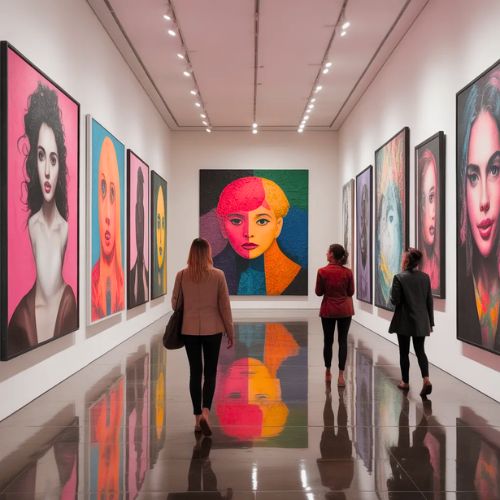
For much of art history, the spotlight largely focused on male painters, sculptors, and conceptual artists. Museums, auction houses, and gallery exhibitions often reflected this imbalance, leaving many remarkable female artists overlooked. Today, however, the narrative is changing in powerful ways. Female artists are not only gaining recognition but are actively redefining what contemporary art looks like and how it engages with the world.
From my perspective working within the art gallery landscape, the shift has been both visible and exciting. Collectors, curators, and institutions are increasingly highlighting female voices that bring fresh perspectives to cultural conversations. These artists are exploring identity, social justice, memory, gender, politics, and global culture in ways that challenge long-standing assumptions about art and its role in society.
Contemporary art today feels more diverse and intellectually vibrant partly because female artists are pushing boundaries across mediums. Painting, installation art, digital work, performance art, photography, and sculpture have all been reimagined through the lens of artists whose experiences and viewpoints expand the narrative of modern creativity.
Another factor driving this momentum is the growing awareness within the art world about historical imbalance. Many galleries and museums are making conscious efforts to highlight artists whose contributions were previously underrepresented. As a result, audiences are discovering extraordinary works that reshape how contemporary art is interpreted.
The rise of female artists is not simply about representation. It is about influence. These artists are shaping artistic discourse, introducing bold concepts, and creating works that resonate deeply with global audiences. Their impact is transforming both the creative and cultural landscape of contemporary art.
Why Female Artists Are Transforming the Contemporary Art Landscape
One of the most remarkable aspects of contemporary art today is how female artists are bringing new dimensions of storytelling into the visual arts. Their work often reflects personal experiences, cultural heritage, and social realities that were historically underexplored in mainstream art spaces.
In my experience observing exhibitions and gallery programs, female artists frequently approach their work with a strong narrative foundation. Their art is not only visually compelling but also intellectually layered. Many pieces invite viewers to reflect on broader cultural conversations about identity, gender roles, migration, race, and the complexities of modern life.
This transformation is also happening across artistic mediums. Female artists are experimenting with techniques that blur traditional boundaries between disciplines. A painting might incorporate photographic collage, while a sculpture might merge textile elements with conceptual storytelling. This interdisciplinary approach expands the possibilities of artistic expression.
Technology has also played a role in amplifying female artistic voices. Digital platforms and global art networks allow artists to share their work beyond the limitations of geography or traditional gallery representation. As a result, emerging female artists from different cultural backgrounds are reaching international audiences more easily than ever before.
Perhaps most importantly, the growing visibility of female artists is inspiring a new generation of creators. Young artists entering the contemporary art world now see role models who demonstrate that powerful ideas, bold experimentation, and unique perspectives can reshape the direction of art itself.
Key Characteristics That Define Today’s Leading Female Artists
While contemporary female artists work across vastly different styles and mediums, several defining qualities often connect their work. These characteristics help explain why their influence continues to grow within the global art scene.
One of the most noticeable qualities is conceptual strength. Many leading female artists create work that is deeply rooted in ideas rather than purely aesthetic concerns. Their art often asks challenging questions about society, history, and identity, encouraging viewers to engage with the work on a deeper level.
Another important characteristic is emotional authenticity. Female artists frequently bring personal narratives into their work, allowing viewers to connect with the art in a meaningful way. This authenticity can make their work particularly powerful because it bridges personal experience with universal themes.
Innovation is another defining element. Many of today’s most influential female artists are unafraid to experiment with unconventional materials or techniques. This willingness to push boundaries often leads to visually striking and conceptually complex artworks.
Several qualities often appear in the work of leading female contemporary artists:
- Strong conceptual storytelling
- Exploration of identity and cultural heritage
- Experimentation with mixed media and interdisciplinary techniques
- Social or political commentary embedded within visual forms
These characteristics contribute to artworks that feel both intellectually engaging and emotionally resonant. From a gallery perspective, this depth of meaning often makes their work especially compelling for collectors and curators alike.
Female Artist Spotlight: Yayoi Kusama
Few contemporary artists have achieved global recognition while maintaining such a distinctive visual language as Yayoi Kusama. Her work has become synonymous with immersive environments, mesmerizing patterns, and an exploration of infinity.
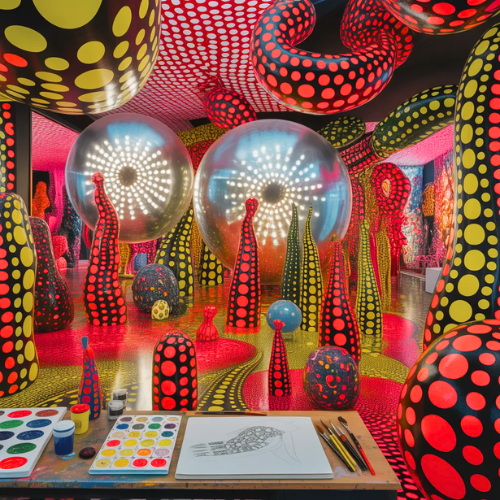
Kusama’s artistic journey began in Japan, where she developed a fascination with repetitive patterns and hallucination-inspired imagery. Over time, these patterns evolved into one of the most recognizable artistic signatures in the contemporary art world: endless polka dots, mirrored spaces, and vibrant colors that create an almost hypnotic visual experience.
One of her most celebrated bodies of work is the immersive installation series known as the Infinity Mirror Rooms. These installations place viewers inside mirrored environments filled with lights and reflections that appear to extend infinitely. The result is a breathtaking visual illusion that transforms the viewer into part of the artwork itself.
From a gallery standpoint, Kusama’s work demonstrates the power of immersive art experiences. Rather than simply presenting an artwork to observe, she creates environments that viewers physically enter and emotionally experience. This approach has had a significant influence on contemporary installation art.
What makes Kusama particularly inspiring is her resilience. Despite personal struggles and early resistance from the traditional art establishment, she remained dedicated to her artistic vision. Today, her work continues to attract millions of visitors in museums and exhibitions around the world, proving that bold originality can transcend cultural and generational boundaries.
Female Artist Spotlight: Kara Walker
Another artist who has profoundly shaped contemporary art is Kara Walker. Her work confronts complex historical narratives surrounding race, power, identity, and American history.
Walker is best known for her dramatic silhouette installations, which often depict scenes inspired by the history of slavery and racial inequality in the United States. At first glance, the black silhouettes appear elegant and decorative, echoing traditional 18th-century portrait techniques. However, a closer look reveals deeply unsettling narratives that challenge viewers to confront difficult historical truths.
This contrast between visual beauty and disturbing subject matter is central to Walker’s artistic approach. By using a historically refined artistic style to depict scenes of oppression and violence, she exposes how historical narratives are often sanitized or romanticized.
In addition to her silhouette works, Walker has created powerful large-scale installations and sculptures. One of her most widely discussed pieces is A Subtlety, a monumental sugar-coated sculpture installed in a former sugar factory. The work explored the legacy of slavery, labor, and colonial exploitation within the global sugar trade.
From a curatorial perspective, Walker’s work exemplifies how contemporary art can function as both cultural commentary and historical reflection. Her installations provoke strong emotional reactions while encouraging audiences to reconsider how history is remembered and represented.
Artists like Walker remind me that contemporary art is not only about visual innovation. It is also about challenging viewers to engage with the deeper narratives that shape society.
Female Artist Spotlight: Jenny Saville
Among contemporary painters who have dramatically reshaped how the human body is represented in modern art, Jenny Saville stands out as one of the most influential. Her work challenges traditional beauty standards and redefines how the female body is portrayed in painting.
Saville rose to prominence in the 1990s as part of the Young British Artists movement, but her work quickly distinguished itself through its powerful emotional intensity and monumental scale. Her paintings often feature large, raw depictions of the human figure, rendered with expressive brushwork and remarkable anatomical detail.
What makes Saville’s work so compelling is her willingness to confront themes that many artists once avoided. She paints bodies with folds, scars, distortions, and layered flesh, emphasizing the physical realities of the human form rather than idealized perfection. This approach directly challenges centuries of art history in which female bodies were often presented through a male gaze.
When I examine Saville’s work from a gallery perspective, I see an artist who transforms painting into a powerful conversation about identity, vulnerability, and physical presence. Her canvases are not merely portraits of bodies; they are explorations of what it means to inhabit a body in contemporary society.
Saville’s influence extends far beyond painting technique. She has opened the door for artists to represent the human form with greater honesty and complexity. In doing so, she has helped redefine the visual language of contemporary figurative art.
Female Artist Spotlight: Njideka Akunyili Crosby
One of the most fascinating voices in contemporary art today is Njideka Akunyili Crosby. Her work explores themes of identity, cultural memory, and the experience of navigating multiple worlds.
Crosby’s paintings are immediately recognizable for their layered visual language. She combines painting, drawing, photography, and collage to construct intimate scenes that often depict everyday domestic environments. These spaces frequently reflect a blend of Nigerian and Western cultural influences.
A key element of her work is the use of photo-transfer techniques that incorporate images from Nigerian newspapers, magazines, and family photographs. These elements create intricate surfaces filled with cultural references that connect personal narratives with broader historical contexts.
When I observe Crosby’s work in gallery exhibitions, what stands out most is the quiet depth of storytelling within each piece. Her scenes often portray moments of reflection or domestic life, yet they carry layers of meaning about migration, belonging, and cultural identity.
Her internationally celebrated painting The Beautyful Ones exemplifies this approach. The work captures an intimate interior scene while embedding visual references that connect personal memory with broader cultural history.
Crosby’s success demonstrates how contemporary art is increasingly shaped by global perspectives. Her work resonates with audiences around the world because it reflects the complexity of living between cultures, a reality that defines many modern identities.
Female Artist Spotlight: Cindy Sherman
Few artists have examined the construction of identity and representation as thoroughly as Cindy Sherman. For decades, Sherman has used photography as a medium to explore how society shapes perceptions of gender, beauty, and identity.
What makes Sherman’s work particularly unique is that she often serves as the subject of her own photographs. Through elaborate costumes, makeup, and staged environments, she transforms herself into a wide range of fictional characters. Each image becomes a kind of visual performance that challenges viewers to question what they are seeing.
Her groundbreaking series Untitled Film Stills is widely considered one of the most important photographic works of the late twentieth century. In these images, Sherman appears as various female characters inspired by classic film tropes, from mysterious actresses to vulnerable protagonists.
At first glance, the photographs resemble still frames from vintage movies. However, these “films” never existed. By constructing fictional narratives, Sherman exposes how media and cinema have historically shaped stereotypes about women.
From a gallery professional’s perspective, Sherman’s work remains incredibly relevant today. In an era dominated by social media and curated online identities, her exploration of constructed personas feels more timely than ever.
Her photographs encourage viewers to question the authenticity of images and the cultural expectations embedded within them. This conceptual depth has made her one of the most influential artists in contemporary photography.
How These Artists Are Challenging Traditional Art Narratives
The artists discussed throughout this article share a common quality: they challenge long-standing narratives that once defined the art world. For centuries, art history often reflected narrow perspectives, prioritizing certain cultural viewpoints while overlooking others.
Contemporary female artists are actively reshaping that narrative. Through their work, they introduce new perspectives on identity, power structures, social dynamics, and cultural memory. Their art expands the conversation about who gets to tell stories and whose experiences are represented in visual culture.
For example, Kara Walker confronts historical narratives about race and power, forcing audiences to reconsider how history has been told. Jenny Saville challenges traditional ideals of beauty by presenting the human body with honesty and physical realism. Cindy Sherman examines how media and culture construct female identity through visual representation.
These artists are not simply adding new voices to the art world. They are transforming the framework through which art is interpreted. Their work invites viewers to question assumptions, examine cultural structures, and engage with art on a deeper intellectual level.
From my experience working with exhibitions and contemporary art discussions, these shifts have made the art world more dynamic and inclusive. The expansion of perspectives enriches both artistic creation and audience engagement.
The Impact of Female Artists on Modern Galleries and Museums
Over the past decade, galleries and museums have increasingly recognized the importance of highlighting female artists within their collections and exhibitions. This shift reflects both a growing awareness of historical imbalance and the undeniable influence of contemporary female creators.
Major institutions now frequently organize exhibitions dedicated to women artists, exploring both historical figures and emerging talents. These exhibitions attract large audiences because they reveal powerful artistic contributions that were often overlooked in earlier decades.
From a gallery perspective, this shift has also influenced collecting practices. Curators and collectors are paying closer attention to artists whose work expands the narrative of contemporary art. As a result, many female artists are receiving greater institutional recognition and increased market demand.
Another important development is the growing presence of female artists in international art fairs and biennials. These global events serve as platforms for artists to present innovative work and engage with international audiences.
The increased visibility of female artists does more than correct historical imbalance. It enriches the artistic landscape by introducing new ideas, cultural perspectives, and creative methodologies that broaden the scope of contemporary art.
Emerging Female Artists to Watch in Contemporary Art
While established figures continue to shape the contemporary art scene, a new generation of female artists is also gaining attention for their innovative approaches and fresh perspectives.
Many of these emerging artists are experimenting with mediums that blend traditional techniques with modern technologies. Digital art, installation environments, performance-based work, and multimedia storytelling are becoming increasingly common among younger creators.
Several trends are particularly noticeable among rising female artists:
- Blending traditional painting with digital media
- Exploring themes of cultural identity and migration
- Using installation art to create immersive experiences
- Addressing environmental and social issues through conceptual art
These emerging voices often reflect the complexity of modern life. Their work addresses topics such as globalization, digital culture, climate change, and personal identity.
From my perspective observing gallery programs and emerging artist showcases, the diversity of these perspectives is incredibly exciting. It suggests that the future of contemporary art will continue to evolve through new ideas and innovative creative approaches.
Why Collectors and Curators Are Paying More Attention to Female Artists
Another noticeable shift within the art market is the increasing interest collectors and curators have in female artists. This attention reflects both cultural awareness and the recognition of exceptional artistic talent.
Historically, many female artists were undervalued compared to their male counterparts. However, recent years have seen a significant reevaluation of their contributions. Collectors are beginning to recognize the importance of acquiring works that reflect broader cultural narratives.
There are several reasons why female artists are gaining greater attention:
- Institutions are revisiting art history to highlight overlooked artists
- Collectors are seeking more diverse and culturally relevant collections
- Contemporary female artists are producing some of the most compelling work today
From my experience within the gallery ecosystem, collectors increasingly appreciate artworks that carry strong conceptual depth and social relevance. Many female artists excel in these areas, creating works that feel intellectually engaging while remaining visually powerful.
This growing recognition is not simply a market trend. It reflects a deeper understanding that the story of contemporary art cannot be complete without the voices and visions of female artists.
The Future of Contemporary Art Through the Lens of Female Creativity
Looking ahead, it is clear that female artists will continue to play a vital role in shaping the future of contemporary art. Their work is expanding the boundaries of artistic practice while challenging long-standing cultural narratives.
One of the most exciting aspects of this movement is the diversity of artistic approaches emerging from female creators. Some artists focus on deeply personal storytelling, while others explore complex social and political themes. Many are experimenting with new technologies that redefine how art is created and experienced.
As galleries and institutions continue to support these voices, audiences will gain access to a broader range of artistic perspectives. This diversity will likely encourage more experimentation and collaboration across disciplines.
In my view, the future of contemporary art will not be defined by a single style or movement. Instead, it will be shaped by artists who bring authentic perspectives and bold ideas into their work. Female artists are already demonstrating how powerful that influence can be.
Conclusion
The rise of female artists in contemporary art represents one of the most meaningful cultural shifts in the modern art world. Their work challenges assumptions, expands artistic language, and introduces perspectives that enrich the global creative conversation.
Artists like Yayoi Kusama, Kara Walker, Jenny Saville, Njideka Akunyili Crosby, and Cindy Sherman demonstrate how diverse artistic practices can reshape the way audiences experience and interpret art. Each brings a unique vision that contributes to the evolving story of contemporary creativity.
From my experience within the art gallery field, one thing is increasingly clear: the influence of female artists will only continue to grow. Their work resonates with audiences because it reflects the complexity of modern life while pushing the boundaries of artistic innovation.
For art enthusiasts, collectors, and cultural institutions alike, paying attention to these voices offers a deeper understanding of where contemporary art is headed. The future of art is being shaped by creators who are unafraid to challenge conventions, explore new ideas, and redefine what artistic expression can be.