Over the past two decades, the art world has experienced a transformation that few traditionalists expected. Digital technology has moved from the margins of artistic experimentation to the center of contemporary creativity. Today, collectors, curators, and galleries increasingly recognize digital art as a legitimate and powerful medium capable of shaping the future of visual culture. As someone who has spent years observing trends in the gallery space, I have witnessed how digital artists are redefining what it means to create, exhibit, and experience art.
The accessibility of powerful creative tools has played a major role in this shift. Software platforms, drawing tablets, artificial intelligence systems, and immersive technologies have allowed artists to explore ideas that were once impossible with traditional materials. Instead of paint and canvas alone, artists now work with algorithms, 3D environments, animation, and interactive design. This technological expansion has opened entirely new creative possibilities.
Digital art is also changing how audiences interact with artwork. Online galleries, virtual exhibitions, and blockchain-based ownership systems have created global access to art in ways that traditional galleries could never achieve alone. A digital artwork can be viewed by thousands of people across the world within minutes of its release.
Because of this shift, certain digital artists are emerging as pioneers who are not simply creating beautiful visuals but also influencing the direction of the art world itself. These artists are experimenting with technology, storytelling, and new forms of audience engagement. Their work offers a glimpse into what the future of art may look like.
This article explores five digital artists whose work has the potential to shape the future of art, not just through aesthetic innovation but through the way they rethink creativity in the digital age.
What Makes a Digital Artist Influential Today?
Not every digital creator becomes a cultural force. While many artists produce impressive digital works, only a few manage to influence the direction of contemporary art. From my experience studying gallery trends and emerging artists, several qualities consistently define those who truly stand out.
One of the most important factors is innovation. Influential digital artists rarely use technology in conventional ways. Instead, they push tools beyond their expected purpose. Some explore artificial intelligence as a creative collaborator, while others build immersive virtual worlds that transform how audiences experience art. The ability to experiment with technology in meaningful ways often separates groundbreaking artists from those who simply follow trends.
Another key characteristic is conceptual depth. Digital art can easily become focused on visual spectacle, but the most impactful artists create work that communicates strong ideas. Themes such as identity, digital culture, environmental awareness, and the relationship between humans and technology often appear in influential digital art. These concepts resonate with modern audiences and make the work culturally relevant.
Audience engagement also plays a significant role in today’s digital art landscape. Unlike traditional gallery paintings that remain static on a wall, digital works can be interactive, dynamic, and constantly evolving. Some artists create pieces that change based on viewer input, while others design experiences that exist inside virtual environments. This level of engagement encourages audiences to participate in the artistic process.
Finally, adaptability is essential. Technology evolves rapidly, and artists who shape the future of art are those who continuously evolve alongside it. They are not tied to a single platform or technique. Instead, they explore new technologies as they emerge, constantly redefining their artistic language.
When these elements come together—innovation, conceptual strength, engagement, and adaptability—the result is a digital artist whose work can influence both audiences and the broader art world.
How Digital Art Is Reshaping the Future of Creativity
Digital art is not simply another artistic medium. It represents a fundamental shift in how creativity can be expressed, shared, and preserved. In many ways, it is redefining the boundaries of artistic possibility.
One of the most significant changes lies in the expansion of creative tools. Traditional artists typically rely on physical materials such as oil paint, charcoal, or sculpture mediums. Digital artists, however, work with an entirely different set of tools that include software platforms, coding languages, artificial intelligence models, and virtual reality environments. These tools allow artists to construct complex visual systems rather than single static images.
For example, generative art allows artists to create algorithms that produce endless variations of a visual concept. Instead of crafting one final piece, the artist designs a system that continuously generates new artworks. This approach introduces a fascinating blend of artistic vision and computational creativity.
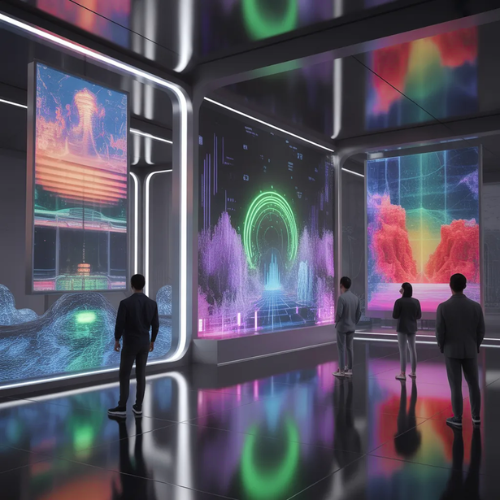
Digital art has also expanded the concept of artistic space. In traditional galleries, artworks exist within physical boundaries. Digital artists, however, can create immersive worlds that audiences explore through virtual reality or interactive screens. These environments transform viewers into participants, allowing them to move through the artwork rather than simply observe it.
Another important shift is the global accessibility of digital artwork. Artists no longer need to rely solely on physical exhibitions to reach collectors and audiences. Online platforms, digital marketplaces, and social media have made it possible for artists to build international followings without traditional gallery representation. As a result, new voices from diverse backgrounds are entering the art world at an unprecedented rate.
Because of these developments, digital art is not only evolving as a medium but also redefining the structure of the art industry itself. The artists who understand and embrace these possibilities are often the ones who lead the conversation about where art is headed next.
Digital Artist Spotlight: Refik Anadol
Among contemporary digital artists, few have pushed the boundaries of data-driven art as effectively as Refik Anadol. His work explores the intersection between artificial intelligence, architecture, and large-scale visual storytelling.
What makes Anadol’s approach particularly compelling is his ability to transform massive datasets into immersive visual experiences. Rather than presenting raw data in analytical form, he uses machine learning algorithms to convert information into flowing, dreamlike visuals. The result often resembles moving digital landscapes that continuously evolve.
One notable example is his large-scale installations that transform building facades into living artworks. By projecting data-driven animations onto architectural structures, he turns entire buildings into dynamic canvases. These installations blur the line between digital art, architecture, and public space.
Anadol’s work also explores the idea of machine imagination. Using artificial intelligence systems trained on enormous visual datasets, he generates images that represent how machines interpret and reconstruct visual information. This concept raises fascinating questions about creativity in the age of AI.
From a gallery perspective, artists like Anadol demonstrate how digital art can exist far beyond the traditional frame. His installations show that the future of art may involve entire environments shaped by data and technology rather than individual objects displayed on a wall.
Digital Artist Spotlight: Beeple
Another digital artist who has significantly influenced the modern art world is Mike Winkelmann, widely known as Beeple. His name became globally recognized after the historic sale of his artwork Everydays: The First 5000 Days.
Beeple’s creative journey is particularly remarkable because it demonstrates the power of consistency and experimentation in digital art. For more than a decade, he committed to creating and publishing one digital artwork every single day. This project, known as “Everydays,” became a massive visual archive of digital culture, technology, and political commentary.
What makes Beeple’s work influential is not only its visual style but also its cultural relevance. His artworks often reflect contemporary issues, internet culture, and technological change. The imagery combines surreal environments, futuristic machines, and satirical social commentary.
The sale of “Everydays: The First 5000 Days” for a record-breaking amount transformed global perceptions of digital art. It demonstrated that digital works could achieve the same level of recognition and financial value traditionally reserved for physical artworks. This moment significantly accelerated mainstream interest in NFTs and blockchain-based art ownership.
From my perspective as someone deeply engaged with the art gallery ecosystem, Beeple’s impact goes beyond a single sale. He proved that digital artists could reach global audiences without following traditional gallery paths, fundamentally shifting how emerging artists think about building their careers.
His influence continues to inspire a new generation of digital creators who see technology not as a limitation but as a powerful artistic tool.
Digital Artist Spotlight: Sougwen Chung
When discussing artists who are redefining the relationship between humans and technology, the work of Sougwen Chung stands out as particularly visionary. Chung’s practice sits at the intersection of drawing, performance, robotics, and artificial intelligence, creating a new dialogue between human creativity and machine collaboration.
What fascinates me most about Chung’s work is the way she treats technology not simply as a tool but as a creative partner. In many of her performances, she draws alongside robotic arms that are programmed to learn from her previous brushstrokes. The machines observe her drawing patterns and then respond with movements of their own, effectively turning the artwork into a collaboration between artist and algorithm.
This approach introduces an entirely new dimension to artistic authorship. Traditionally, art has been understood as a purely human expression. Chung challenges that assumption by asking an intriguing question: what happens when creativity becomes shared between humans and intelligent machines?
Her performances are often visually striking, with robotic arms moving fluidly across large canvases while she works beside them. Yet beneath the spectacle lies a deeper conceptual exploration about the future of creativity in a world increasingly shaped by artificial intelligence.
From a gallery perspective, artists like Chung are incredibly important because they push the conversation forward. Rather than resisting technological change, she embraces it and uses it to investigate new forms of artistic collaboration. This perspective may very well influence how future generations of artists interact with creative technologies.
Digital Artist Spotlight: Pak
Few digital artists have generated as much intrigue and influence in the NFT and digital ownership space as Pak. Known for maintaining an anonymous identity, Pak has become one of the most respected conceptual artists working in digital media today.
What distinguishes Pak’s work is its conceptual minimalism. Unlike many digital artists who focus on highly detailed visuals, Pak often creates works built around simple geometric forms and minimal color palettes. However, the power of the work lies in the ideas behind it rather than visual complexity.
Pak’s projects frequently explore themes such as ownership, scarcity, and value in the digital world. In one of the most talked-about digital art sales, Pak released a project called The Merge, which allowed collectors to purchase “mass” units that combined into a single evolving artwork. The more units someone owned, the larger their piece became within the overall artwork.
This innovative approach redefined how collectors interact with art. Instead of purchasing a static object, buyers participated in shaping the artwork itself. The project became one of the highest-grossing digital art sales in history and demonstrated how blockchain technology could reshape the economics of the art market.
From my experience observing digital art trends, Pak’s influence is profound because it shifts attention from aesthetics alone to conceptual systems. His work encourages collectors and audiences to think critically about what art ownership means in the digital age.
Digital Artist Spotlight: Krista Kim
Another digital artist who is influencing the future of art through a unique perspective is Krista Kim. Her work explores the concept of digital wellness and the emotional impact of visual environments.
Kim is widely recognized for creating minimalist digital artworks that focus on light, color gradients, and calming visual atmospheres. While many digital artworks emphasize complex imagery or technological spectacle, Kim’s work takes a very different approach. She focuses on creating tranquil digital spaces designed to promote mental clarity and emotional balance.
One of her most notable projects is Mars House, a fully digital architectural environment sold as an NFT. The project combined architecture, interior design, and digital art into a single immersive experience. The house features glowing gradient walls and serene lighting environments that create a sense of futuristic calm.
What makes Kim’s work especially important is the philosophical message behind it. She often speaks about the need for digital environments that support mental well-being rather than overwhelm users with constant stimulation. In a world increasingly dominated by screens and virtual spaces, this perspective feels incredibly relevant.
From a gallery standpoint, Kim’s work illustrates how digital art can move beyond traditional images and become entire environments designed for emotional experience. It also highlights how digital artists are beginning to shape not only visual culture but also the psychological experience of digital life.
Key Trends These Digital Artists Represent
After observing the work of these artists, several major trends begin to emerge. These trends help explain why digital art is becoming one of the most dynamic forces in the contemporary art world.
One major trend is the fusion of art and artificial intelligence. Artists such as Sougwen Chung and Refik Anadol are exploring how machine learning systems can participate in the creative process. This collaboration between human intuition and computational analysis opens new possibilities for visual expression.
Another significant trend is the rise of blockchain-based art ownership. The work of Beeple and Pak demonstrated that digital artworks could be collected and traded in ways that rival traditional art markets. Blockchain technology allows collectors to verify authenticity and ownership, which has historically been one of the biggest challenges for digital art.
Immersive environments are also becoming increasingly important. Artists are no longer limited to creating flat images. Instead, they are designing interactive spaces, virtual installations, and digital architecture that audiences can explore.
Several important shifts are shaping this new artistic landscape:
- The integration of artificial intelligence into artistic creation
- The expansion of immersive and interactive art experiences
- The emergence of blockchain as a new system for art ownership
- The growing importance of global online audiences
Together, these developments suggest that digital art is not simply a passing trend. It represents a fundamental evolution in how art is created, distributed, and experienced.
Why Digital Artists Are Influencing the Future of the Global Art Market
The influence of digital artists extends far beyond creative experimentation. In many ways, they are also reshaping the economic structure of the art world.
Traditionally, artists relied heavily on galleries, auction houses, and collectors to build their careers. While those institutions remain important, digital platforms have introduced new opportunities for artists to connect directly with audiences. Social media, digital marketplaces, and online exhibitions allow artists to showcase their work globally without geographic limitations.
This accessibility has dramatically expanded the pool of artists entering the market. Talented creators from regions that previously had limited access to the international art scene can now build global followings online. As a result, the art world is becoming more diverse and inclusive.
Collectors are also adapting to these changes. Many younger collectors are comfortable purchasing digital assets and participating in online art communities. They view digital ownership as a natural extension of contemporary culture.
From my perspective within the art gallery space, this shift does not mean traditional galleries will disappear. Instead, galleries are beginning to integrate digital artists into their exhibitions and explore hybrid models that combine physical and virtual experiences.
How Emerging Digital Artists Are Changing the Way We Experience Art
Perhaps the most exciting aspect of digital art is how it transforms the viewer’s experience. Traditional artworks typically present a finished object for contemplation. Digital artworks, however, often invite participation and interaction.
For instance, some digital installations respond to viewer movement, sound, or touch. Others exist entirely within virtual reality environments that audiences can explore. In these cases, the artwork becomes an experience rather than a static object.
Online exhibitions are also expanding access to art. A viewer no longer needs to travel to a museum or gallery to see important works. Digital platforms allow audiences to discover artists from around the world instantly.
Another fascinating development is the rise of community-driven art experiences. Many digital artists build online communities where collectors and fans participate in discussions, creative collaborations, and project development. This sense of community adds an entirely new social dimension to the art world.
As these experiences evolve, audiences are beginning to expect more than passive observation. They want to interact with art, influence it, and share it within digital environments. Artists who understand this shift are shaping the next generation of artistic engagement.
Final Thoughts: The Future of Art in a Digital World
The future of art will likely be shaped by a complex relationship between tradition and technology. While painting, sculpture, and physical galleries will always hold cultural importance, digital creativity is opening new pathways that were unimaginable only a generation ago.
The artists explored in this article represent different aspects of that transformation. Refik Anadol explores data and machine imagination. Beeple demonstrates the power of digital culture and online creativity. Sougwen Chung investigates collaboration between humans and artificial intelligence. Pak redefines ownership and conceptual systems, while Krista Kim focuses on emotional experience within digital environments.
Each of these artists reveals a different direction the future of art might take. Some focus on immersive technology, others on conceptual systems, and others on the emotional impact of digital spaces.
From my experience observing the evolving gallery landscape, one thing is becoming increasingly clear: digital art is not a temporary trend. It is an expanding frontier of creativity that will continue to influence how art is created, shared, and valued across the world.
For collectors, curators, and art enthusiasts alike, paying attention to digital artists today offers a fascinating glimpse into the future of visual culture.