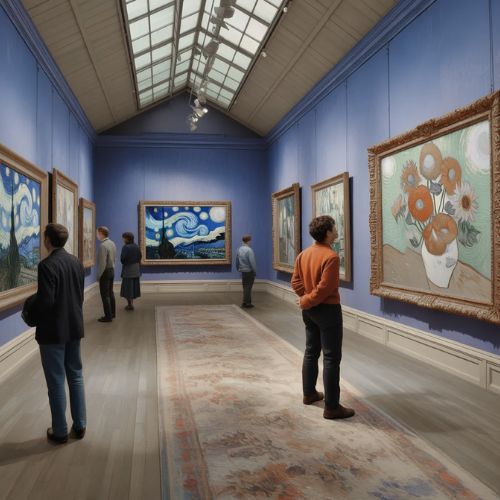
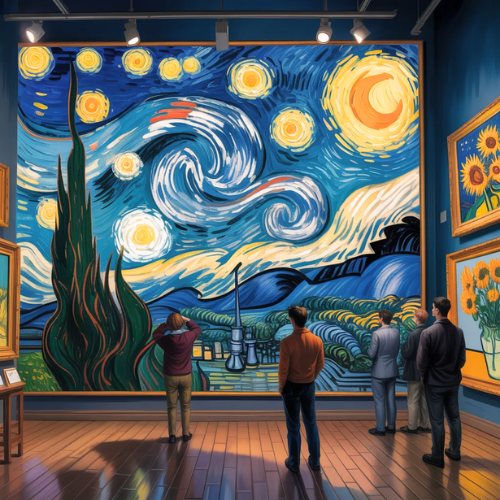
Few artists have left a mark on the art world as deeply as Vincent van Gogh. In galleries, museums, and classrooms around the world, his paintings continue to spark fascination, emotional reflection, and admiration. As someone who has spent years studying and working around art collections, I often notice that visitors linger longer in front of Van Gogh’s works than almost any other artist. There is something undeniably magnetic about his paintings.
Part of this lasting appeal lies in how emotionally direct his work feels. When looking at pieces like The Starry Night or Sunflowers, viewers rarely need a long explanation to feel something. The swirling skies, bold brushstrokes, and vibrant colors communicate mood instantly. Even people who know very little about art history often find themselves deeply moved by his work.
Another reason Van Gogh continues to captivate audiences is the dramatic story of his life. His artistic career lasted barely a decade, yet during that short time he created more than 2,000 artworks. Ironically, he sold very few paintings while he was alive. Today, however, his works are among the most celebrated and valuable pieces in museum collections.
In the modern art world, Van Gogh represents something more than technical skill. He symbolizes artistic courage—the willingness to paint what one feels rather than simply what one sees. That philosophy helped reshape the direction of modern art and continues to inspire generations of artists today.
Who Was Vincent van Gogh? A Brief Background
Vincent van Gogh was born in 1853 in the Netherlands, in the small village of Zundert. His early life was not immediately connected to becoming an artist. In fact, before committing to painting, he tried several different careers, including working as an art dealer, a teacher, and even a preacher.
What makes Van Gogh’s story remarkable is how late his artistic journey truly began. He only seriously pursued painting in his late twenties. For many artists, this would be considered a late start, yet within roughly ten years he developed one of the most recognizable styles in the history of art.
A major influence in his life was his younger brother, Theo van Gogh. Theo worked as an art dealer and became Vincent’s primary supporter, both financially and emotionally. The letters exchanged between the two brothers remain some of the most revealing documents in art history, offering an intimate look into Van Gogh’s creative struggles and ambitions.
Despite the hardships he faced—including poverty, isolation, and recurring mental health challenges—Van Gogh continued to paint with extraordinary dedication. His commitment to artistic expression, even when recognition seemed impossible, is one of the reasons his story resonates so strongly with artists and art lovers today.
Van Gogh’s Early Life and Artistic Beginnings
Before discovering painting as his true calling, Vincent van Gogh lived a life filled with uncertainty and searching. As a young man, he worked for an art dealership in several European cities, including London and Paris. This experience exposed him to a wide range of artworks and artistic traditions, which would later shape his own creative development.
However, Van Gogh struggled to fit comfortably into the structured world of art commerce. His intense personality and strong emotional sensitivity often made it difficult for him to maintain stable employment. After leaving the art trade, he attempted to follow a religious path and worked briefly as a missionary among coal miners in Belgium.
It was during this period that he began to draw seriously. Witnessing the harsh living conditions of the miners left a deep impression on him, and he started sketching scenes of everyday labor and poverty. These early drawings reveal an artist who was deeply concerned with human dignity and social reality.
His first major painting, The Potato Eaters, reflects this early interest in working-class life. The painting portrays a group of peasants gathered around a dimly lit table, sharing a simple meal. The dark tones and rough textures emphasize the harshness of rural life while also capturing a quiet sense of humanity.
Although the work received little praise at the time, it marked an important step in Van Gogh’s artistic evolution. It demonstrated his desire to paint ordinary people with honesty and emotional depth, a theme that would remain central to his art.
The Unique Style That Set Van Gogh Apart
One of the most fascinating aspects of Vincent van Gogh’s work is how unmistakable his style became. Even someone unfamiliar with art history can often recognize a Van Gogh painting immediately. This distinctive visual language did not appear overnight—it evolved through experimentation, observation, and an intense dedication to expressing emotion through paint.
A defining characteristic of his work is the energetic brushstroke. Rather than blending paint smoothly, Van Gogh applied thick layers of color in visible, textured strokes. This technique, known as impasto, allowed the paint itself to become part of the visual experience.
When observing paintings like Wheatfield with Crows, the brushstrokes appear almost alive. The sky seems to swirl, the wheat fields ripple with movement, and the entire composition feels charged with emotion. Instead of simply depicting a landscape, Van Gogh captured the feeling of standing within it.
Color also played a powerful role in his artistic language. After moving to Paris and encountering the works of artists such as Claude Monet and Paul Gauguin, Van Gogh began experimenting with brighter palettes. Yellows, blues, and greens became more intense and expressive in his paintings.
This bold use of color allowed Van Gogh to communicate mood rather than realism. A sky did not need to be painted exactly as it appeared in nature—it could be exaggerated, swirling, or glowing if that better conveyed the emotional atmosphere of the scene.
Over time, this fearless approach to brushwork and color helped redefine how artists thought about painting. Instead of focusing solely on accurate representation, Van Gogh demonstrated that emotion and personal expression could become the central focus of art.
Masterpieces That Redefined Modern Art
Although Vincent van Gogh produced hundreds of paintings, a handful of masterpieces have become cornerstones of modern art. These works are studied in art schools, displayed in major museums, and admired by millions of visitors each year.
Perhaps the most famous is The Starry Night, painted in 1889 while Van Gogh was staying at an asylum in Saint-Rémy-de-Provence. The painting transforms a quiet nighttime landscape into a dramatic, swirling vision of light and movement. The sky appears almost cosmic, filled with spiraling stars and glowing moons.
Another iconic work is Sunflowers, part of a series created to decorate the room of fellow artist Paul Gauguin. These paintings celebrate the beauty of a simple subject through bold color and thick paint. The vibrant yellow tones have become one of Van Gogh’s most recognizable visual signatures.
Van Gogh also produced remarkable landscapes such as Irises and The Bedroom. In these paintings, everyday environments—gardens, rooms, and fields—are transformed into emotionally charged spaces through color and rhythm.
What makes these works so important is not only their beauty but their influence. Later movements such as Expressionism and Fauvism drew inspiration from Van Gogh’s bold colors and emotional intensity.
Many of the paintings that struggled to find buyers during his lifetime now attract millions of visitors in institutions like the Van Gogh Museum in Amsterdam and the Museum of Modern Art in New York. This transformation—from an overlooked artist to one of the most celebrated figures in art history—remains one of the most remarkable stories in the art world.
The Story Behind The Starry Night and Other Iconic Works
The Starry Night is often considered the pinnacle of Vincent van Gogh’s artistic expression. Painted in 1889 during his stay at the Saint-Rémy-de-Provence asylum, it captures a view from his room’s window—but transformed through imagination and emotion. The swirling night sky, luminous stars, and crescent moon seem almost alive, conveying a sense of both wonder and turbulence. As someone who has studied this work in person, I can attest that the energy of Van Gogh’s brushstrokes creates a dynamic experience that is difficult to achieve in print or digital reproductions.
Beyond the technical brilliance, this painting reflects Van Gogh’s inner world. It demonstrates how he turned personal struggles into art that communicates universally. Each element—the cypress trees reaching skyward, the rolling hills, the vibrant celestial bodies—represents a fusion of reality and emotional perception. Similarly, other works like Sunflowers and Irises transform ordinary subjects into something extraordinary. Van Gogh’s ability to make the familiar feel profound is a key reason why his work continues to resonate with audiences today.
Struggles, Mental Health, and the Myth of the “Tortured Artist”
Van Gogh’s life story is inseparable from his struggles. He battled mental health challenges throughout his adult life, experiencing episodes of deep depression and psychosis. His well-known incident of cutting off part of his ear has become emblematic of the “tortured artist” narrative, yet it’s crucial to understand that his creativity cannot be reduced to suffering alone.
These struggles influenced his art profoundly. His intense emotions fueled the energetic brushstrokes, vivid colors, and often dramatic compositions that define his style. For instance, in paintings like Wheatfield with Crows, one can sense an undercurrent of urgency and turmoil that reflects his psychological state. However, it’s important to view Van Gogh as more than just a tragic figure. He was fiercely dedicated, deeply reflective, and committed to expressing life’s raw realities through his art. His letters, particularly those to his brother Theo, reveal a thoughtful, introspective mind constantly seeking meaning, beauty, and understanding.
How Vincent van Gogh Influenced Modern and Contemporary Art
Van Gogh’s contributions to modern art are immeasurable. His innovative use of color, expressive brushwork, and emotional intensity paved the way for movements such as Expressionism and Fauvism. Artists like Edvard Munch and Henri Matisse drew inspiration from his techniques, particularly his fearless approach to color and form.
Beyond direct stylistic influence, Van Gogh challenged the way artists approached the act of painting itself. He demonstrated that the artist’s inner vision could take precedence over strict realism. This concept became a cornerstone of modern art, encouraging creativity that prioritized expression, emotion, and personal perspective over mere representation. In galleries and classrooms today, Van Gogh’s work continues to serve as a case study in innovation, emotional authenticity, and the transformative power of art.
Why Van Gogh Became One of the Most Famous Artists in History
Despite selling very few works during his lifetime, Van Gogh’s posthumous fame is staggering. Several factors contributed to this recognition. First, his work embodies timeless human emotion. Viewers from different cultures and generations can connect with his art on an intuitive level, making it universally appealing.
Second, the documentation of his life—through letters, biographies, and exhibitions—created a compelling narrative of struggle, perseverance, and genius. This story, coupled with the visual power of his paintings, captivated both art enthusiasts and the general public. Third, the accessibility of his work in major museums around the world, including the Van Gogh Museum in Amsterdam and the Musée d’Orsay in Paris, has ensured that millions can experience his art firsthand, further cementing his legendary status.
What Artists and Art Lovers Can Learn from Van Gogh Today
Van Gogh’s legacy is not just historical—it’s instructive for contemporary artists and art lovers. His life teaches perseverance in the face of obstacles, dedication to one’s craft, and the importance of emotional honesty in art. Aspiring artists can study his use of color, composition, and brushwork to understand how to evoke emotion and tell stories visually.
Moreover, art enthusiasts can gain a deeper appreciation for the creative process by observing the evolution of Van Gogh’s style over time. From his somber early works like The Potato Eaters to the luminous landscapes of Arles and Saint-Rémy, his journey highlights experimentation, risk-taking, and continuous learning. Recognizing these elements can enrich how audiences interpret not only Van Gogh’s work but art more broadly.
Where to See Van Gogh’s Art in Museums Around the World
For anyone seeking a tangible connection to Van Gogh’s genius, visiting museums is essential. The Van Gogh Museum in Amsterdam houses the largest collection of his paintings, drawings, and letters, offering unparalleled insight into his creative process. Other notable locations include the Musée d’Orsay in Paris, the Museum of Modern Art in New York, and the Kröller-Müller Museum in the Netherlands.
Visiting these institutions allows viewers to see Van Gogh’s brushwork up close, experience the scale of his compositions, and observe the texture and depth that reproductions cannot capture. These encounters often create a more profound understanding of why his art continues to captivate audiences and influence artists worldwide.
Conclusion: The Enduring Legacy of Vincent van Gogh
Vincent van Gogh changed the art world forever through his innovative use of color, bold brushwork, and deep emotional resonance. His life exemplifies the power of perseverance, the importance of emotional honesty in creative work, and the transformative potential of art. From his modest beginnings to his current status as one of the most celebrated artists in history, Van Gogh’s story inspires artists and art lovers alike.
Even today, his influence can be felt across painting, design, and visual culture. By studying Van Gogh’s works, exploring his letters, and experiencing his art firsthand in museums, one can appreciate the profound legacy of an artist who, despite personal struggles and limited recognition during his lifetime, forever reshaped the way we perceive and value art.