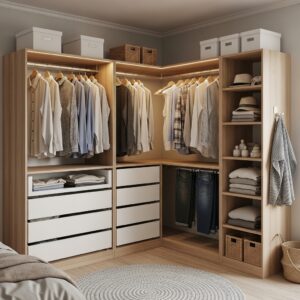
IKEA closet systems have become a staple for homeowners looking to combine functionality, flexibility, and style. Over the years, I’ve seen countless clients transform their bedrooms using these modular systems, turning what was once a cluttered, cramped wardrobe area into a sleek, organized, and designer-worthy space. One of the reasons IKEA closets are so popular is their adaptability—they cater to a wide range of needs, from small apartments to master suites, without compromising on style.
What makes these systems particularly appealing is their balance between affordability and design. Unlike custom-built closets that often come with a hefty price tag, IKEA systems allow homeowners to create their dream wardrobe on a budget. They also provide an incredible level of customization. With various components such as drawers, shelves, hanging rods, and integrated lighting, it’s possible to mix and match pieces to suit both the room layout and personal storage requirements.
Beyond practicality, IKEA closets are visually versatile. Their minimalistic design language allows them to blend seamlessly into any interior style, whether it’s Scandinavian, modern, or even transitional. I’ve noticed that even a basic PAX system can feel upscale when paired with thoughtful styling, coordinated hangers, and organized accessories.
Another factor driving their popularity is ease of assembly. Many people shy away from DIY furniture because of perceived complexity, but IKEA provides step-by-step instructions that make even a larger system manageable for a weekend project. With careful planning and a clear vision, anyone can install a beautiful, functional wardrobe without needing professional help.
In this article, I’ll guide you through five gorgeous IKEA closet system ideas that can help you achieve a dream wardrobe. Each idea focuses on maximizing storage, optimizing layout, and creating a polished, boutique-style appearance.
What Makes an IKEA Closet System Look High-End?
Not every IKEA closet automatically looks luxurious. I’ve seen many setups that, while functional, feel like basic flat-pack furniture rather than a designer wardrobe. The difference often comes down to attention to detail, consistency, and styling.
First, consistency in color and materials is key. Choosing matching drawer fronts, handles, and shelving creates a cohesive look. For instance, white PAX frames paired with light oak drawer fronts and soft, matching handles instantly elevate the closet’s appearance. Using mismatched components can break the visual flow and make even the most organized system look disjointed.
Second, layout and organization play a huge role. Designer wardrobes don’t just store clothing—they showcase it. I always recommend giving each type of item a dedicated space. Jackets and dresses should hang freely without touching the floor, shoes should be neatly arranged on shelves or in boxes, and accessories should be grouped in small baskets or trays. These small organizational touches make a big difference in how the closet is perceived.
Lighting is another critical factor that separates basic IKEA setups from high-end systems. Adding LED strip lighting along shelves or under cabinets highlights clothing and creates depth. I’ve noticed that even minimal lighting instantly transforms a closet, making it feel custom-built rather than ready-made.
Finally, decorative touches matter. Matching hangers, coordinating storage boxes, and subtle color accents create a boutique-like appearance. For example, a stack of neatly folded sweaters in neutral tones on a shelf paired with leather storage boxes can make a PAX wardrobe look like it belongs in a luxury showroom.
Things to Consider Before Choosing an IKEA Closet System
Before diving into an IKEA closet project, I always advise homeowners to evaluate their needs and the space carefully. Planning upfront ensures that the finished system is both functional and visually appealing.
Start by measuring the room and any available wall space. IKEA systems are modular, but each component has fixed dimensions. Ensuring that the chosen frames and shelves fit your space without crowding the room is crucial. Keep in mind ceiling height, doorways, and potential obstacles such as radiators or vents.
Next, assess storage needs. Take inventory of your wardrobe to determine the mix of hanging space, drawers, and shelves you’ll need. For example, if you have many long dresses or coats, prioritize tall hanging sections. If folded clothing or shoes dominate your collection, incorporate plenty of shelves and drawers.
Another important consideration is accessibility. A common mistake I see is placing shelves too high or drawers too low, making everyday use inconvenient. I recommend designing a system that allows easy reach for frequently used items while using less accessible areas for seasonal or rarely used pieces.
Finally, consider styling preferences. IKEA systems are highly versatile, but the final look depends on the combination of finishes, handles, and accessories. Decide whether you want a minimal Scandinavian feel, a modern luxe aesthetic, or a warm, natural vibe with wood accents. This decision will guide your component selection and ensure that the system complements the room’s overall decor.
1. Open IKEA Closet System for a Boutique-Style Wardrobe
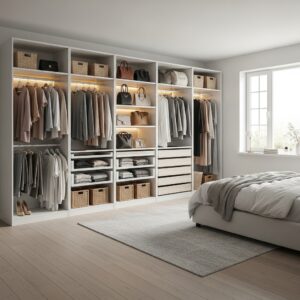
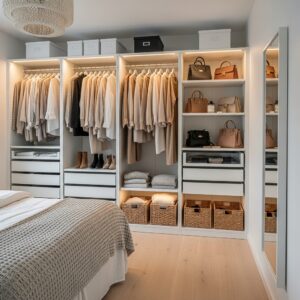
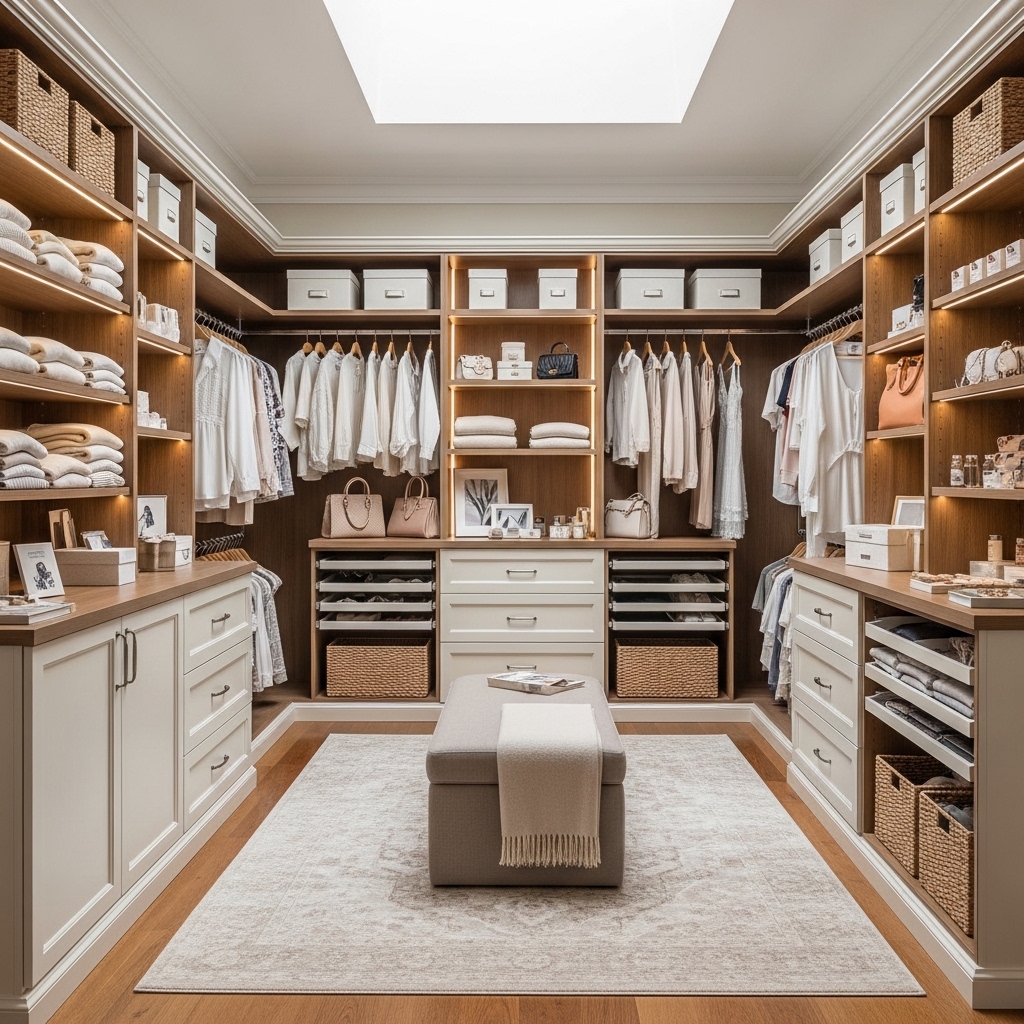
One of the most striking IKEA closet ideas I often recommend is the open system. An open IKEA setup focuses on visible storage, creating a boutique-style wardrobe that’s both practical and visually appealing.
The beauty of an open closet lies in its display potential. Clothing, shoes, and accessories are no longer hidden—they become part of the room’s design. I always suggest grouping items by type or color to create a curated, organized look. For example, hanging jackets together and arranging handbags on shelves according to size and color instantly adds a designer touch.
Open systems work best with a combination of hanging rods, open shelves, and small storage boxes. Incorporating a few decorative elements, such as trays for jewelry or woven baskets for scarves, elevates the space from a functional wardrobe to a styled closet that feels personal and luxurious.
Lighting is essential here. LED strips installed under shelves or along hanging rods add depth and make each section stand out. In some of my projects, I’ve also added small spotlights to highlight special accessories or handbags, creating a boutique-like focal point within the closet.
In terms of layout, I usually recommend balancing hanging sections with shelving. Too much hanging space can look empty, while too many shelves can feel cluttered. A thoughtfully arranged open IKEA system offers a sense of order and intentionality, making it feel like a professional wardrobe setup.
2. PAX Wardrobe System for a Built-In Closet Look
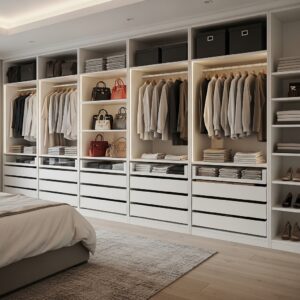
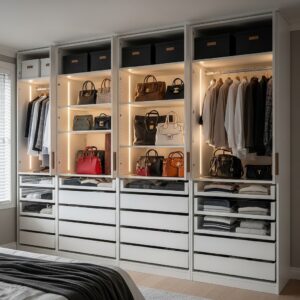
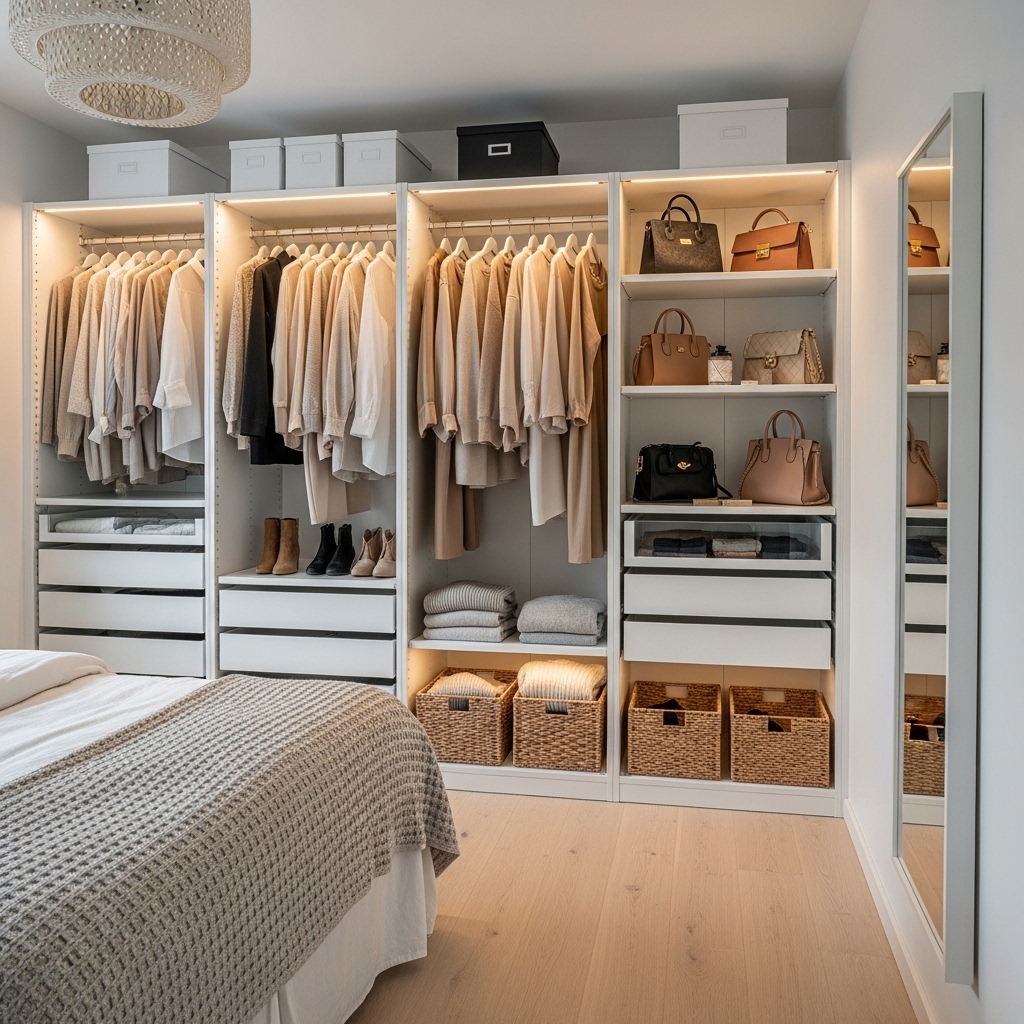
The PAX system is IKEA’s flagship modular wardrobe line and is perfect for achieving a built-in closet aesthetic. I often recommend PAX when clients want a polished, high-end look without the cost of custom cabinetry.
The PAX system allows for extensive customization, from sliding doors to interior organizers. By combining tall frames with drawers, shelves, and hanging rods, it’s possible to create a cohesive built-in look that feels permanent. Painting or selecting finishes that match the room’s trim or walls can enhance this effect, making the wardrobe appear integrated into the bedroom rather than added after the fact.
One of my favorite strategies with PAX is combining closed storage with some open sections. For example, sliding doors can hide seasonal clothing, while a small open niche displays favorite handbags or folded sweaters. This mix of open and closed storage keeps the system functional and visually interesting.
Adding high-end touches, such as leather handles, LED interior lighting, and uniform hangers, further elevates the system. Even though the components are modular and relatively affordable, these styling choices make the PAX system look custom-made.
3. IKEA Closet System with Sliding Doors for Small Bedrooms
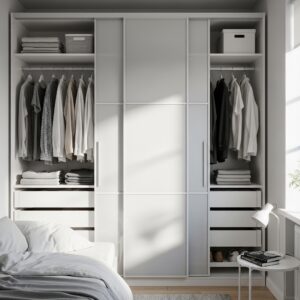
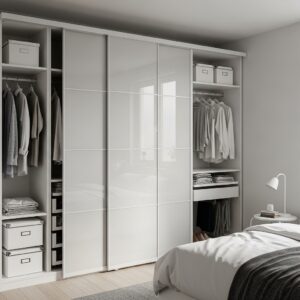
Sliding doors are a game-changer for small bedrooms, and I often recommend incorporating them into IKEA closet systems for both functionality and style. Unlike traditional hinged doors, sliding doors don’t require extra clearance to open, making them ideal for tight spaces where every inch counts.
In addition to saving space, sliding doors also create a sleek, modern aesthetic. I’ve worked on projects where a PAX system with glossy white or frosted glass sliding doors instantly transformed a compact bedroom, giving it a clean, upscale look. For homeowners who want to introduce a touch of luxury, mirrored sliding doors are particularly effective. They serve the dual purpose of making the room feel larger while doubling as a full-length mirror for dressing.
Inside, it’s important to organize efficiently. I often recommend dividing the interior into sections: one for long hanging garments, one for folded clothing, and one for accessories. By keeping everything visible and accessible, sliding door wardrobes can feel both functional and stylish.
For small bedrooms, sliding doors also help reduce visual clutter. Even if the interior is packed with clothing and storage items, the exterior remains sleek and minimal, which is essential for maintaining a sense of openness in a limited space.
4. Corner IKEA Closet System to Maximize Awkward Spaces
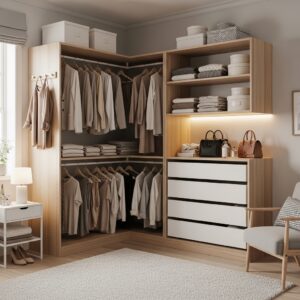
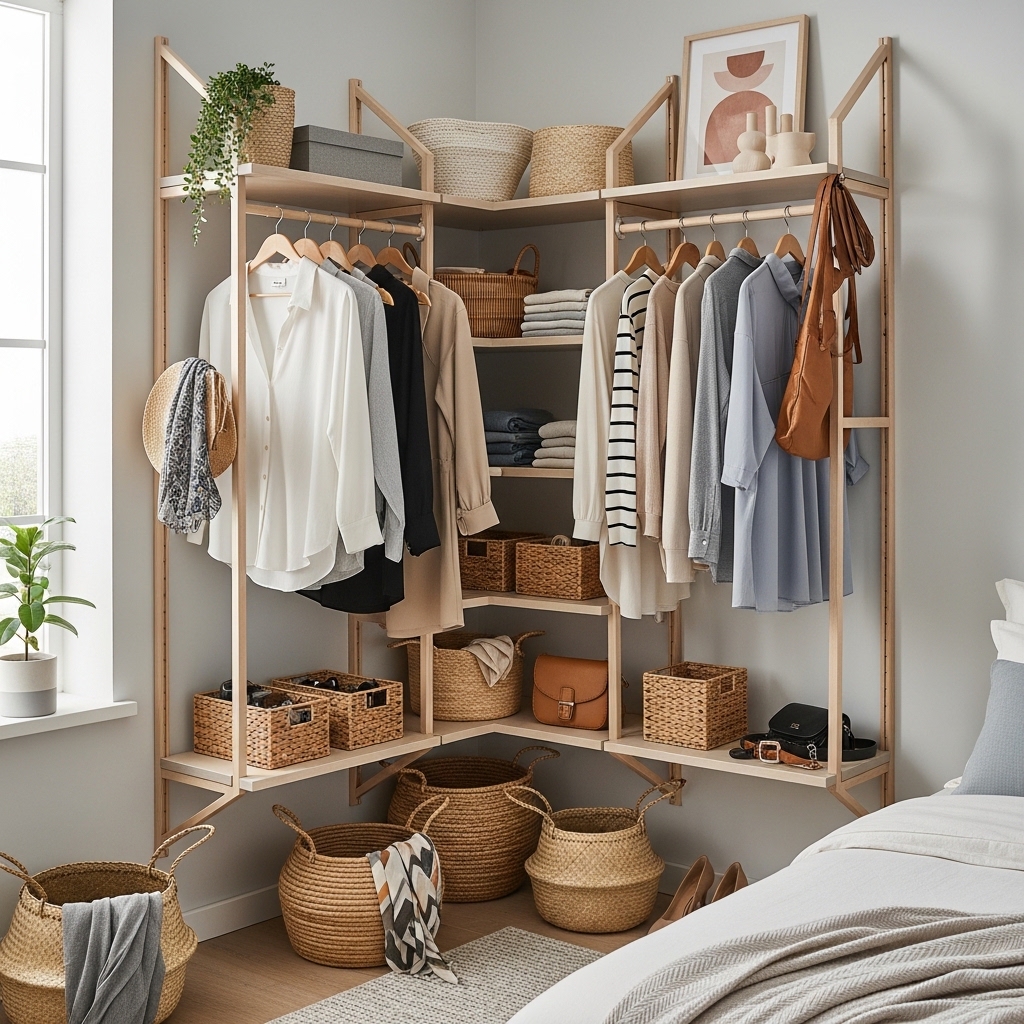
Corners are often neglected in bedroom layouts, but IKEA closet systems make them highly usable. I frequently suggest corner configurations for clients who want to maximize storage without consuming the entire room.
A corner IKEA setup typically uses L-shaped or modular units that fit snugly into a corner, providing a mix of hanging space and shelving. This approach turns previously wasted space into a functional wardrobe zone. In my experience, adding corner shelves or angled rods not only increases storage capacity but also creates a visually dynamic layout that feels intentional rather than cramped.
Styling a corner closet can be tricky, but lighting plays a huge role. LED strips along the interior edges and strategic placement of small spotlights ensure that every item is visible. I also recommend using consistent hangers, color-coordinated storage boxes, and neatly folded items to maintain a clean and boutique-like appearance.
Corner systems are particularly beneficial in irregularly shaped rooms or apartments where traditional linear layouts are impractical. With careful planning, they can provide a surprisingly large amount of storage while keeping the room open and airy.
5. Minimalist IKEA Closet with Open Shelving and Hanging Rods
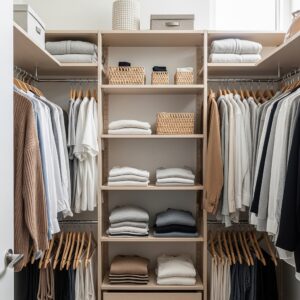
For homeowners who love a clean, airy aesthetic, a minimalist IKEA closet with open shelving and hanging rods is a perfect solution. I often recommend this setup for small or medium-sized bedrooms where a light and uncluttered feel is desired.
Open shelving keeps the closet visually light, while strategically placed hanging rods offer functional storage without overwhelming the space. This setup is ideal for displaying favorite items such as handbags, neatly folded sweaters, or carefully curated shoes. The key is balance: too many shelves or rods can make the space look chaotic, while the right arrangement creates a boutique-like, organized feel.
Styling is essential for open minimalist closets. I usually advise clients to stick to a neutral color palette, use matching hangers, and incorporate decorative storage boxes or woven baskets. These subtle elements help maintain a cohesive look while keeping the focus on the clothing and accessories themselves.
Lighting is another critical factor. I often integrate LED strip lights under shelves to highlight items and add depth. Even a simple floor lamp or wall sconce near the closet can dramatically improve the visual appeal.
Styling Tips to Make Your IKEA Closet Look Custom-Made
Even the best IKEA system can feel generic without proper styling. I’ve found that attention to detail is what truly transforms these modular systems into dream wardrobes.
Uniform hangers are the first step. Mixed plastic and wire hangers instantly reduce the perceived quality of a closet, while matching wooden or velvet hangers give it a boutique, high-end appearance.
Color coordination is another powerful technique. Organizing clothing by color or type makes the closet visually harmonious and easy to navigate. Small decorative touches, like elegant trays for jewelry, stylish baskets for accessories, or a few decorative books on open shelves, further enhance the design.
Lighting is critical for elevating the look. Soft LED strips along shelves, interior cabinet lighting, or pendant lighting above open areas can create a professional, curated feel. Even small mirrors inside a closet can help reflect light and make the space feel larger.
Finally, maintenance matters. A well-styled IKEA closet only remains impressive if it’s kept organized. Regularly folding clothing, returning items to their designated spots, and minimizing clutter are essential to sustaining a polished, designer-inspired look.
Common IKEA Closet Design Mistakes to Avoid
While IKEA closet systems are incredibly versatile, I often see a few mistakes that reduce their impact. Overcrowding is one of the most common issues. Even the most beautiful system can look cluttered if shelves and rods are packed too tightly.
Another mistake is ignoring functional zones. Long garments, folded clothing, shoes, and accessories all need dedicated spaces. Failing to allocate proper sections leads to chaos and reduces usability.
Poor lighting is another frequent oversight. A closet can be perfectly organized, but without proper illumination, it can feel flat and uninviting. Integrating LED lighting or using natural light effectively can make a dramatic difference.
Finally, skipping the finishing touches can downgrade the overall aesthetic. Inconsistent hangers, mismatched storage boxes, or uncoordinated drawer fronts immediately make the closet feel generic rather than high-end. Attention to detail in these small areas is what transforms an IKEA system into a designer wardrobe.
Final Thoughts: Creating Your Dream Wardrobe with IKEA Systems
Creating a dream wardrobe doesn’t have to mean expensive custom cabinetry. IKEA closet systems provide incredible flexibility, allowing homeowners to design spaces that are functional, stylish, and personalized.
From open boutique-style systems to PAX configurations, sliding door wardrobes, and corner solutions, there are endless ways to maximize storage and elevate the look of any bedroom. By combining thoughtful layout planning, coordinated styling, and integrated lighting, an IKEA closet can feel like a high-end, custom-built solution.
In my experience, the most successful IKEA closets balance practicality with visual appeal. When each component has a purpose, items are organized efficiently, and finishing touches are carefully considered, even a modular system can achieve a luxurious, designer-inspired appearance. With these strategies, anyone can create a dream wardrobe that looks as if it were professionally designed while staying within budget.