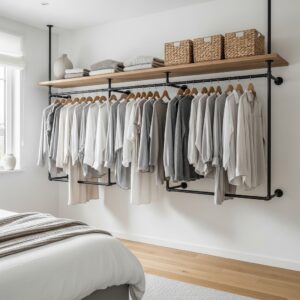
Open closets have quietly become one of the most sought-after features in modern home design. Over the past few years, I’ve noticed homeowners shifting away from bulky wardrobe doors and cramped closet interiors in favor of open, airy storage systems that double as a design statement. Instead of hiding clothes behind doors, an open closet allows fashion, accessories, and even storage solutions to become part of the room’s aesthetic.
One of the main reasons this trend is gaining momentum is flexibility. A traditional closet is fixed and often inefficient, but a DIY open closet can be customized to fit almost any space. Whether someone lives in a small apartment, a studio, or a large home, open closet systems allow every inch of wall space to work harder.
Another major reason people love open closets is affordability. Many designer-style closets cost thousands of dollars, yet I’ve personally seen stunning DIY versions created for a fraction of that price. With the right shelves, rods, and thoughtful styling, a simple wall can be transformed into something that looks straight out of a luxury interior design magazine.
Beyond practicality, open closets also encourage better organization. When everything is visible, it becomes easier to maintain a tidy system. Clothes are easier to find, accessories are displayed neatly, and the entire space feels more intentional rather than cluttered.
For homeowners who want a closet that feels both functional and visually impressive, DIY open closets offer the perfect solution.
What Makes an Open Closet Look “Designer”?
Not every open closet automatically looks stylish. I’ve seen many DIY setups that feel cluttered or unfinished simply because they lack the design elements that elevate them from basic storage to a designer-inspired feature.
A designer-looking open closet focuses on structure, balance, and materials. Everything should feel intentional rather than randomly assembled. When I design or recommend open closet setups, I usually focus on three essential principles.
First is consistency. Using the same color palette, materials, and finishes instantly makes a closet feel cohesive. For example, black metal rods paired with warm wood shelves create a high-end industrial look, while white shelving with brass rods produces a softer, boutique-style aesthetic.
Second is spacing and layout. Designer closets often feel luxurious because items are given room to breathe. Shirts are evenly spaced, shelves are not overcrowded, and accessories are neatly arranged. Even simple adjustments—like aligning hangers or grouping clothes by color—can dramatically improve the overall appearance.
Third is styling. The difference between a plain closet and a designer-inspired one often comes down to styling elements such as decorative baskets, matching hangers, small storage boxes, and subtle lighting. These details create a curated appearance rather than a purely functional storage wall.
Here is a quick comparison that illustrates the difference.
| Basic Open Closet | Designer-Looking Open Closet |
|---|---|
| Mixed hangers and mismatched shelves | Uniform hangers and coordinated materials |
| Clothes packed tightly together | Balanced spacing between items |
| No decorative elements | Baskets, trays, and subtle decor |
| Harsh lighting or no lighting | Soft LED or warm lighting |
When these design principles are applied thoughtfully, even a simple DIY closet can look surprisingly high-end.
Things to Consider Before Creating a DIY Open Closet
Before building an open closet, I always recommend taking a step back and evaluating the space carefully. While these systems are incredibly versatile, a little planning can make the difference between a polished setup and one that feels chaotic.
The first thing to consider is wall space. Open closets rely heavily on vertical storage, so measuring the wall accurately is essential. I typically suggest mapping out where rods, shelves, and storage units will go before installing anything. This prevents overcrowding and ensures every item has a designated spot.
Another important factor is clothing volume. Some people own a minimalist wardrobe while others have extensive collections. The layout should reflect that reality. Someone with many hanging garments will need more rods, while someone with folded sweaters or denim will benefit from additional shelving.
Lighting is another detail many people overlook. Traditional closets often have built-in lights, but open closets rely on room lighting or additional fixtures. Installing simple LED strip lights under shelves can completely transform the appearance and make the closet feel much more refined.
Durability also matters. Since open closets are visible at all times, materials should not only look good but also hold weight reliably. Strong brackets, solid shelves, and properly anchored rods are essential for long-term stability.
Here is a simple planning checklist I often recommend before starting a DIY open closet project:
-
Measure wall height and width accurately
-
Identify hanging vs folded clothing needs
-
Choose a consistent material style (wood, metal, etc.)
-
Plan lighting placement
-
Leave breathing room between sections
Taking time to plan these details ensures the finished closet feels intentional rather than improvised.
#1. DIY Open Closet Idea: Minimalist Pipe Rack Closet
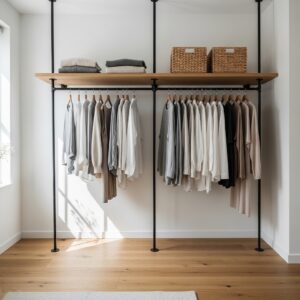
One of the most popular and easiest DIY open closet designs I recommend is the minimalist pipe rack system. This design uses industrial metal pipes as hanging rods, creating a modern structure that is both durable and visually striking.
What makes this setup particularly appealing is its simplicity. With a few wall-mounted pipe brackets and rods, an entire clothing rack can be built within a few hours. The materials are affordable and widely available at most hardware stores, making this a great entry-level DIY project.
The industrial aesthetic also pairs beautifully with many interior styles. In modern apartments, black pipes combined with wooden shelves create a sophisticated loft-style appearance. In lighter interiors, white-painted pipes can produce a softer minimalist look.
I’ve found that the key to making this type of closet look designer rather than purely industrial is balance. Adding a wooden shelf above the hanging rod instantly introduces warmth and additional storage for folded items, hats, or decorative boxes.
A typical minimalist pipe closet layout often includes:
-
A sturdy pipe rod for hanging clothes
-
A wooden shelf above the rod for storage
-
Optional lower shelves for shoes or baskets
This combination keeps the structure simple while providing enough functionality for everyday use.
Another advantage of pipe rack closets is adaptability. If someone moves to a new home or decides to expand their wardrobe storage, additional rods or shelves can easily be added without rebuilding the entire system.
#2. DIY Open Closet Idea: IKEA Hack Open Closet System
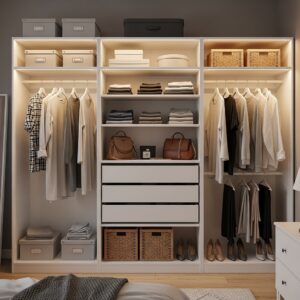
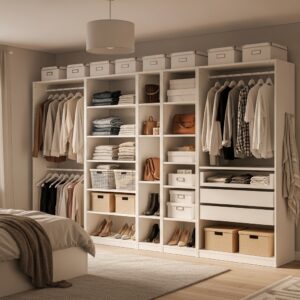
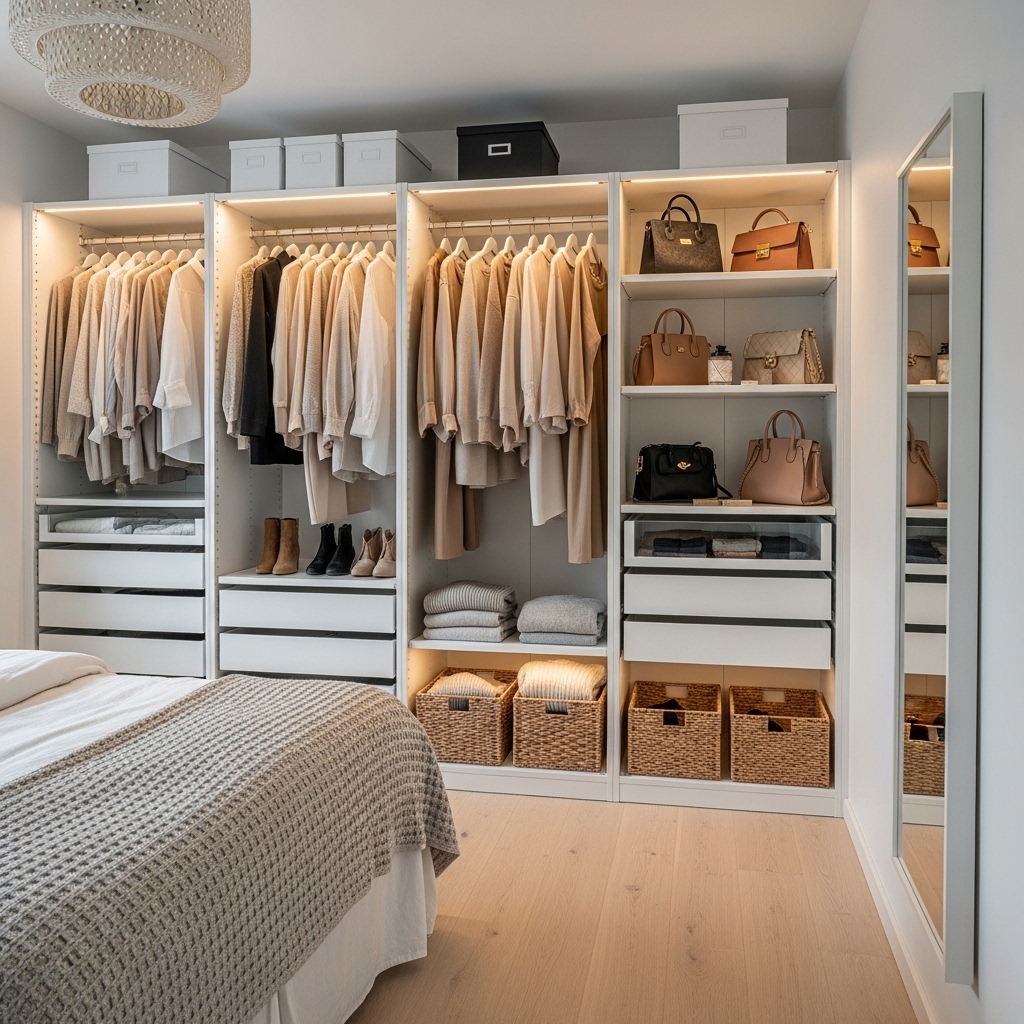
If someone wants a closet that looks professionally built without spending thousands of dollars, I often recommend an IKEA hack. These projects combine affordable modular furniture with custom adjustments to create something that looks far more expensive than it actually is.
I’ve worked with several homeowners who transformed simple shelving units into elegant open closet systems by integrating clothing rods, baskets, and decorative storage elements. The beauty of these setups lies in their flexibility.
Many IKEA storage units already provide a strong structural base. By adding hanging rods between units, installing extra shelves, or integrating drawer inserts, it becomes possible to build a fully functional wardrobe wall.
One approach that works especially well is combining vertical shelving towers with a central hanging section. The shelves hold folded clothing and accessories, while the middle space provides room for dresses, shirts, or coats.
For example, a balanced open closet setup might look like this:
| Section | Function |
|---|---|
| Left shelving tower | Folded sweaters, jeans, and storage boxes |
| Center rod section | Hanging shirts, dresses, jackets |
| Right shelving tower | Shoes, bags, and accessories |
This layout mimics the structure of high-end custom closets but at a fraction of the price.
To elevate the design further, I often recommend a few simple upgrades such as replacing standard handles with brass or matte black hardware, adding LED lighting, and using matching baskets for concealed storage.
With the right styling, most people would never guess that the closet started as a simple IKEA setup.
#3. DIY Open Closet Idea: Floating Shelves + Hanging Rod Combo
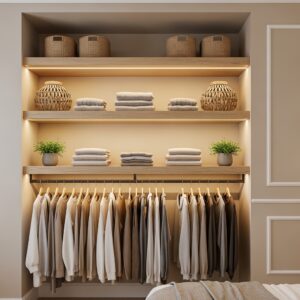
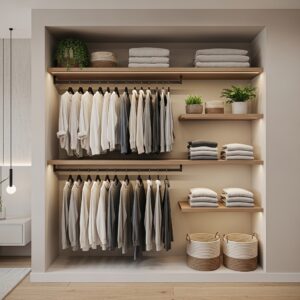
One of the most practical and visually balanced open closet designs I often recommend is the floating shelves and hanging rod combination. This setup works particularly well because it blends two essential storage methods—hanging and folding—without making the wall feel overcrowded.
Floating shelves immediately create a clean and modern appearance. Because the brackets are hidden, the shelves appear to “float” against the wall, which gives the closet a sleek and minimal aesthetic. When paired with a sturdy hanging rod underneath, the system becomes both stylish and highly functional.
In most closets I design with this method, the shelves are placed about 12–16 inches above the hanging rod. This creates enough room for jackets and shirts to hang naturally while leaving space above for folded clothing, handbags, or decorative storage boxes.
Another advantage of floating shelves is their versatility. They can be arranged in different configurations depending on the size of the wall. In smaller bedrooms, a single rod with two or three shelves above it can provide enough storage for a minimalist wardrobe. Larger walls can support multiple rods and shelf sections, creating a more complete wardrobe system.
Styling is where floating shelves really shine. When done correctly, the closet can look almost like a boutique display. I usually recommend arranging items thoughtfully rather than stacking everything together. For example:
-
Folded sweaters stacked neatly in small piles
-
Handbags displayed upright
-
Storage baskets for smaller items like scarves or belts
-
Decorative boxes to hide seasonal pieces
These simple touches make the closet feel curated instead of purely functional.
Lighting also plays a big role here. Installing LED strip lighting beneath the floating shelves adds a soft glow that highlights clothing and instantly makes the space feel more luxurious.
#4. DIY Open Closet Idea: Built-In Style Open Closet With Wood Frames
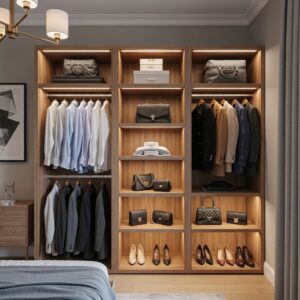
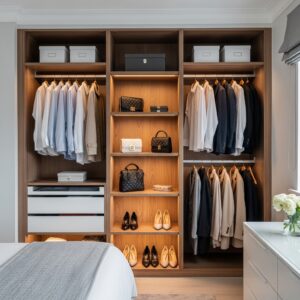
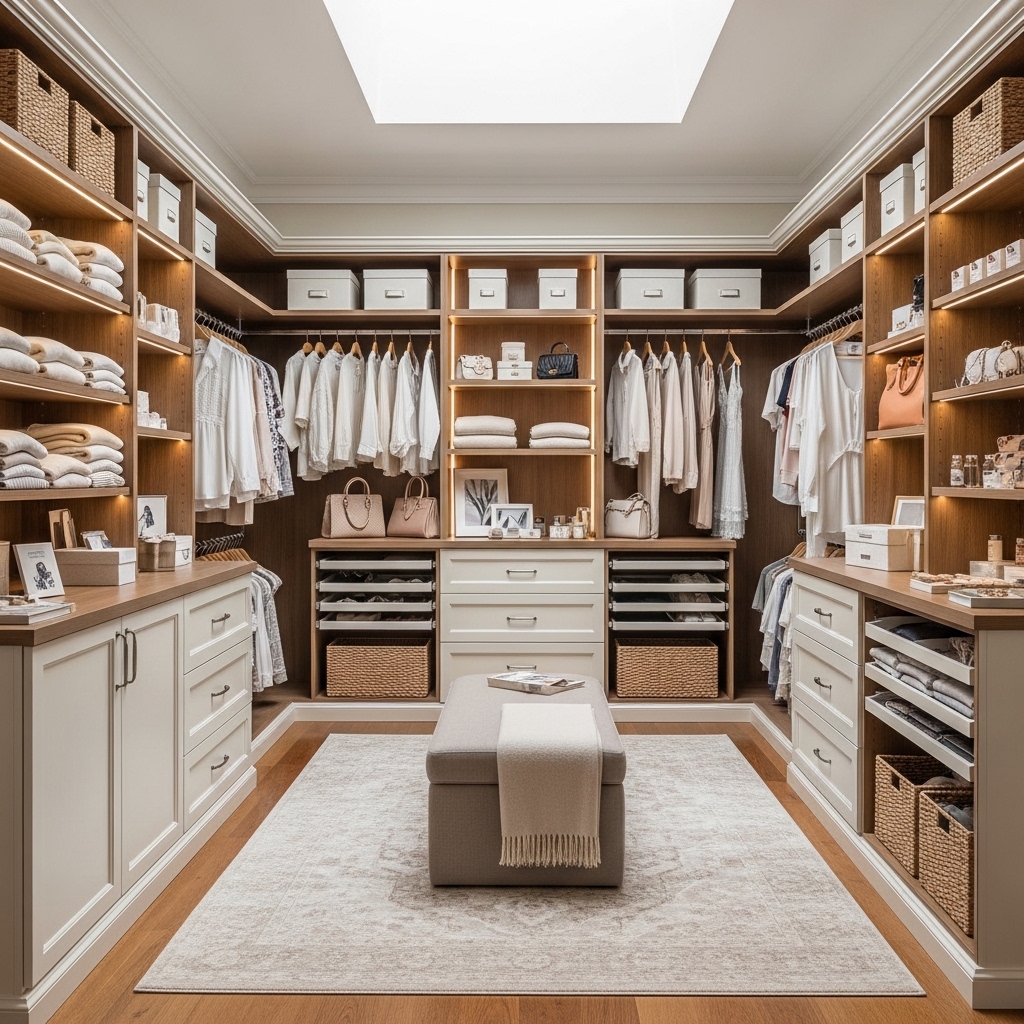
For homeowners who want their DIY closet to look as if it were professionally built into the home, a wood-framed open closet is an excellent option. This style mimics high-end custom wardrobes often seen in luxury homes or designer showrooms.
The core idea is to create a structured frame using wooden panels or boards that divide the closet into sections. These vertical frames act as supports for rods, shelves, and storage compartments. The result is a closet system that looks intentionally designed rather than assembled from separate pieces.
What I particularly like about this approach is the architectural feel it brings to a room. Instead of looking like a temporary rack system, the closet becomes part of the wall itself. Painted wood frames in white or soft neutral tones can make the space feel clean and elegant, while natural wood finishes add warmth and character.
A typical built-in style open closet might include sections like these:
-
A tall hanging section for coats and dresses
-
A double rod section for shirts and pants
-
Several shelves for folded clothing
-
A lower shoe display area
This kind of structure provides balance and symmetry, which is one of the defining characteristics of designer closets.
Another advantage is durability. Because the entire system is anchored to the wall and supported by wooden framing, it can hold significantly more weight than many lightweight DIY solutions.
Even small design decisions can enhance the built-in look. Matching wooden hangers, integrated lighting, and neutral paint colors can elevate the entire setup and make it feel truly custom.
#5. DIY Open Closet Idea: Corner Open Closet for Small Spaces
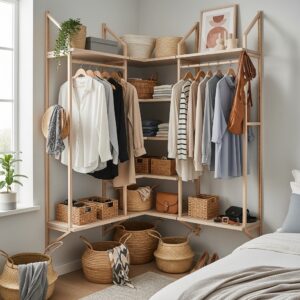
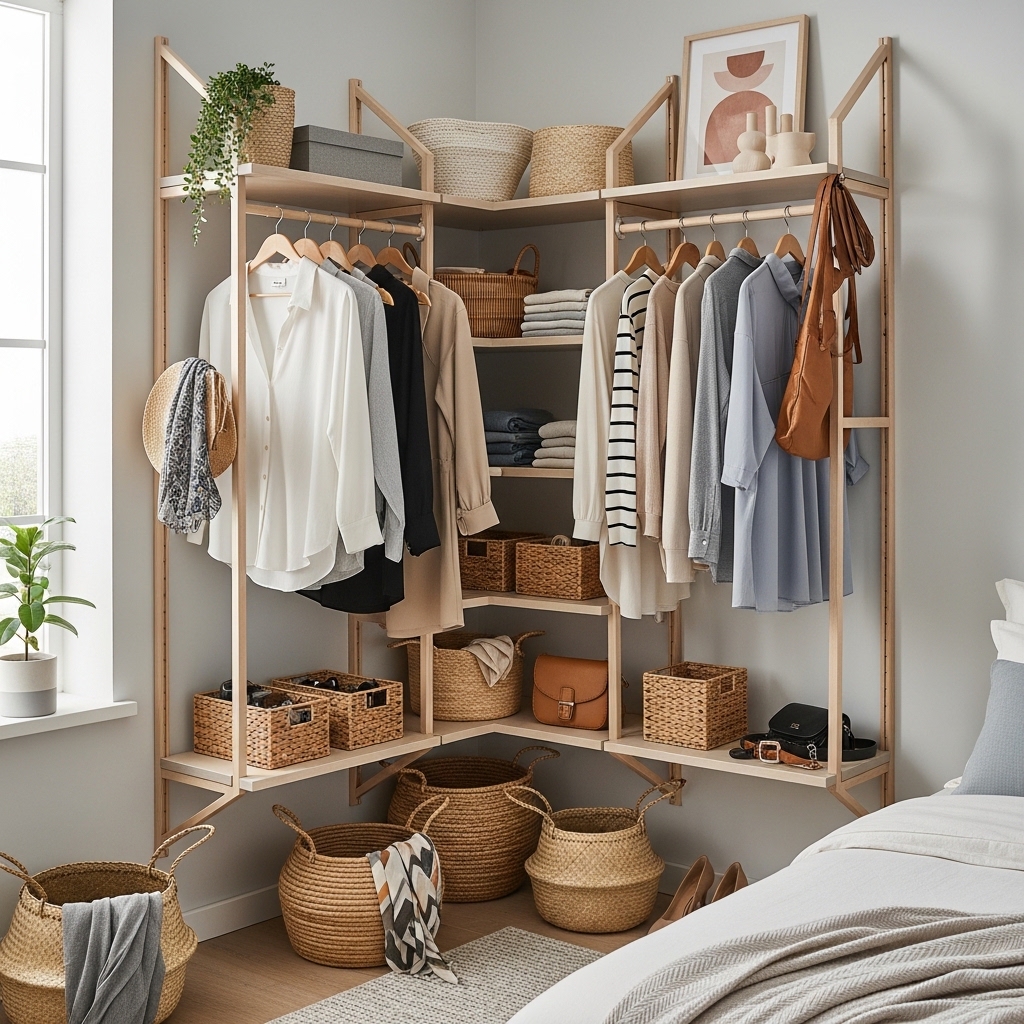
Not every home has the luxury of a large walk-in closet, which is why I often suggest corner open closets for smaller bedrooms or apartments. Corners are one of the most underutilized spaces in many homes, yet they can become incredibly efficient storage areas when designed properly.
A corner open closet typically uses two adjacent walls to create an L-shaped layout. By installing rods and shelves along both walls, it becomes possible to store a surprising amount of clothing without taking up much floor space.
This layout works particularly well for compact rooms because it keeps the storage contained within one area instead of spreading racks across multiple walls. The room still feels open, but the wardrobe remains accessible and organized.
When designing corner closets, I usually focus on keeping the layout simple. Too many shelves or rods can quickly make the space feel cluttered. Instead, a balanced approach works best.
For example, one wall may contain a hanging rod for shirts and jackets, while the other wall provides shelves for folded clothing and accessories. The corner itself can hold decorative baskets or a small shoe rack.
Another trick that helps visually expand the space is color coordination. Light-colored shelves, neutral walls, and consistent hangers create a clean and cohesive appearance that prevents the closet from dominating the room.
For renters or people working with limited square footage, this corner solution is often one of the smartest and most affordable ways to build a functional open closet.
Bonus DIY Open Closet Idea: Curtain-Covered Open Closet
While many people love the visual openness of a designer-style closet, some still prefer the option to hide clothing when necessary. A curtain-covered open closet offers the best of both worlds.
In this setup, the closet structure remains open, but a simple curtain rod and fabric panel are installed above it. The curtain can be drawn closed to conceal the clothing or opened to display the wardrobe when desired.
This solution is especially helpful for people who worry about visual clutter. Even a well-organized closet can sometimes make a bedroom feel busy, particularly in smaller spaces. A curtain instantly softens the look and restores a sense of calm to the room.
Another benefit is style versatility. Curtains introduce texture, color, and softness into the design. Linen curtains create a relaxed, airy feel, while velvet or heavier fabrics can make the closet look more luxurious.
From a practical perspective, curtain closets are also extremely budget-friendly. Instead of installing doors or sliding panels, a simple rod and curtain can achieve a similar effect at a fraction of the cost.
Many of the most beautiful DIY closets I’ve seen combine open shelving with a neutral curtain that blends into the room’s overall color palette.
Styling Tips to Make Your Open Closet Look Expensive
Even the most well-built closet can look ordinary without thoughtful styling. Over the years, I’ve learned that presentation plays a huge role in making an open closet appear designer-level.
One of the simplest upgrades is switching to uniform hangers. Mixed plastic and wire hangers instantly make a closet look messy, while matching wooden or velvet hangers create visual harmony.
Color coordination is another powerful trick. Grouping clothing by color—from light to dark—makes the closet look intentional and organized. Fashion boutiques use this exact method to create visually pleasing displays.
I also recommend limiting the number of visible items on shelves. Instead of stacking everything together, leave small gaps between piles of clothing. This spacing makes the closet feel calm and balanced.
Decorative storage can also elevate the design. Woven baskets, fabric bins, and elegant storage boxes hide clutter while adding texture to the space.
A few styling elements that consistently improve the look of open closets include:
-
Matching hangers
-
Coordinated storage baskets
-
Small trays for jewelry or watches
-
Neutral-colored storage boxes
-
Soft LED lighting under shelves
These small upgrades can dramatically transform the overall appearance of a closet.
Common DIY Open Closet Mistakes to Avoid
While DIY open closets can look incredible, I’ve also seen a few common mistakes that quickly reduce their visual appeal.
One of the biggest issues is overcrowding. Because everything is visible, too many clothes packed into one area can make the closet feel chaotic. An open closet works best when items have room to breathe.
Another mistake is ignoring structural support. Weak shelves or poorly installed rods can sag over time, which not only looks messy but also creates safety concerns. Strong brackets and secure wall anchors are essential.
Poor lighting is another frequently overlooked detail. Without proper lighting, even a beautiful closet can look dull and unfinished. Simple LED strips or small spotlights can dramatically improve the overall atmosphere.
Finally, many people forget to maintain organization after building the closet. Open closets require occasional upkeep. Folding clothes neatly, returning items to their designated spots, and avoiding clutter will keep the space looking designer-worthy.
Final Thoughts: Creating a Designer-Looking Closet on a Budget
A beautiful closet does not require a massive renovation or an expensive custom installation. With thoughtful planning and a few smart design choices, a DIY open closet can look just as impressive as those found in high-end homes.
The key is combining functionality with intentional design. Choosing the right layout, using consistent materials, and styling the space carefully can transform even the simplest wall into a polished wardrobe display.
From minimalist pipe racks to built-in wood frames and clever corner solutions, there are countless ways to create a closet that reflects both personal style and practical needs.
In my experience, the most successful DIY closets are the ones that balance organization with aesthetics. When clothing is displayed neatly, supported by well-designed shelving and thoughtful lighting, the closet becomes more than storage—it becomes part of the room’s overall design.
With the right approach, anyone can create a designer-looking open closet without spending a fortune.